Optimal exercise modalities and doses for blood pressure management in adults with prehypertension and hypertension: A systematic review and Bayesian network meta-analysis
Dose-response
Abstract
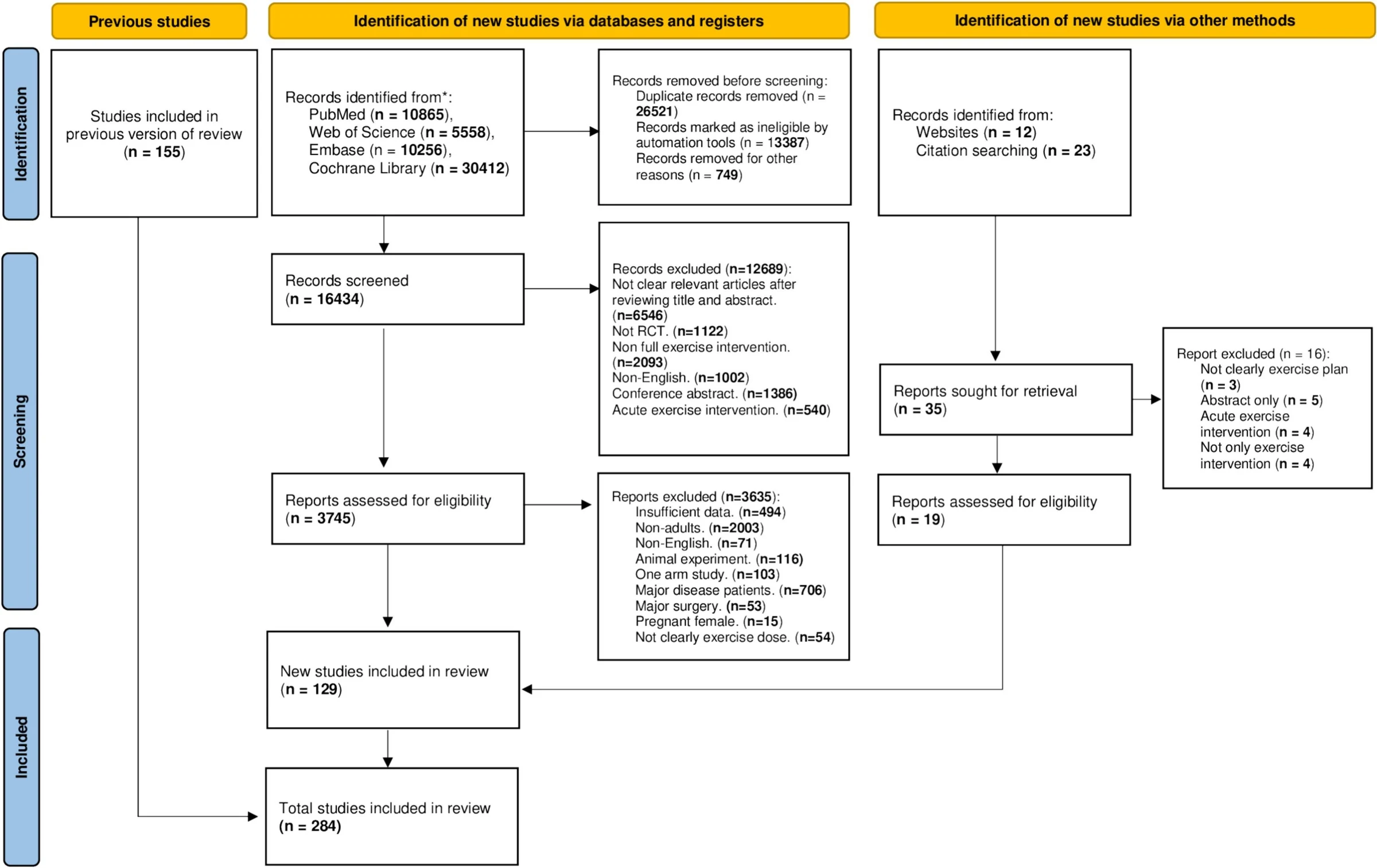
BACKGROUND: This study aimed to identify the most effective exercise modalities and optimal estimated dose range for reducing blood pressure in adults with prehypertension and hypertension, to support more precise exercise prescription. METHODS: We conducted a systematic review and Bayesian network meta-analysis. PubMed, Web of Science, Embase, and the Cochrane Library were searched from database inception to December 28, 2025. Randomized controlled trials were eligible if they included adults with prehypertension or stage 1 or stage 2 hypertension, evaluated structured exercise interventions, and reported resting systolic blood pressure and/or diastolic blood pressure. RESULTS: A total of 284 randomized controlled trials, including 18,750 participants with a mean age of 56.8 years, covering ten exercise modalities were included. Aquatic exercise achieved the greatest reduction in systolic blood pressure, with a mean difference of -10.28 mmHg and a 95% credible interval from -13.05 to -7.49; the surface under the cumulative ranking curve was 93.26%. Whole-body vibration and cycling also showed favorable estimates for systolic blood pressure. Mind-body exercise showed the largest estimated reduction in diastolic blood pressure, with a mean difference of -4.69 mmHg and a 95% credible interval from -6.45 to -2.92; the surface under the cumulative ranking curve was 85.90%. Aquatic exercise and isometric exercise training also showed favorable effect estimates. Dose-response modelling indicated that 750 metabolic equivalent task minutes per week was the estimated dose associated with maximal modeled systolic blood pressure benefit for isometric exercise training, with a mean difference of -13.52 mmHg and a 95% credible interval from -23.22 to -3.86. In contrast, 3600 metabolic equivalent task minutes per week was the estimated dose associated with maximal modeled diastolic blood pressure benefit for aerobic exercise, with a mean difference of -7.11 mmHg and a 95% credible interval from -11.89 to -2.18. CONCLUSION: Ten exercise modalities were associated with reductions in blood pressure, with particularly strong effects for aquatic, mind-body, and isometric exercise at specific doses. These findings may inform more tailored exercise prescription strategies for adults across hypertension phenotypes.