Metabolic byproduct extended lifespan in yeast cells
Experiments linked the effect to a brief burst of reactive oxygen molecules and a transporter protein called Ybt1.
Limit: Chronological lifespan captures nondividing cell survival, not the number of divisions cells can complete
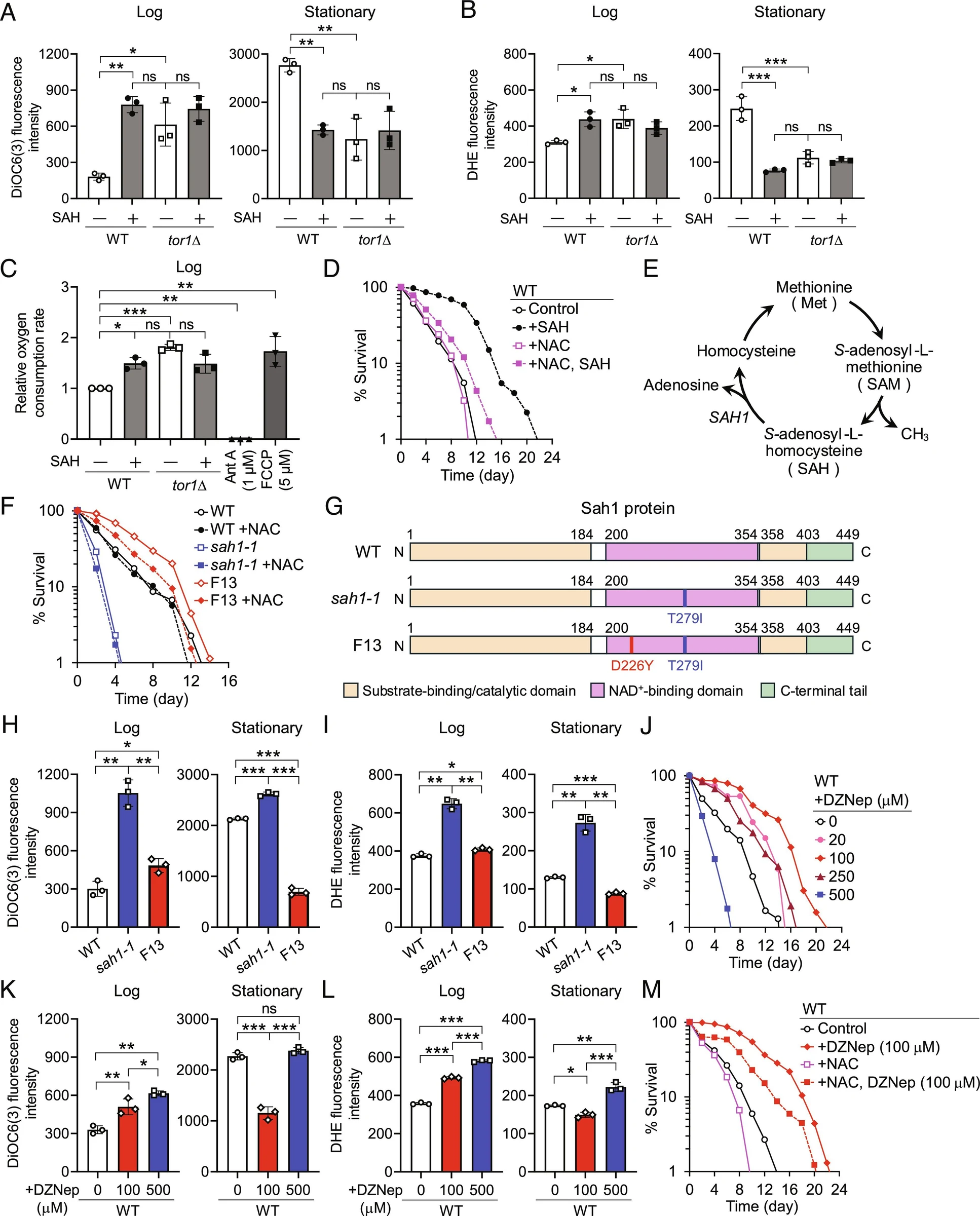
In experiments in yeast cells, the metabolic byproduct S-adenosyl-L-homocysteine (SAH) extended chronological lifespan, a measure of how long cells survive without dividing. Early in rapid cell growth, SAH triggered a temporary rise in reactive oxygen molecules. This prompted an adaptive response in which stress helped cells survive longer.
The researchers identified Ybt1, a protein that transports molecules, as a key part of this response. It helped move S-adenosyl-L-methionine, a molecule that donates chemical groups, from the cell’s main fluid into its vacuole, a storage compartment. Increasing production of Ybt1 also extended lifespan. This mimicked SAH’s effects through changes involving nutrient and energy sensing and autophagy, the process by which cells break down and recycle their components.
Why it matters
The relationship between metabolism and longevity raises a question about aging: how do cells adjust their survival responses to nutrient and energy availability? This work explored that question through an adaptive response to metabolic stress.
Caveats
These experiments measured survival in laboratory-grown yeast cells, not lifespan or health in animals or people. The abstract did not report the size of the lifespan extension.
