Implementation of Risk Prediction Models Using Electronic Health Data for Early Detection of Pancreatic Cancer: A Prospective Pilot Feasibility Study
18 months, non-randomised trial
Abstract
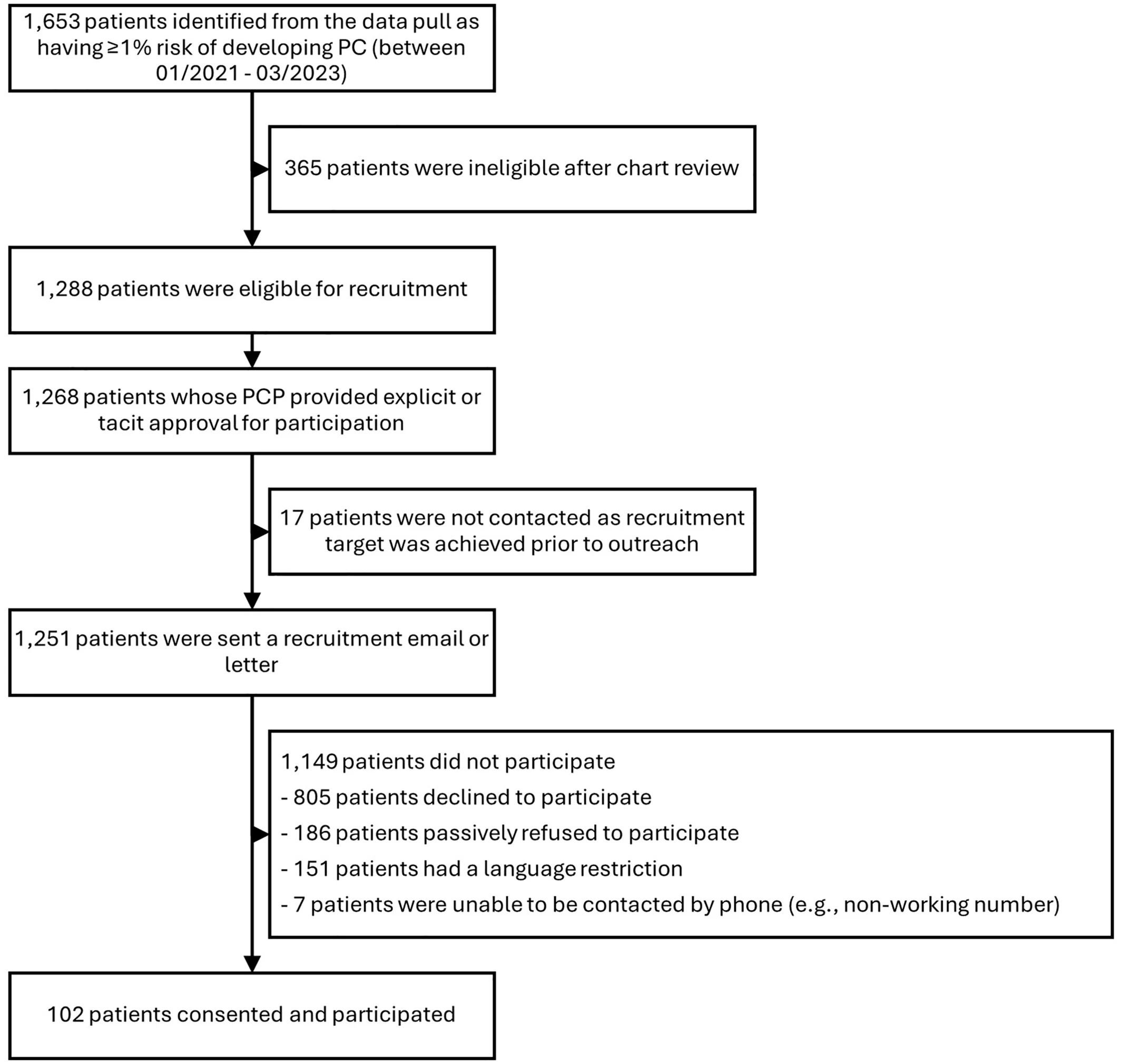
BACKGROUND AND AIMS: We previously developed multiple machine-learning and regression-based risk prediction models using retrospective electronic health records (EHR) to estimate near-term risk of pancreatic cancer (PC). This pilot study aimed to assess the feasibility of an early detection strategy combining initial EHR-based risk prediction with downstream imaging and blood-based testing. METHODS: This prospective study included adults aged 50-84 years with an estimated ≥ 1% 18-month risk of PC, identified between January 2021 and March 2023 using four previously validated models. Patients with a history or active suspicion of PC were excluded. Participants completed cross-sectional imaging and CA19-9 Labs at baseline and again at 18 months. Outcomes included enrollment rates, test completion rate, and burden of incidental findings. RESULTS: Of 1251 eligible patients, 102 (8.2%) enrolled (median age 69 years [IQR 62-75]; 58% women; 48% Hispanic, 34% White, 11% Black, and 7% Asian). At baseline, 89 (87%) completed imaging and 98 (96%) completed CA19-9. At 18 months, 79% completed both imaging and CA19-9. Ten (10%) participants underwent additional clinical evaluations triggered by imaging findings. Evaluations included an endoscopic ultrasound, renal imaging, and FibroScan. CA19-9 results were normal in most participants, though 18% had elevated levels at baseline. CONCLUSIONS: Real-time EHR-based ML algorithms can be combined with blood- and imaging-based surveillance for early detection of PC with acceptable burden of incidental findings. However, improved patient engagement is a key aspect that will need to be addressed in order to successfully scale an AI-guided strategy for early detection.
From the paper
- Participants
A total of 1653 patients with a predicted risk of ≥ 1% for developing PC and meeting inclusion/exclusion criteria were identified during the study period.
- Harms
There were no adverse events reported in relation to the imaging procedures or biospecimen collection.
- Limitation
First, the relatively small sample size reflects the pilot nature of the study and limits the generalizability of the findings.
Quoted word for word from the full text on onlinelibrary.wiley.com.
The paper
Department of Research and Evaluation
Cancer Medicine, 1 Oct 2026