Quality-of-Life and Weight Loss Outcomes Following an Individualized Nutrition and Physical Activity Counseling Program in Breast Cancer Survivors: A Prospective Single-Arm Pilot Study
6 months
Abstract
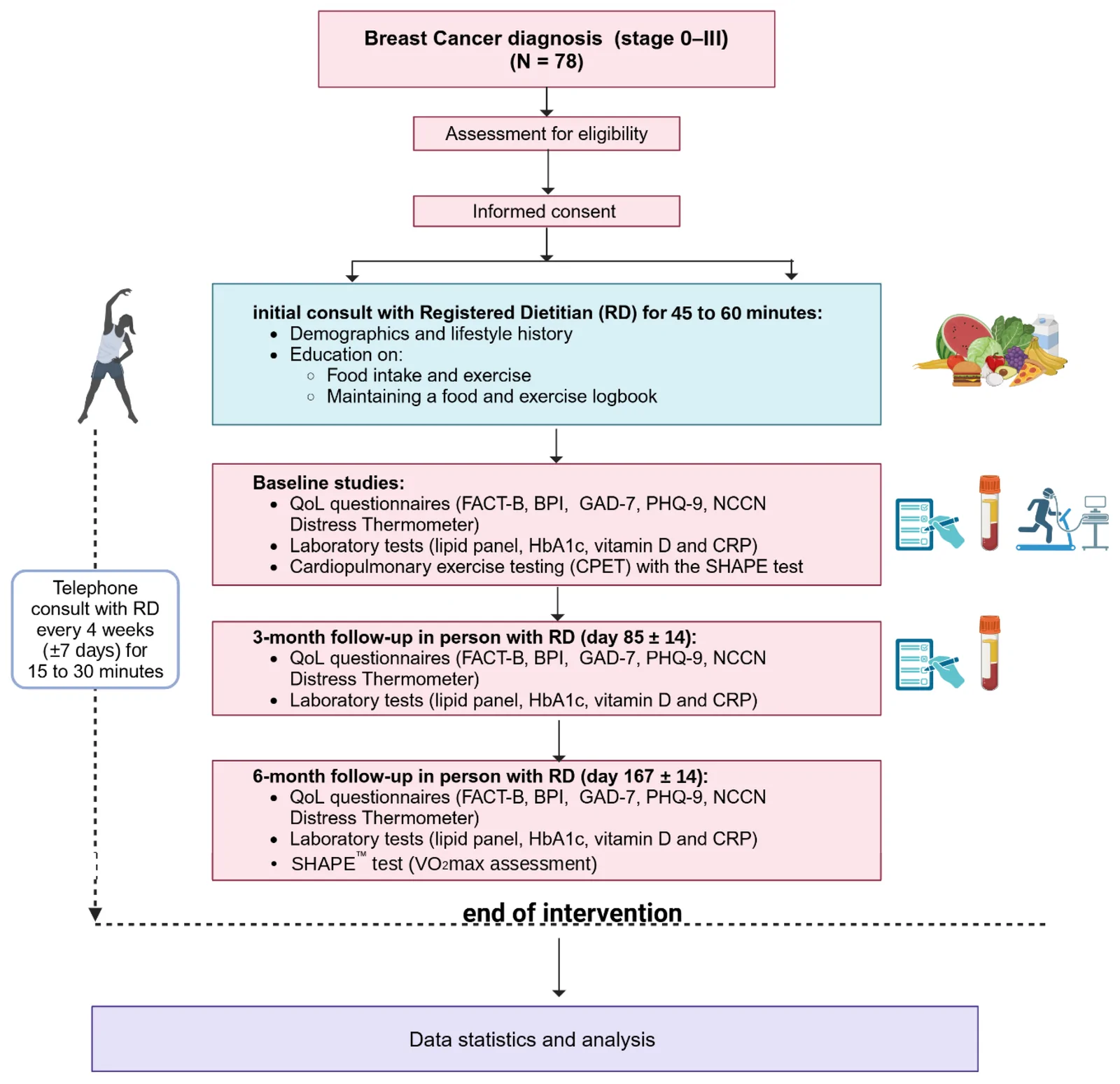
PURPOSE: Assess the feasibility of a 6-month individualized nutrition counseling and exercise program targeting a 10% body weight loss in breast cancer (BC) survivors, with secondary endpoints assessing metabolic parameters, cardiovascular function, and quality of life. METHODS: This single-arm pilot study enrolled BC survivors with body mass index (BMI) ≥ 25 kg/m² in a counseling program with a registered dietitian, consisting of in-person and telephone visits over six months. Outcomes measured included weight, body composition, blood markers, cardiovascular function, and quality of life at 3 and 6 months. RESULTS: A total of 78 breast cancer survivors were enrolled; 59 remained in the study at Month 3, and 54 completed the 6-month follow-up. The median age of participants was 58.5 years, and the cohort was predominantly White (72.4%). Among the 54 participants who completed 6-month follow-up, 11.1% achieved >10% weight loss and 29.6% achieved >5% weight loss. At 3 months, significant reductions were observed in BMI, body fat composition, and hemoglobin A1c (HbA1c), along with improvements in quality of life, depression, and anxiety. At 6 months, significant reductions were observed in weight, BMI, and body fat composition, with improvements in quality of life and depressive symptoms. CONCLUSIONS: This hybrid nutrition and exercise program was associated with observed improvements in weight loss and improved quality of life among BC survivors. IMPLICATIONS FOR CANCER SURVIVORS: A low-burden, hybrid nutrition and exercise program integrated into routine oncology follow-up may help breast cancer survivors achieve weight loss while improving their quality of life.
The paper
Cleveland Clinic Florida
Cancers, 3 Oct 2026, Open access


