Skeletal Muscle Mass as a Potential Mediator of the Physical Activity-Left Atrial Function Relationship: A Community-Based Cross-Sectional Study
Abstract
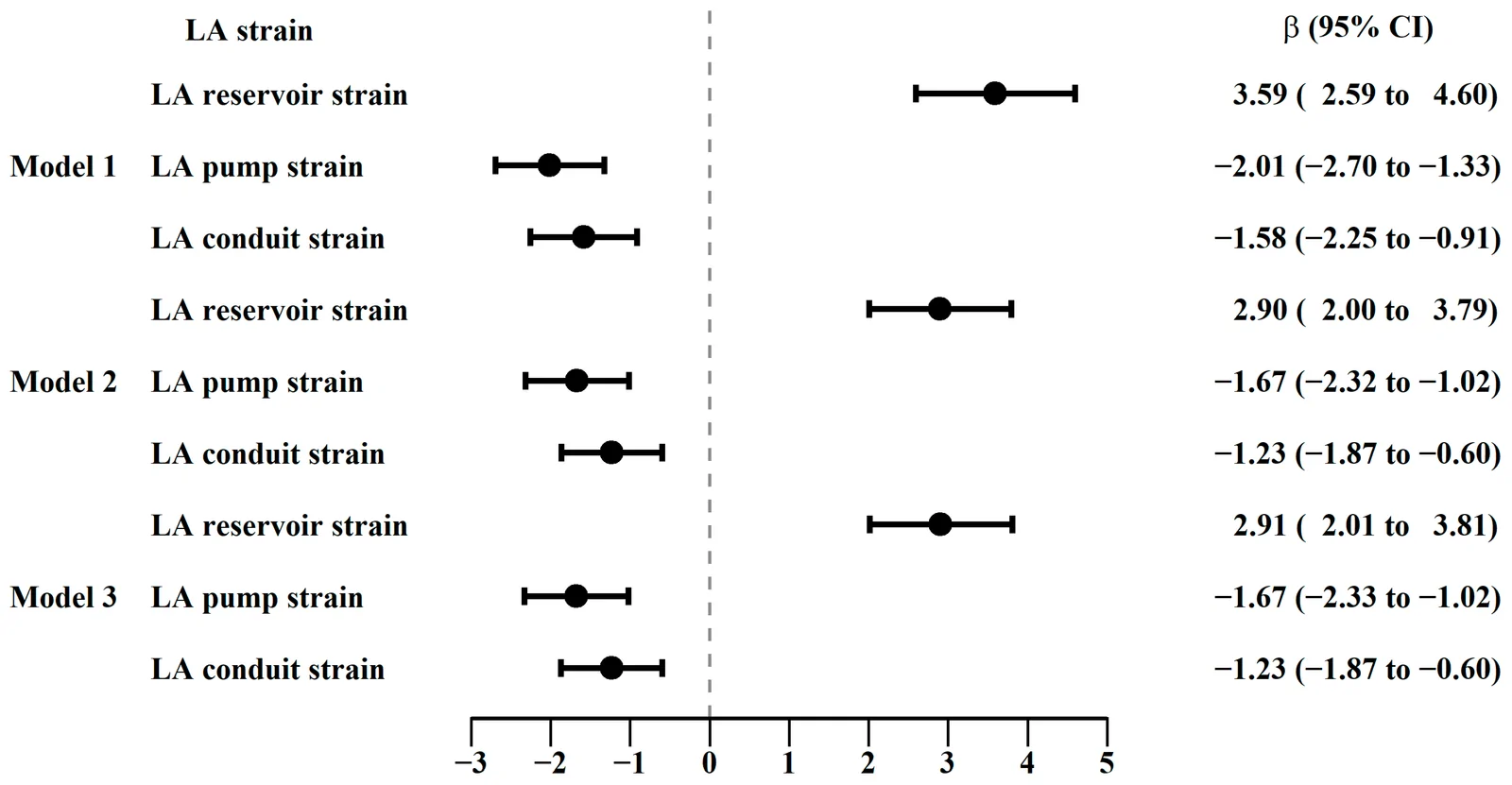
Objectives: Left atrial (LA) strain reflects early cardiac dysfunction preceding structural remodeling and clinical disease. Data on the association between physical activity (PA) and LA function are limited. In this study, we aim to explore the association of PA with LA strain, and to test the indirect effect of skeletal muscle mass in the PA-LA association. Methods: Data from the Healthy Lifestyle Promotion Cohort involving 407 participants were analyzed. Multivariate linear regression models were used to estimate the associations of leisure-time PA with LA function, and indirect associations through skeletal muscle mass were determined using a regression-based mediation analysis. Results: PA was significantly associated with LA reservoir strain (β = 2.907, p < 0.001) and with pump strain (β = -1.674, p < 0.001). PA had a significant effect on the skeletal muscle mass index (SMI) (β = 0.230, p < 0.001), while the SMI had a significant impact on LA reservoir strain (β = 2.619, 95% CI 1.425-3.813, p < 0.001) and pump strain (β = -2.621, 95% CI -3.472--1.771, p < 0.001). The SMI partially mediated the effect of PA on LA reservoir strain by 21% (95% CI: 9-38%, p < 0.001) and LA pump strain by 36% (95% CI: 20-59%, p < 0.001). Subgroup analysis revealed that this statistical mediation effect of the SMI demonstrated a stronger trend in women compared to men and in participants ≥60 years old compared to their younger counterparts. Conclusions: The SMI partially mediates the association between PA and LA function in the community-dwelling Chinese participants. Sustaining a higher level of leisure-time PA was associated with better LA function. These possible beneficial effects may be partially explained through favorable changes in the SMI.
- Leisure-time physical activity
- Left atrial pump strain
- Left atrial reservoir strain
- Skeletal muscle mass index
- Humans
The paper
Sichuan University
Journal of Clinical Medicine, 8 Oct 2026, Open access