Effects of Glucoerb® and Epavin® on Cardiometabolic Profile in Adults with Overweight or Obesity: A Three-Month Real-World Study
3 months
Abstract
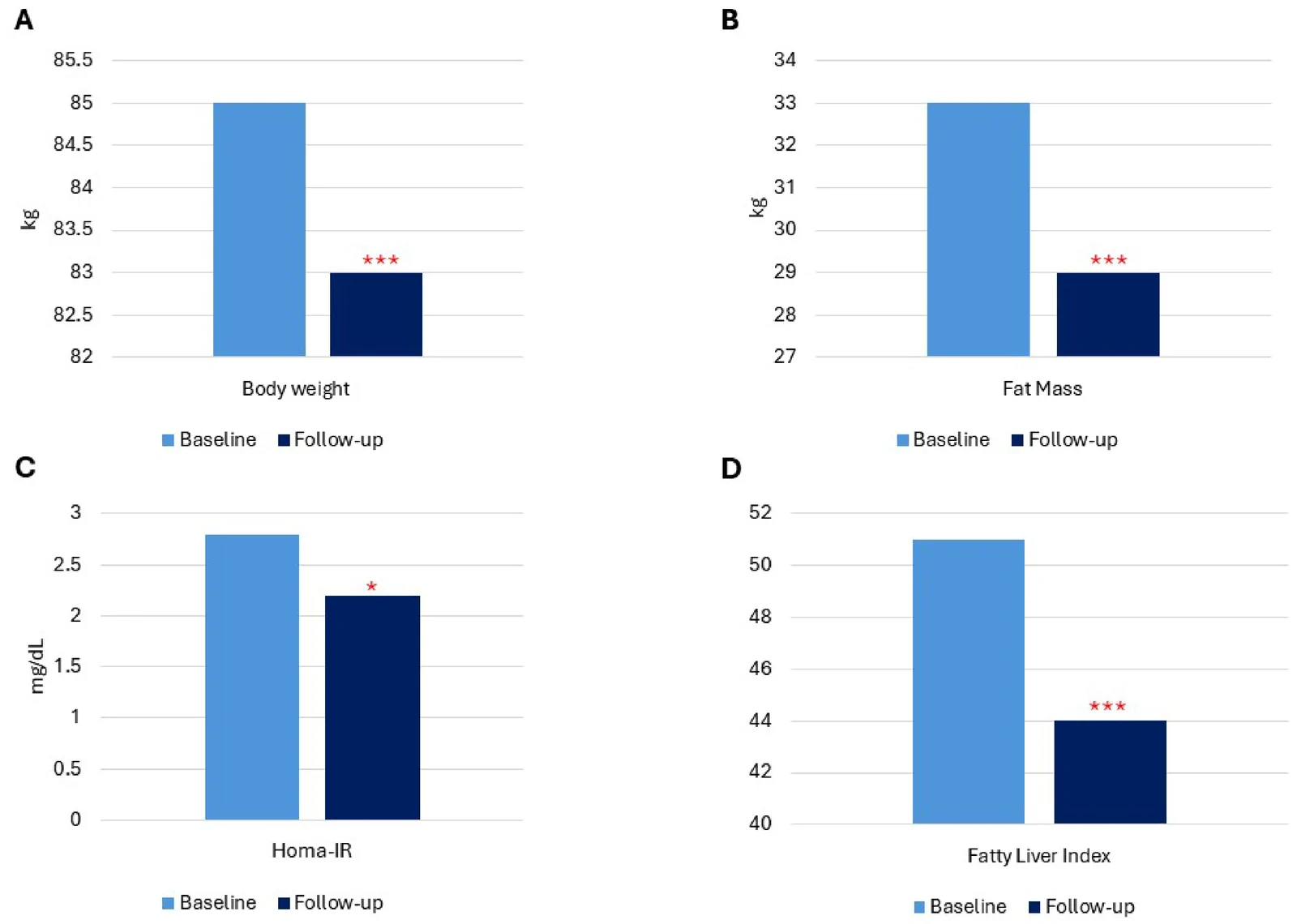
Background/Objectives: Overweight and obesity are major drivers of cardiometabolic dysfunction and increase the risk of type 2 diabetes (T2DM)and cardiovascular disease. Although lifestyle intervention remains the cornerstone of treatment, complementary strategies may provide additional benefits. The effects of Glucoerb® and Epavin®, administered individually or in combination, on cardiometabolic health in adults with overweight or obesity remain poorly characterized. Methods: In this prospective real-world study, 150 adults received Glucoerb® (n = 50), Epavin® (n = 50), or their combination (n = 50), alongside individualized nutritional counselling based on a moderately carbohydrate-restricted Mediterranean diet and standardized physical activity recommendations. Anthropometric, body composition, biochemical, and vascular parameters were assessed at baseline and after 3 months. Results: All groups showed significant improvements in body weight, body mass index (BMI), waist circumference, and fat mass (FM) (all p < 0.001). Glucoerb® supplementation was associated with a significant reduction in HOMA-IR (-21%), whereas Epavin® supplementation improved the lipid profile (total cholesterol -13%, triglycerides-13%, LDL cholesterol -17%, HDL cholesterol +6%). Fatty Liver Index decreased across all groups (Glucoerb® -14%, Epavin® -19%, combination -17%). Combined supplementation was associated with reductions in body weight (-6%) and HOMA-IR (-32%), while endothelial function improved (+19%, p = 0.017). Conclusions: These findings support further investigation of complementary multi-target plant-based strategies for cardiometabolic risk management.
The paper
University of Palermo
Journal of Clinical Medicine, 23 Sep 2026, Open access