A Doubly Robust Approach to Evaluating the Impact of Hospital Length of Stay on Post-Fracture Recovery in Older Adults With Cognitive Impairment
Abstract
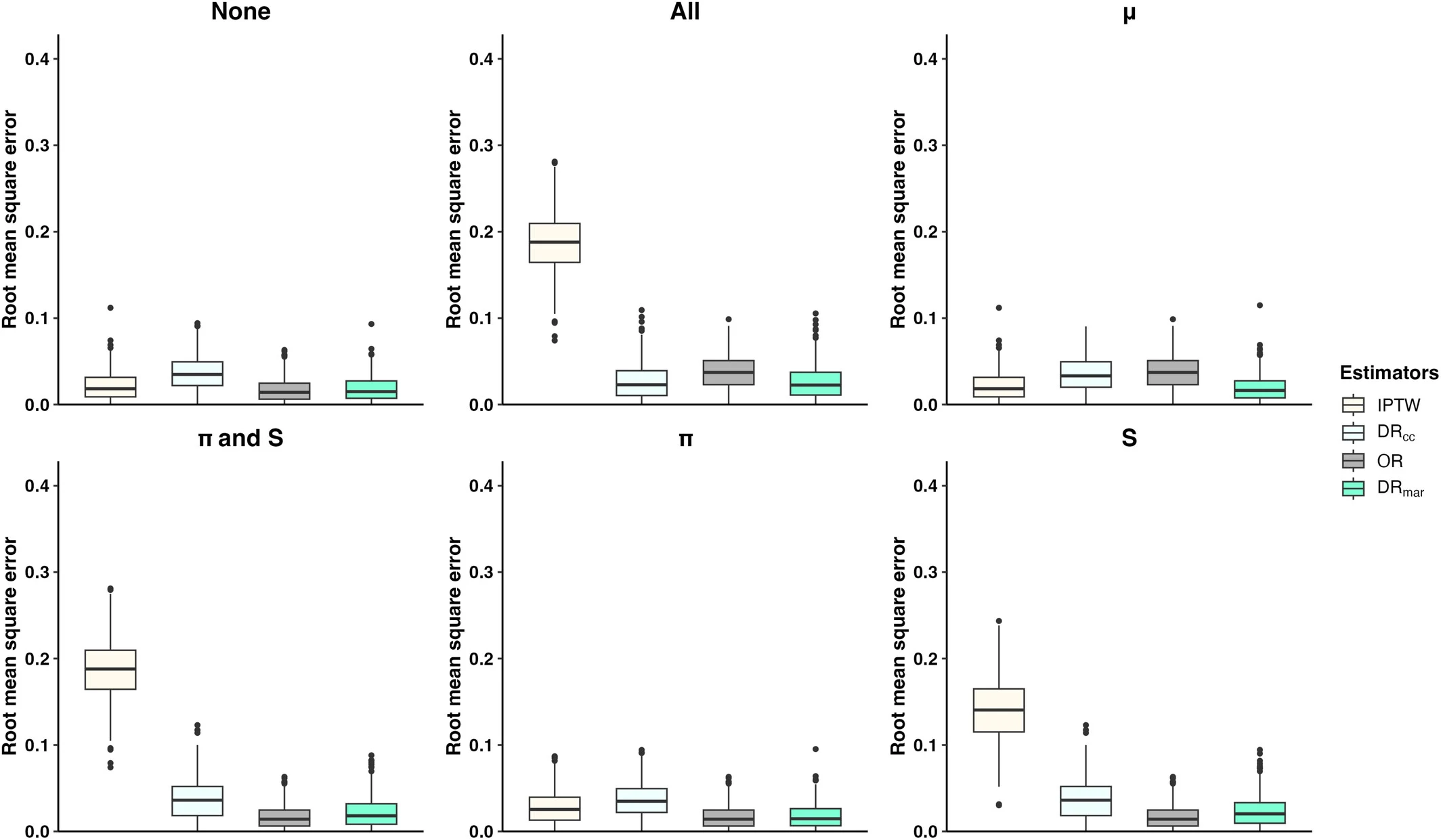
For older adults diagnosed with Alzheimer's Disease and Related Dementias, recovery outcomes after a hip fracture are often poor, with extended hospital stays and prolonged rehabilitation being common. This paper examines the impact of hospitalization on post-discharge outcomes, focusing on the differential effects of hospital length of stay on recovery, measured by the number of healthy days spent at home (DAH). Our analysis faces important analytical challenges, including baseline confounding, missing outcome, and the complexity of assessing a continuous exposure. To address these issues, we develop a doubly robust estimator that accommodates a continuous exposure and accounts for outcome missingness and provides practical guidance for end-users, including diagnostics for conditional density and missing data models and sensitivity analyses for assumption violation. Extensive simulations demonstrate that our method consistently outperforms existing doubly robust method for continuous exposures when outcome data are missing at random. Application to real-world data suggests that hospital stays longer than 20 days are associated with substantially reduced DAH.
The paper
University of Maryland; University of Maryland School of Medicine
Statistics in Medicine, 1 Oct 2026


