Frailty and clinical outcomes in older adults with gynaecological malignancies: A systematic review and meta-analysis
Abstract
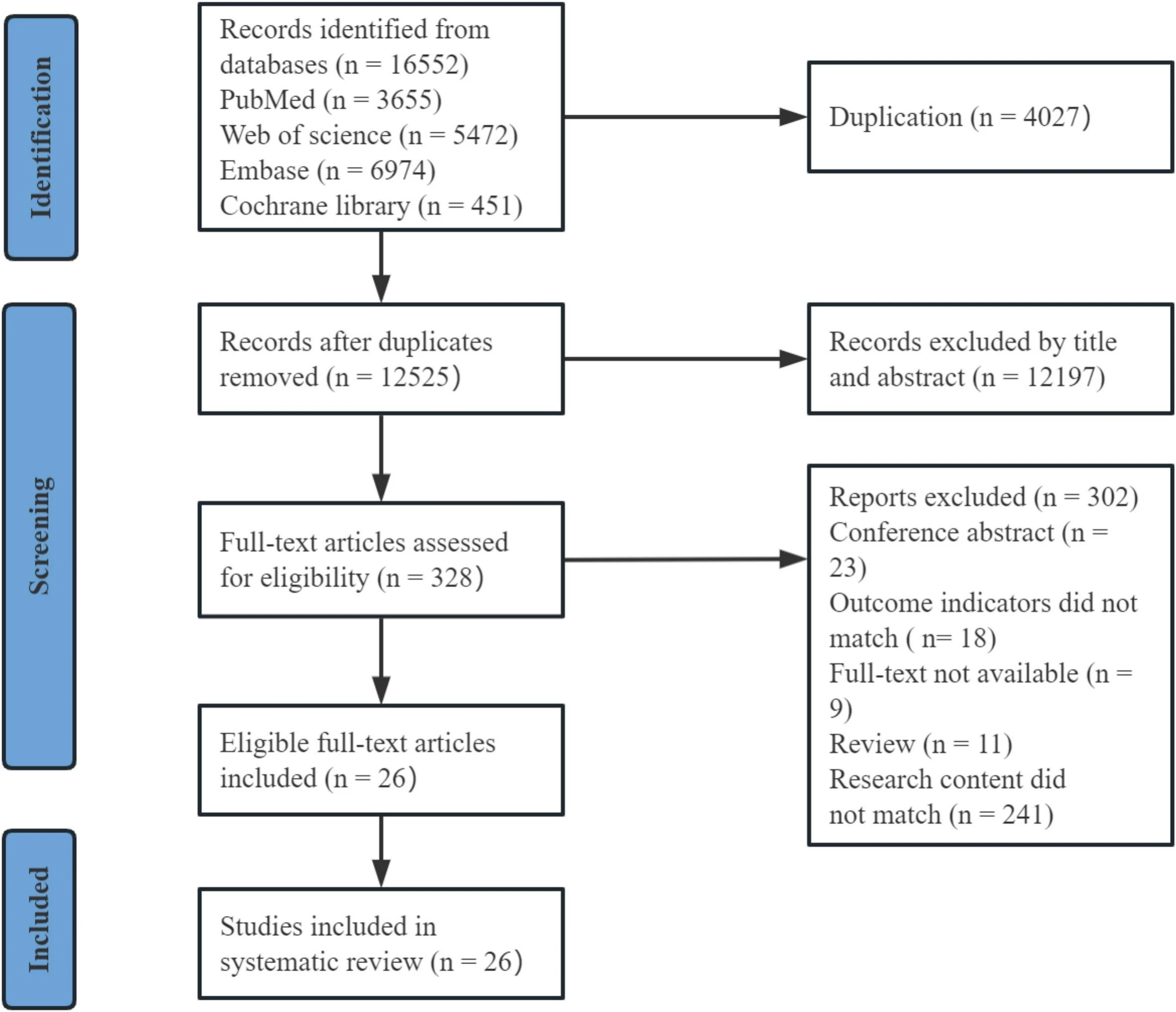
INTRODUCTION: Gynecologic malignancies, including ovarian, endometrial, and cervical cancers, increase in incidence with advancing age. Many women with gynecologic tumors experience varying degrees of frailty, which may accelerate disease progression and adversely affect prognosis. MATERIALS AND METHODS: A systematic search was conducted in PubMed, Web of Science, Embase, and the Cochrane Library, with the search period ranging from the inception of the databases to April 2, 2026. Two researchers independently selected studies based on inclusion and exclusion criteria. The frailty outcome measures were estimated using OR (odds ratio) and 95% CI (confidence intervals). Statistical analysis was conducted using Stata 15.1. RESULTS: This study included a total of 26 articles, involving 34,315 older adults with gynaecological malignancies. The results showed that the prevalence of frailty in older adults with gynecologic malignancies was 26% (19%, 35%). Subgroup analyses showed that frailty prevalence varied by cancer type, tumour stage, region, and assessment tool. The prevalence was 33% in ovarian cancer and 24% in endometrial cancer, and increased from 22% in tumour stage II to 37% in stage IV. Adverse outcomes included a higher incidence of postoperative complications and reduced overall survival. DISCUSSION: This review systematically summarized the prevalence of frailty and its association with adverse outcomes in older adults with gynaecological malignancies, highlighting frailty as a measurable and potentially modifiable clinical indicator. These findings may help optimize diagnostic and treatment strategies and contribute to improving the overall prognosis of older patients with gynaecological malignancies.
The paper
West China Second University Hospital
Journal of Geriatric Oncology, 15 Oct 2026