Frailty linked to higher death risk after surgery and intensive care
Among 5,398 matched patients aged 90 or older, frailty was linked to higher one-year mortality than no frailty, with a hazard ratio of 1.66.
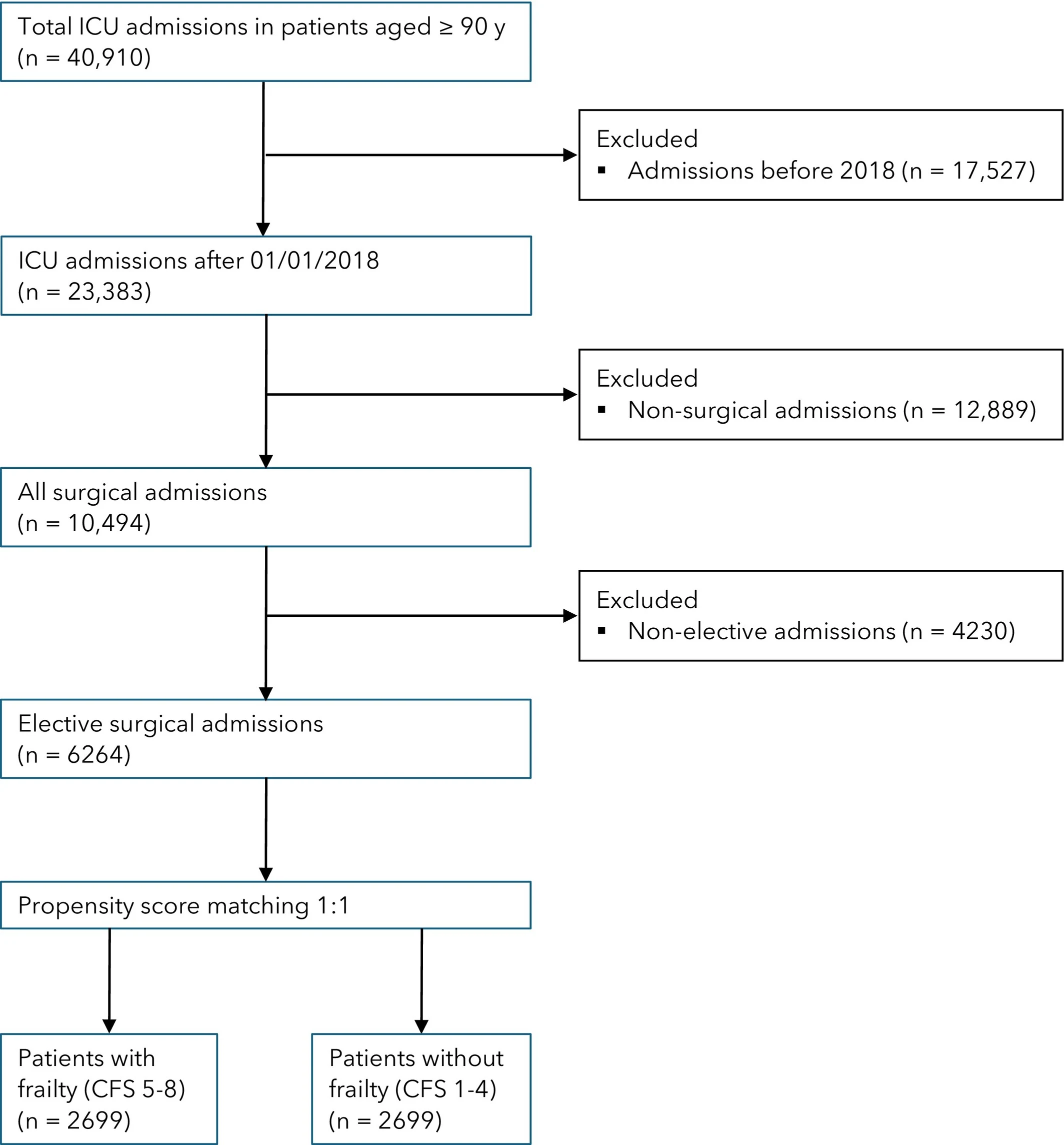
Researchers studied 5,398 matched patients aged 90 or older admitted to intensive care after elective surgery in Australia and New Zealand. This retrospective observational cohort study used registry records. They matched 2,699 patients living with frailty with 2,699 without frailty, balancing age, sex, acute illness severity and other medical conditions. They assessed frailty using a clinical rating scale at intensive care admission.
Frailty was associated with higher mortality in hospital and within one year. The hazard ratio, which compares the rate of death during follow-up, was 1.66 for each outcome. Intensive care mortality was low and did not differ significantly between groups. Patients living with frailty had longer hospital stays and more postoperative complications. Those without frailty had higher odds of returning to their previous residence at discharge.
Why it matters
For people aged 90 or older considering elective surgery, frailty assessment may help guide discussions about risk and personalised care.
Caveats
This observational study cannot show that frailty caused the poorer outcomes. It covered only patients admitted to intensive care after elective surgery, not everyone aged 90 or older undergoing surgery.
From the paper
- Participants
Before matching, a total of 6264 patients (2887 without frailty and 3377 living with frailty) were included (online Supporting Information Table S1).
- Primary outcome
For the primary outcome of 1-year mortality, frailty was associated with elevated risk in the unmatched (HR 1.82, 95%CI 1.63–2.04, p < 0.001) and matched (HR 1.66, 95%CI 1.47–1.87, p < 0.001) cohorts (Table 3).
- Limitation
First, the observational design precludes causal inference and residual confounding from unmeasured variables, including pre-hospitalisation functional status; cognitive function; nutritional state; and social support, cannot be excluded despite propensity score adjustment.
Quoted word for word from the full text on associationofanaesthetists-publications.onlinelibrary.wiley.com.
The paper
Department of Anaesthesia; Dongguk University Ilsan Hospital
Anaesthesia, 13 Oct 2026