AI could improve video walking analysis in older adults
The correction model could improve agreement with motion capture by an average of 0.082 on a reliability scale, compared with uncorrected video analysis.
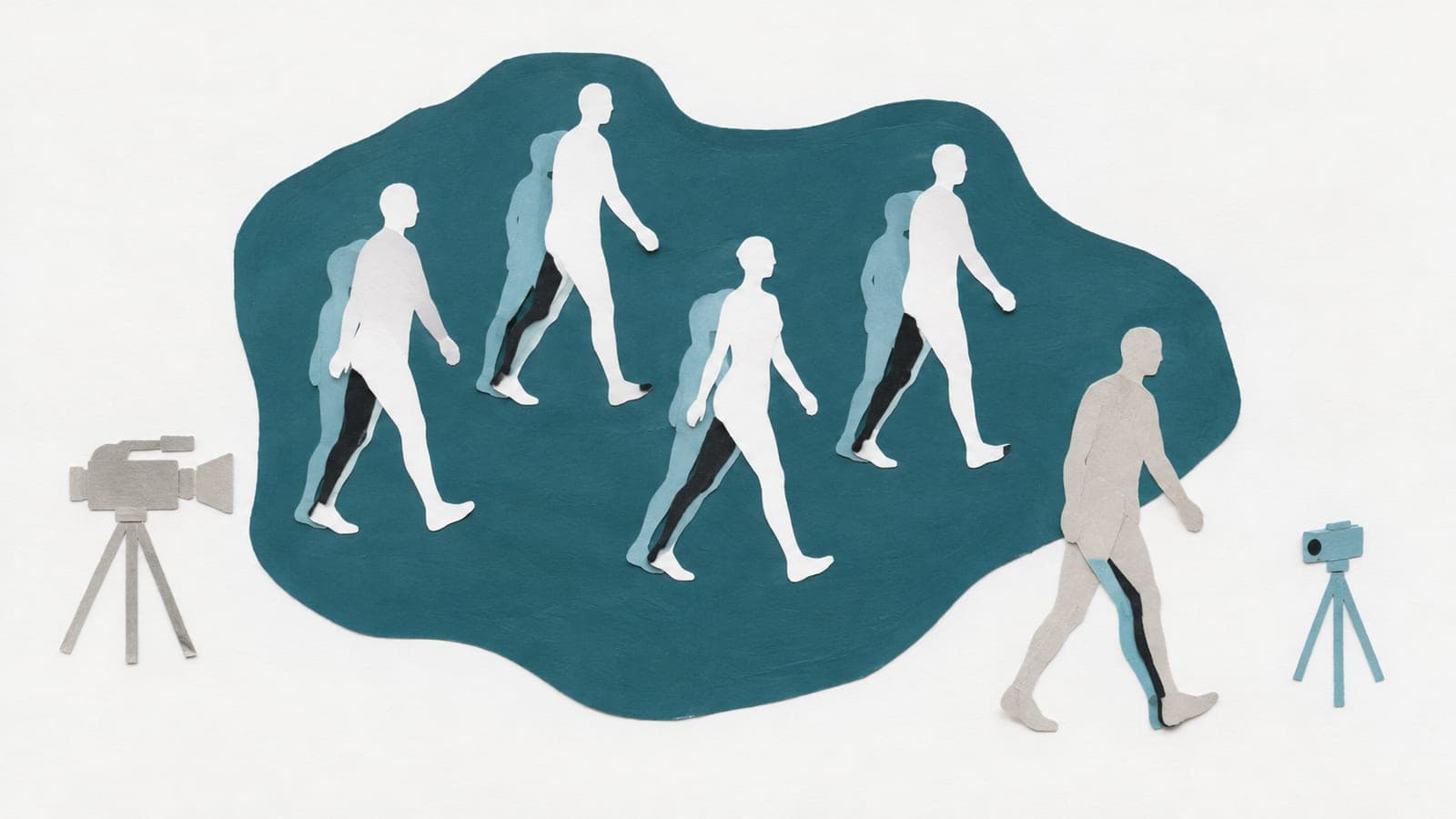
In a model-development and validation study, researchers used walking recordings from 307 healthy older adults to develop an automated method for correcting video-based walking measurements. They evaluated it using recordings from another 126 healthy older adults. The recordings covered walking with and without slips.
The team compared body-segment angles calculated from conventional and corrected video analysis with measurements from a motion-capture system, the reference method. They used a reliability score to measure agreement between the methods. The correction model could improve this score by an average of 0.082 in both walking conditions. After correction, scores ranged from 0.73 to 0.85 during slips and from 0.87 to 0.92 during walking without slips.
Why it matters
Accurate walking measurements matter for assessing mobility and fall risk in older people. Video offers a potentially low-cost, scalable way to make these assessments remotely.
Caveats
This was a measurement-validation study, not a test of whether the method predicts falls. It included only healthy older adults.
The paper
AI-driven correction of video-derived gait kinematics in healthy older adults
IEEE Transactions on Neural Systems and Rehabilitation Engineering, 15 Oct 2026