Colorectal neoplasia detected during colonoscopic surveillance in Li-Fraumeni syndrome: a retrospective case series
Abstract
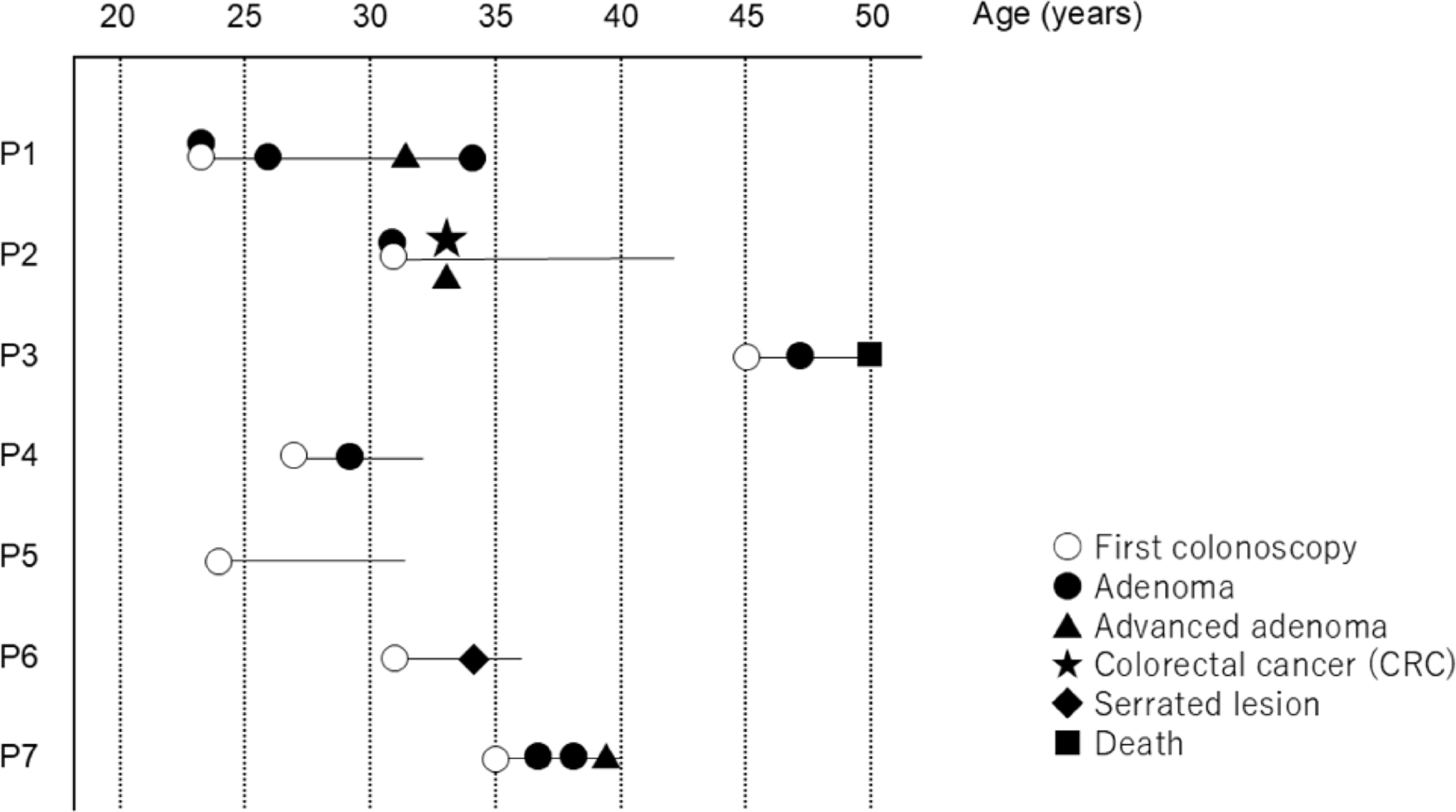
BACKGROUND: Li-Fraumeni syndrome (LFS), caused by germline pathogenic variants in TP53, predisposes affected individuals to multiple early-onset malignancies. Although the risk of colorectal cancer (CRC) is increasingly recognized, evidence regarding colonoscopic surveillance remains limited. CASE PRESENTATION: We present a series of seven genetically confirmed patients with LFS who underwent colonoscopic surveillance at our institution. All patients were women with a history of multiple primary malignancies. Adenomas were identified at the initial colonoscopy in two patients. Among the remaining five patients with negative baseline examinations, four subsequently had colorectal neoplastic lesions detected within 2-3 years. Overall, colorectal neoplasia was detected in five patients, including three advanced adenomas and one CRC diagnosed at 32 years of age. A serrated lesion was observed in one patient. The median age at first detection of colorectal neoplasia was 32.5 years. CONCLUSION: This case series demonstrates that colorectal neoplasia may be detected at a young age in patients with LFS, including within a relatively short interval after a negative colonoscopic examination. These findings underscore the importance of careful and regular colonoscopic surveillance in this high-risk population.
- Colonoscopic surveillance
- Colorectal neoplasia
- Li-Fraumeni syndrome
- Advanced colorectal adenoma
- Colorectal adenoma
- Humans
The paper
Clinical Journal of Gastroenterology, Oct 15, 2026