Comorbidity patterns and their associations with performance status and treatment receipt in breast and colorectal cancers in a multiethnic Asian setting: a latent class analysis
Abstract
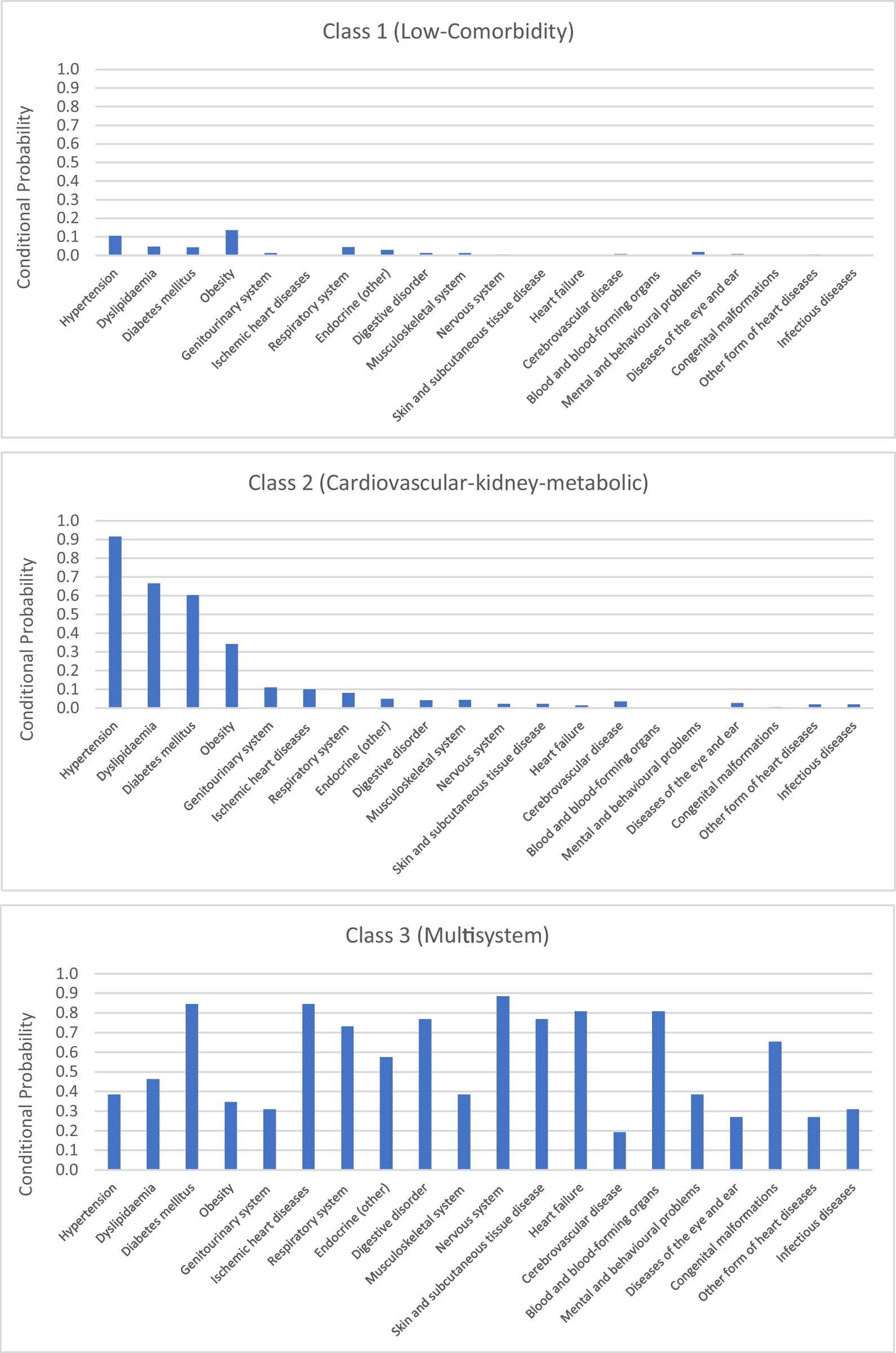
PURPOSE: Comorbidity is usually summarised as a count or index, which treats different combinations of conditions equally. Whether distinct comorbidity patterns have different implications for management decisions in cancer is unclear. We applied latent class analysis (LCA) to identify comorbidity patterns and examined their associations with performance status and cancer treatment in individuals with breast or colorectal cancer. METHODS: Data from two Malaysian cohorts comprising adults with breast or colorectal cancer were analysed. Comorbidities, verified against medical records, were grouped into 20 categories. LCA was used to identify comorbidity patterns. Outcomes included ECOG performance status (0-1 vs ≥ 2) and receipt of treatment (surgery, chemotherapy, radiotherapy, immunotherapy, anti-HER2, CDK4/6 inhibitors, hormone therapy). RESULTS: Among 1117 individuals, 695 (62.2%) had ≥ 1 comorbidity. Hypertension, dyslipidaemia, diabetes and obesity were most prevalent. LCA identified three classes: low (n = 723), cardiovascular-kidney-metabolic (CKM) (n = 368) and multisystem (n = 26). All in the multisystem group and half in the CKM group had modified Charlson Comorbidity Index ≥ 3. The CKM group was older than the low-comorbidity group (62 vs 51 years) but did not differ in performance or treatment status. The multisystem group however had poorer performance status (adjusted odds ratio [aOR] = 4.04, 95%CI = 1.50-10.84), lower odds of receiving chemotherapy (aOR = 0.10, 95%CI = 0.04-0.25) and anti-HER2 therapy (aOR = 0.14, 95%CI = 0.02-0.86). CONCLUSION: Comorbidity patterns revealed differences that counts alone would have missed. The CKM class had similar performance status and treatment receipt to the low-comorbidity class despite cardiovascular and renal comorbidity, highlighting risks not reflected by performance status. The multisystem class requires validation.
The paper
Universiti Malaya
Supportive Care in Cancer, 15 Oct 2026