Breast cancer overdiagnosis due to mammography screening-A long-term follow-up population study of BreastScreen Norway
Abstract
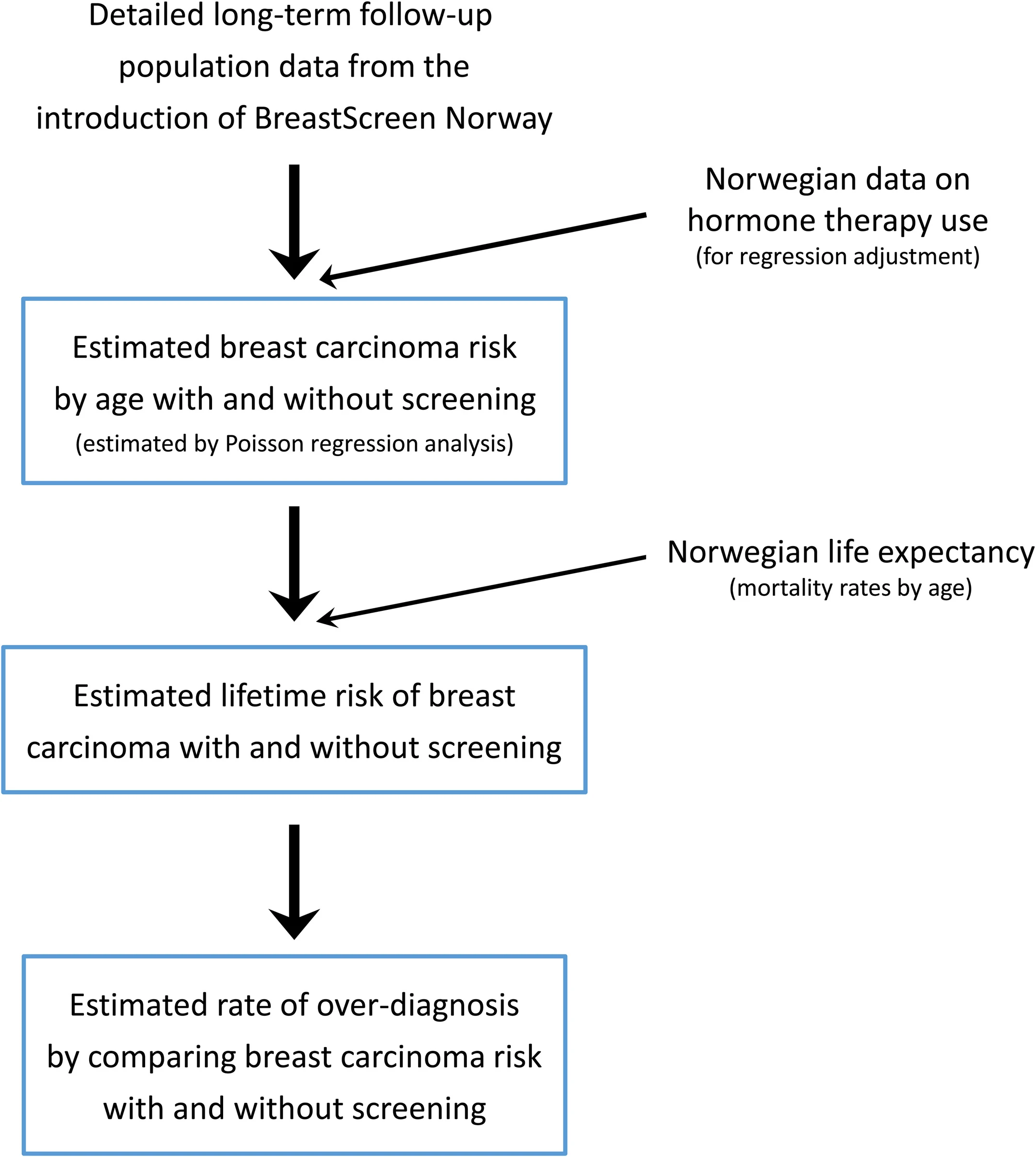
ObjectivesEstimates of breast cancer overdiagnosis related to mammography screening vary substantially. Overdiagnosis is commonly defined as cases that would not have been detected during the person's remaining lifetime in the absence of screening. We here aim to quantify overdiagnosis in the population-based BreastScreen Norway mammography screening program using long-term follow-up and more detailed modeling than previous studies.SettingWe applied data on Norwegian screening patterns and breast carcinoma incidence for the period 1987-2019, covering women aged 49-84, leveraging the gradual implementation of the organized biennial BreastScreen Norway screening program for women aged 50-69 during 1995-2005.MethodsUsing an extended age-period-cohort model, we estimated excess lifetime risk of invasive breast cancer and ductal carcinoma in situ in the presence of program screening, as an indicator of overdiagnosis among screen-detected cases.ResultsLifetime risk of breast carcinomas was 6.6% (95% confidence interval: 2.5%-10.7%) higher for invited than for non-invited women. This indicates that 18% (95% confidence interval: 7.3%-28.0%) of screen-detected cases may be overdiagnosed, and that approximately one in 86 (95% confidence interval: 54-210) screened women were overdiagnosed during their screening period. Using effect estimates from previous studies, we estimated that approximately three women are overdiagnosed for every breast cancer death prevented by screening, and that 87% of overdiagnosed tumors might grow extremely slowly.ConclusionsOverdiagnosis related to mammography screening is a considerable problem, but its extent may be smaller than reported in some previous studies. Most overdiagnosed tumors likely grow very slowly.
The paper
Oslo University Hospital
Journal of Medical Screening, 15 Oct 2026