Printed material speeds healing in diabetic wound models
A robot printed an oxygen-releasing material containing human stem cells onto wounds in diabetic wound models, promoting blood vessel growth and tissue regeneration.
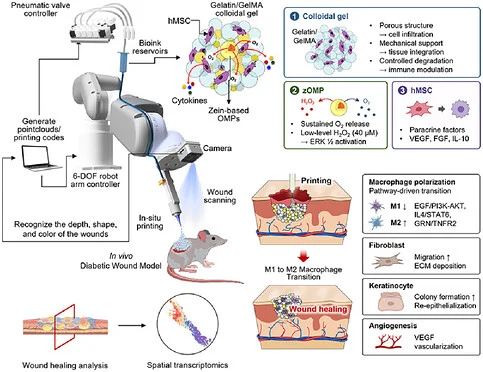
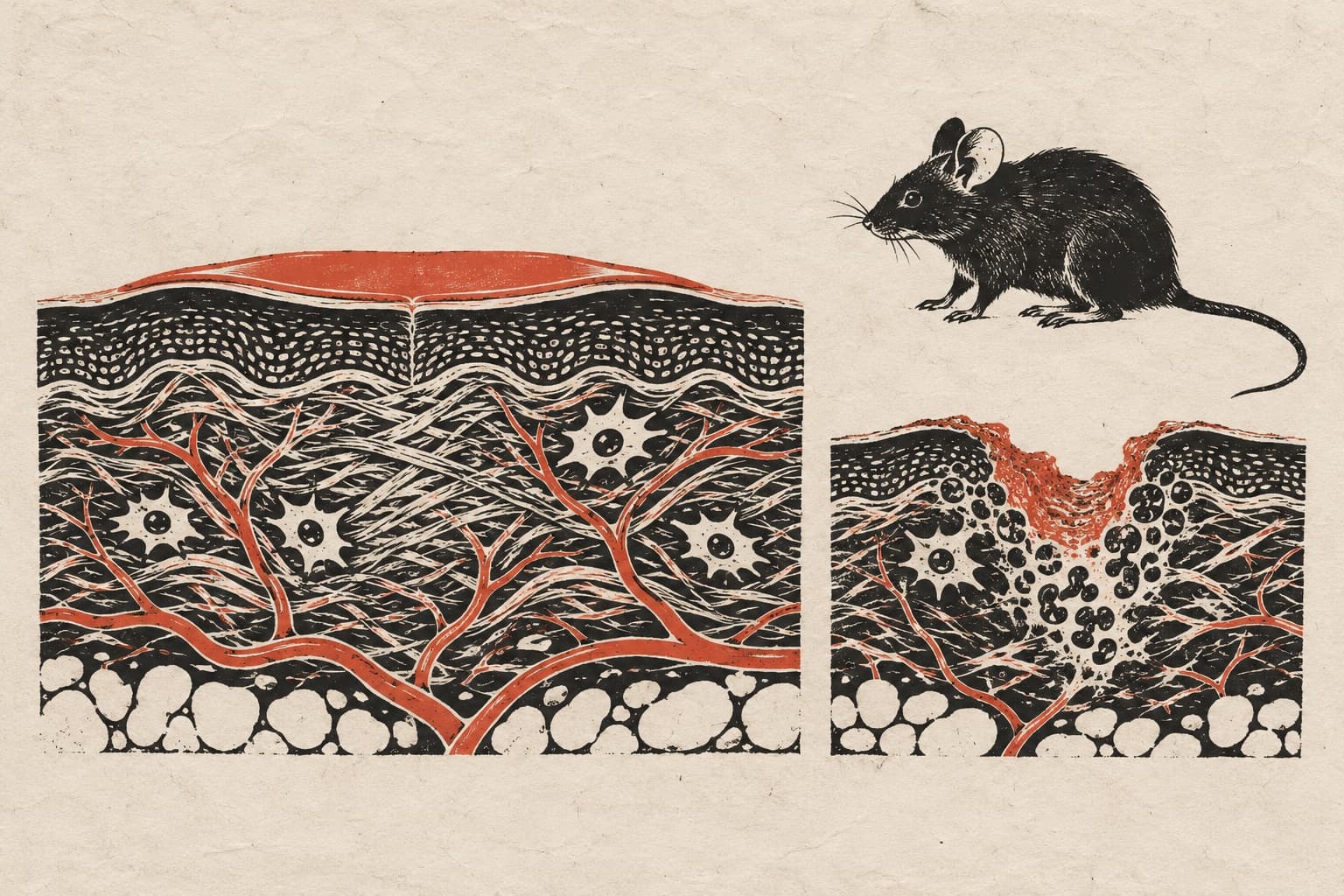
In experiments using diabetic wound models, researchers tested a material that a vision-guided robot printed onto wounds. This printable mixture combined oxygen-generating particles and human stem cells within a porous supporting material. Its sustained oxygen release eased low-oxygen stress and helped the stem cells survive.
The printed material promoted blood vessel formation, sped wound closure and improved tissue regeneration. Researchers also mapped gene activity across different wound areas. They identified a shift in macrophages, immune cells, from inflammation-promoting states towards repair-supporting states. This shift was associated with the combined contributions of oxygen control and signals released by the stem cells.
Why it matters
For aging research, chronic diabetic wounds raise the question of how to support tissue repair when inflammation persists. The study explored a way to guide immune responses towards regeneration.
Caveats
The abstract did not specify the type of diabetic wound model, so these results cannot be assumed to apply to people. It also did not report the sample size or study duration.
- Human mesenchymal stem cells
- Immunomodulatory colloidal bioink
- Angiogenesis
- Hypoxia and HIF signalling
- Chronic diabetic wound
- Humans
The paper
Brigham and Women's Hospital
Advanced Functional Materials, 23 Jul 2026