Exact age linked to more accurate dementia risk predictions
Across three cohorts, age-and-sex models using exact age scored 0.71, 0.78 and 0.75 for prediction accuracy, higher than models using age groups.
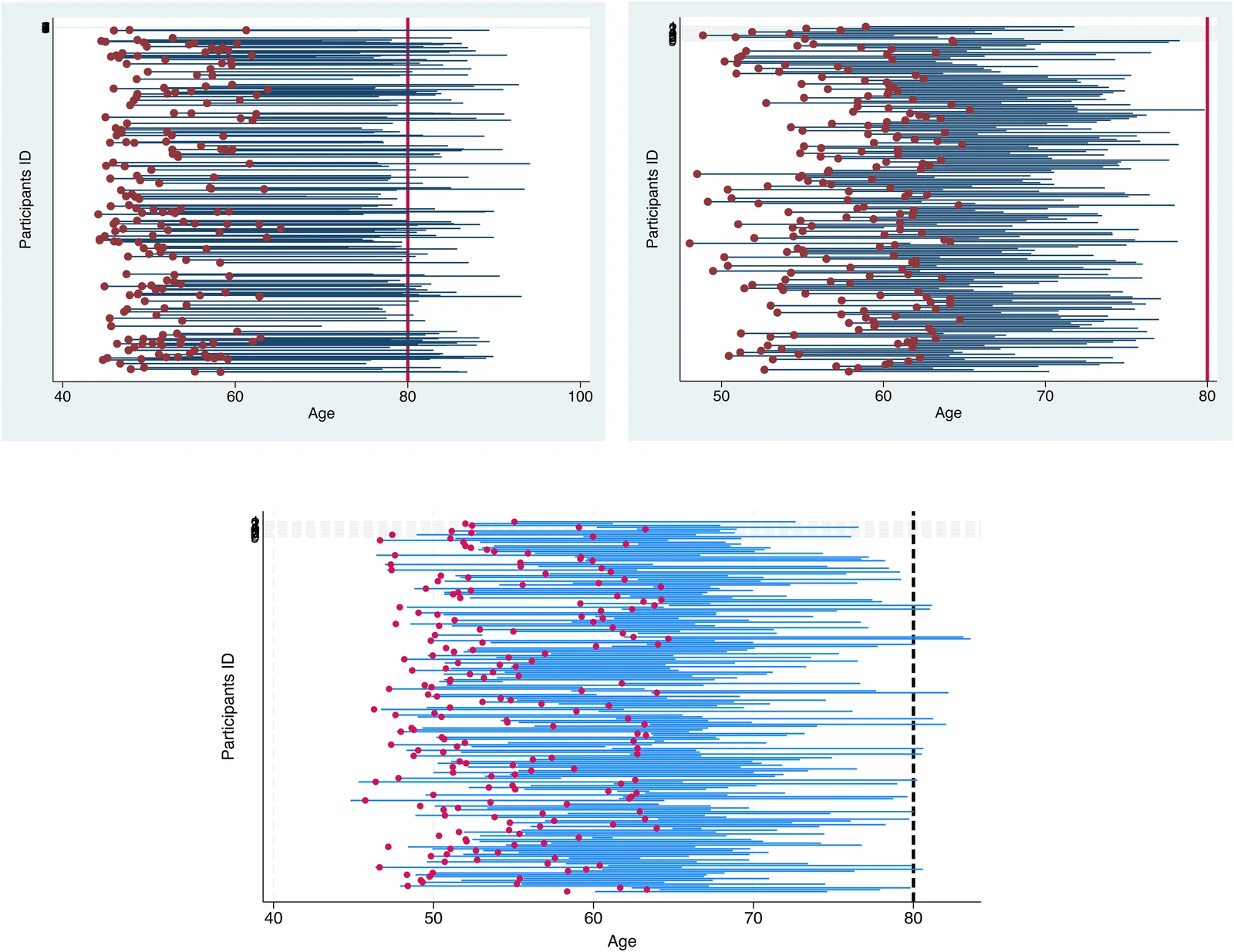
People without dementia at the start of three cohort studies were included in this observational analysis of midlife dementia risk scores. Researchers compared three risk tools and their performance using exact age or age bands.
They measured accuracy by how well models ranked people by dementia risk. Models using age and sex alone performed best with exact age. Age bands gave lower accuracy scores. Without age, the three risk scores performed similarly in each cohort. Shorter follow-up produced higher accuracy estimates, but these were less precise. The findings suggested that age format and the ages represented in a cohort mattered more to performance than the choice of risk tool.
Why it matters
Midlife dementia risk scores aim to support prevention strategies. Fair comparisons matter when deciding which tools may help identify people for risk reduction.
Caveats
This observational analysis assessed prediction, not whether using a score reduced dementia risk. It included only people without dementia at baseline.
The paper
UNSW Sydney
Journal of Alzheimer's Disease Reports, 14 Aug 2026, Open access