Association between different types of tea consumption frequency and sleep quality with cognitive function among older adults in Qingdao rural area
Abstract
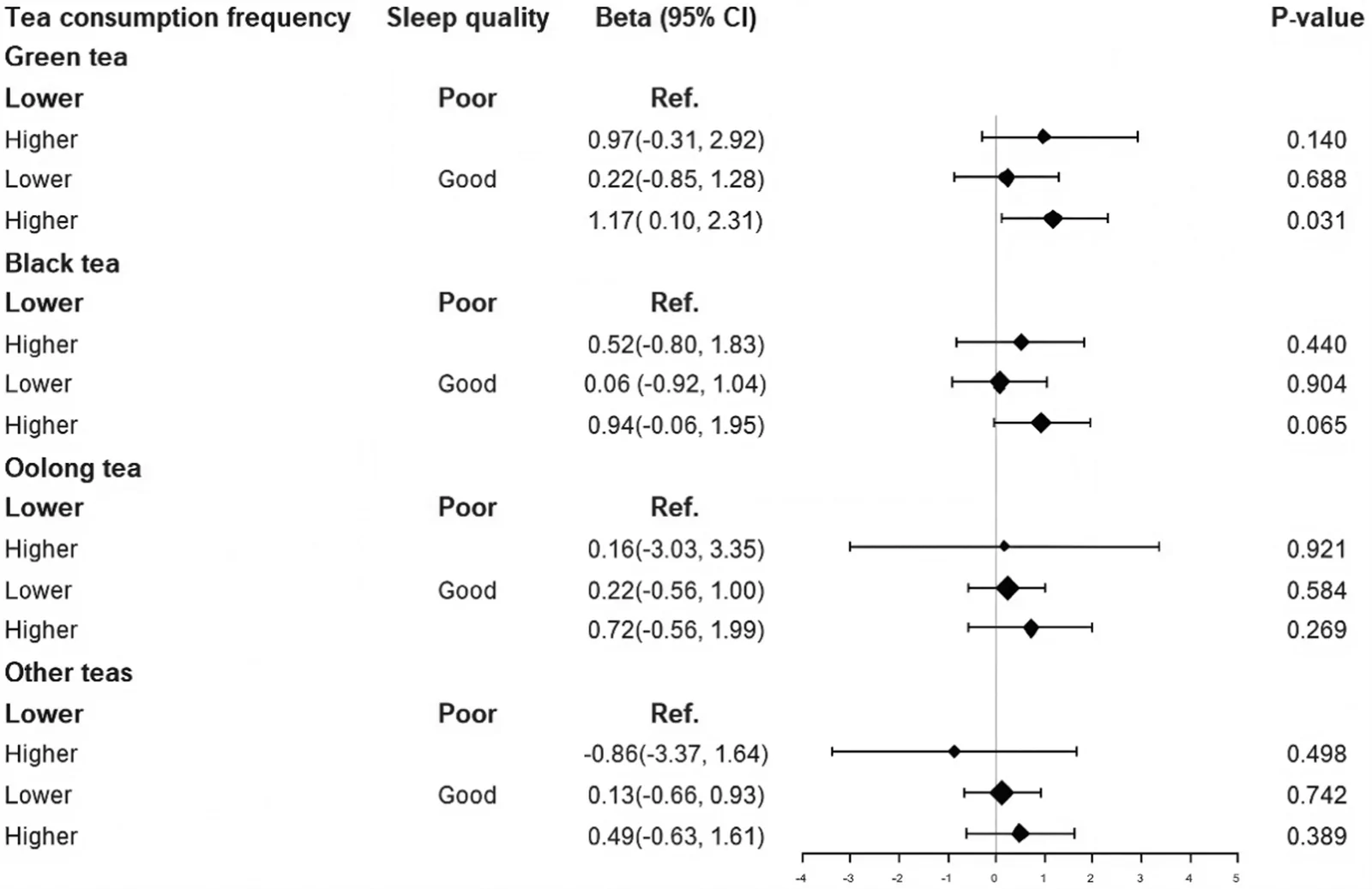
BACKGROUND: Previous studies have shown that tea consumption frequency or sleep quality is independently associated with cognitive function, but the combined association remains unclear. OBJECTIVE: To investigate the individual and combined associations between tea consumption frequency and sleep quality with cognitive function and analyze whether this association is modified by gender and age. METHODS: The cross-sectional study involved 646 participants from 17 villages in Jimo District, Qingdao, in 2022. Data on tea consumption frequency were collected via a questionnaire. Cognitive function and sleep quality were assessed through the Montreal Cognitive Assessment and Pittsburgh Sleep Quality Index, respectively. Linear regression models were used to analyze associations, with a combined variable for tea consumption frequency and sleep quality constructed to evaluate their combined association. Stratified analysis and interaction tests assessed the moderating effects of gender and age. RESULTS: Higher consumption frequency of green tea (β (95% CI): 0.97 (0.23, 1.70)) or black tea (β (95% CI): 0.78 (0.08, 1.48)) was positively associated with cognitive function. Moreover, higher consumption frequency of green tea combined with good sleep quality was significantly associated with optimal cognitive function (β (95% CI): 1.17 (0.10, 2.31)). Stratified analysis revealed no significant modifying effects of gender or age on the aforementioned associations. CONCLUSION: Increased consumption frequency of green tea, alongside maintaining good sleep quality, is associated with enhanced cognitive function. These findings highlight the value of modifiable lifestyle factors in promoting cognitive health.
The paper
Qingdao University
Journal of Alzheimer's Disease Reports, 21 Aug 2026, Open access