Tai Chi linked to gains in mild cognitive impairment after menopause
Over 12 weeks, cognitive test scores improved by an estimated 4.95 points more with Tai Chi than with health education.
12 weeks, registered ChiCTR2300068871
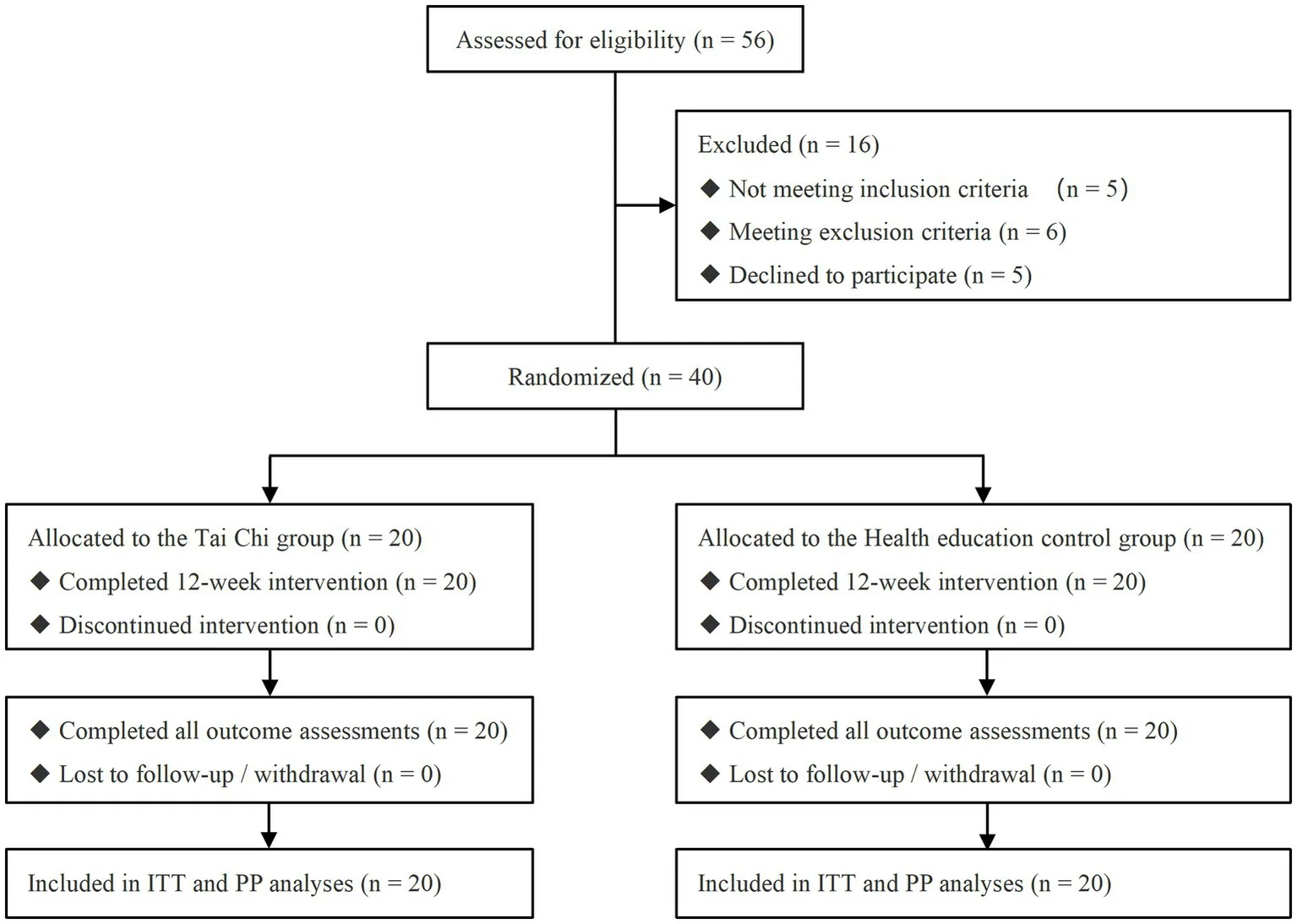
Forty postmenopausal women with mild cognitive impairment, meaning mild problems with memory or thinking, took part in an exploratory randomised controlled trial in Fuzhou, China. Researchers assigned them to 12 weeks of supervised Tai Chi or health education. Participants knew which group they were in.
The Tai Chi group showed greater improvement on the Montreal Cognitive Assessment, a test of thinking and memory. Improvements included delayed recall, attention and skills used to interpret visual information and plan tasks. Tai Chi was also associated with greater increases in blood flow through the brain, more favourable blood measures related to blood vessel function, and greater reductions in circulating markers related to Alzheimer’s disease. No intervention-related adverse events occurred.
Why it matters
Blood vessel dysfunction may contribute to cognitive vulnerability after menopause. The trial explored whether a non-drug approach could support both cognitive function and the brain’s blood supply.
Caveats
Participants knew their assigned group, and this exploratory trial included only 40 women at one centre. The findings do not establish lasting benefits or prevention of Alzheimer’s disease.
- Tai chi
- Nitric oxide–cGMP signalling
- Mild cognitive impairment
- Montreal Cognitive Assessment
- Amyloid-beta 1-42
- Humans
The paper
The Second Affiliated Hospital of Fujian University of Traditional Chinese Medicine
Frontiers in Aging Neuroscience, 25 Sep 2026