Older mouse muscle may switch less readily between RNA versions
Long-read RNA sequencing detected switching in 19 genes in overloaded adult mouse muscle, compared with none in overloaded aged muscle.
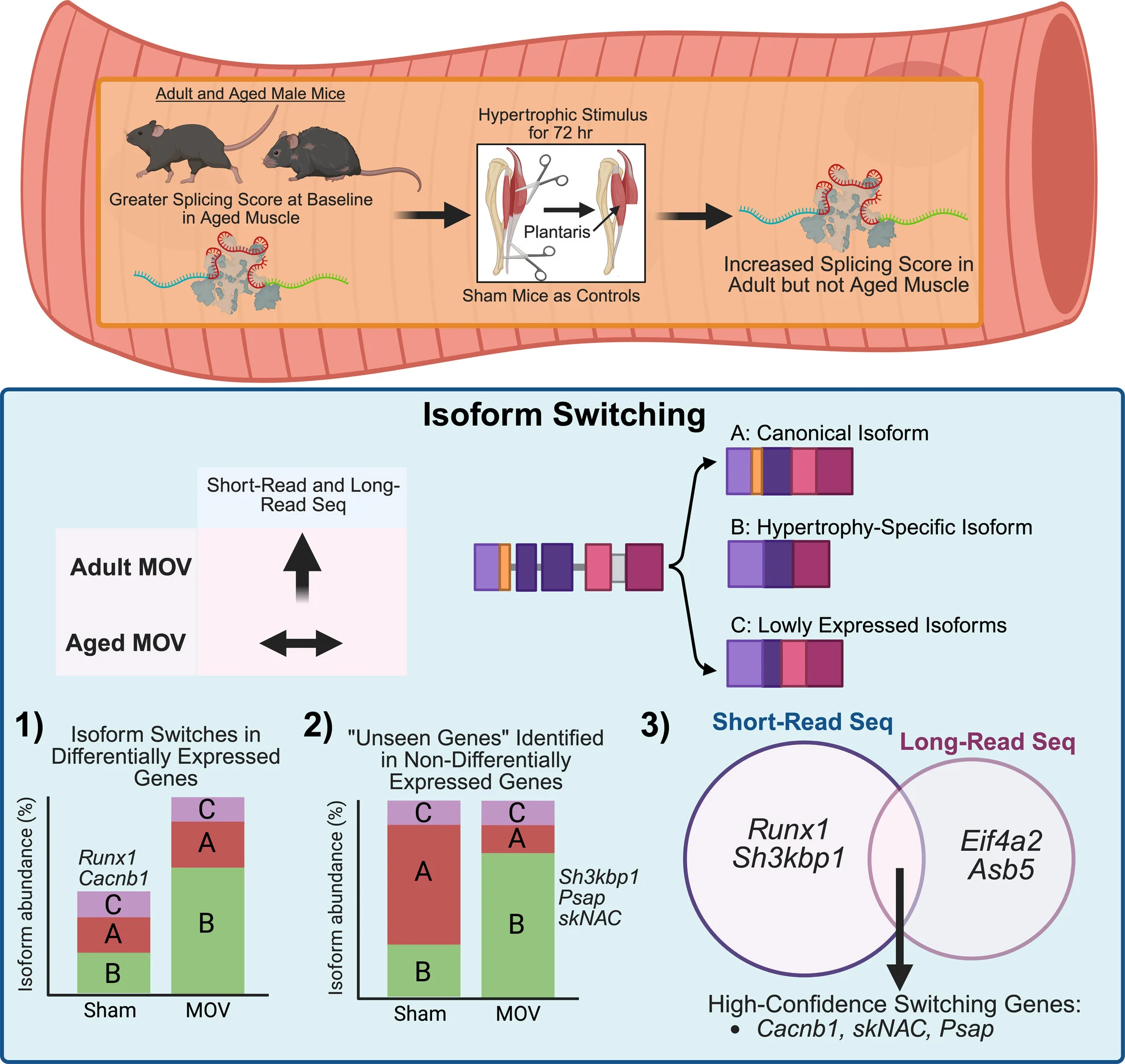
In an experiment in adult and aged mice, researchers mechanically overloaded skeletal muscle and compared it with muscle from sham procedures. They used two RNA-sequencing methods to examine isoforms, different RNA versions made from the same gene. Cells can produce these versions by joining RNA sections in different ways.
The short-read method identified hundreds of genes with switching between versions in overloaded adult muscle relative to sham controls, but only 37 in overloaded aged muscle. The long-read method identified 19 genes with switching in overloaded adult muscle and none in overloaded aged muscle. Some genes switched versions without a corresponding change in their overall activity. The findings suggested that aged muscle had a reduced, or possibly delayed, ability to switch RNA versions in response to mechanical stress.
Why it matters
Muscle becomes less able to adapt to increased loads with age. Studying RNA versions may help uncover molecular processes involved in that reduced adaptability.
Caveats
This was an acute muscle-overload experiment in mice, not a study of people or long-term muscle adaptation. Less switching in aged muscle could reflect a delayed response.