Some flame retardants linked to type 2 diabetes in retired adults
Each twofold rise in blood triphenyl phosphate, a flame-retardant chemical, was associated with 6% higher odds of type 2 diabetes.
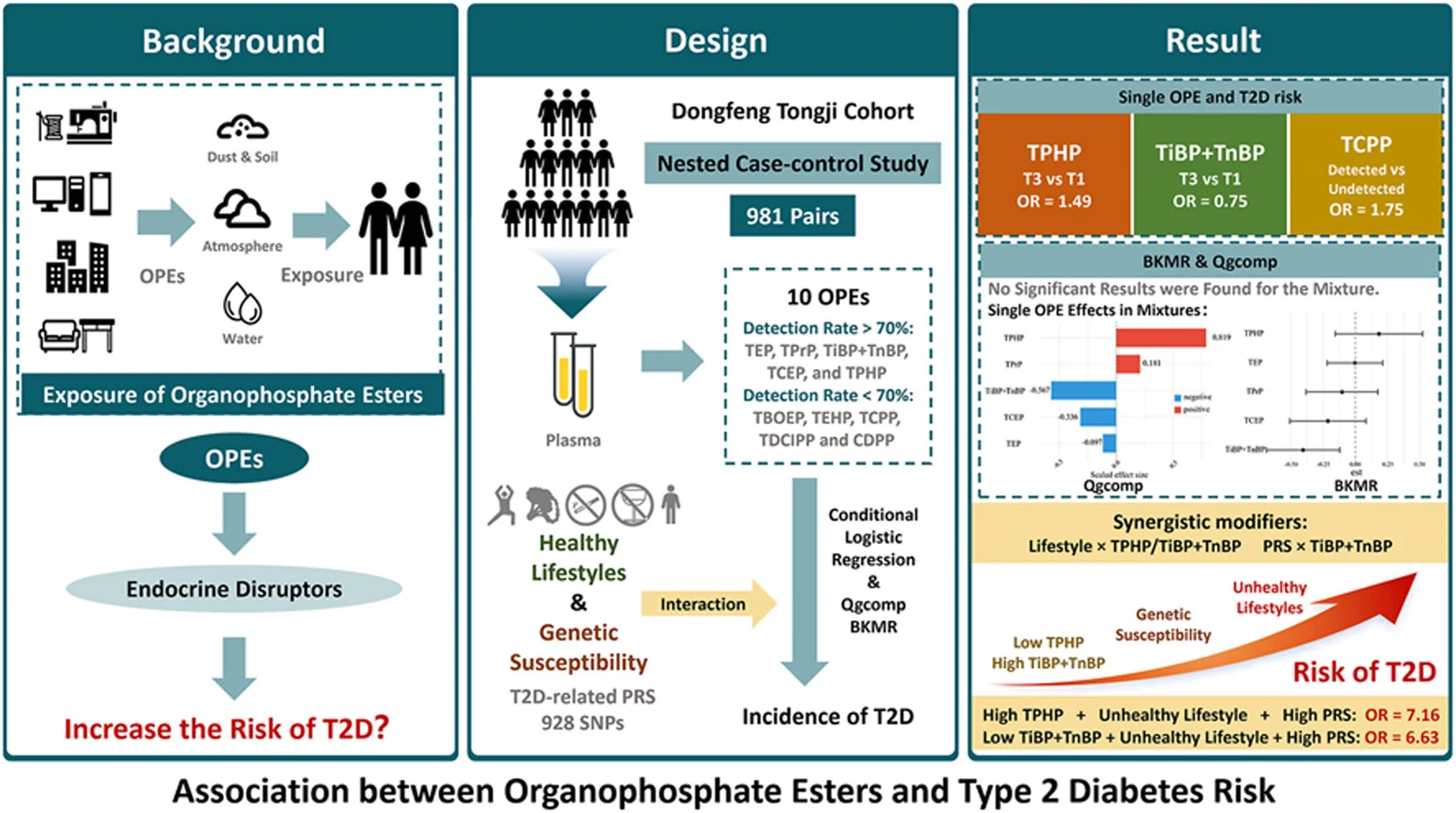
Retired adults in this observational study had a median age of 62. The nested case-control study included 981 pairs of people who developed type 2 diabetes and controls matched by age and sex. Researchers measured 10 chemicals used as flame retardants and plastic additives in blood samples taken at the start. Follow-up averaged 4.6 years.
People in the highest third for triphenyl phosphate had 49% higher odds of diabetes than those in the lowest third. For two other chemicals measured together, the highest third was associated with lower odds than the lowest third. The overall chemical mixture had no statistically significant association with diabetes.
Why it matters
For type 2 diabetes in later life, the authors suggested that a healthy lifestyle may offset chemical and genetic effects.
Caveats
This observational study cannot show that the chemicals caused diabetes or that a healthy lifestyle counteracted their effects. The findings concern retired adults, and chemical measurements came from baseline blood samples.
- Triphenyl phosphate
- Organophosphate esters
- Tri-isobutyl phosphate
- Type 2 diabetes
- Plasma organophosphate esters
- Humans
The paper
Tongji Medical College
Environmental Research, 14 Oct 2026