Fine particle air pollution linked to higher dementia risk
In a prospective cohort followed for a median 11.9 years, 5,648 dementia cases were linked to particle pollution from domestic, transport and industrial sources.
11.9 years
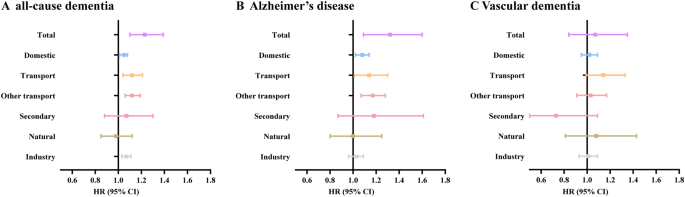
In a prospective cohort study of people followed over a median of 11.9 years, researchers identified 5,648 cases of incident all-cause dementia. They analysed long-term exposure to PM2.5, fine airborne particles, separated by where the pollution originated.
For an interquartile range increase in exposure, the adjusted hazard ratio for dementia was 1.05 for domestic sources, 1.12 for transport, 1.12 for other transport, and 1.07 for industry. Participants who had high particle exposure alongside high genetic susceptibility had about 236% to 352% greater risk of dementia compared to those with the lowest pollution exposure and lowest genetic risk. The researchers observed a similar joint pattern between source-specific particles and lifestyle factors.
Why it matters
Dementia is a leading contributor to cognitive impairment and loss of independence in older age. Identifying which pollution sources present the greatest risk may help shape targeted environmental strategies and prevention approaches to protect aging brains.
Caveats
Because this was an observational study, the findings establish statistical links but cannot establish that air pollution causes dementia. The analysis also relies on constructed genetic and lifestyle risk scores that may not capture every individual influence.
The paper
Tongji Medical College
European Archives of Psychiatry and Clinical Neuroscience, 9 Oct 2026