CDH1 germline carriers and diffuse gastric Cancer: Are we ready for personalized surveillance and prevention?
Abstract
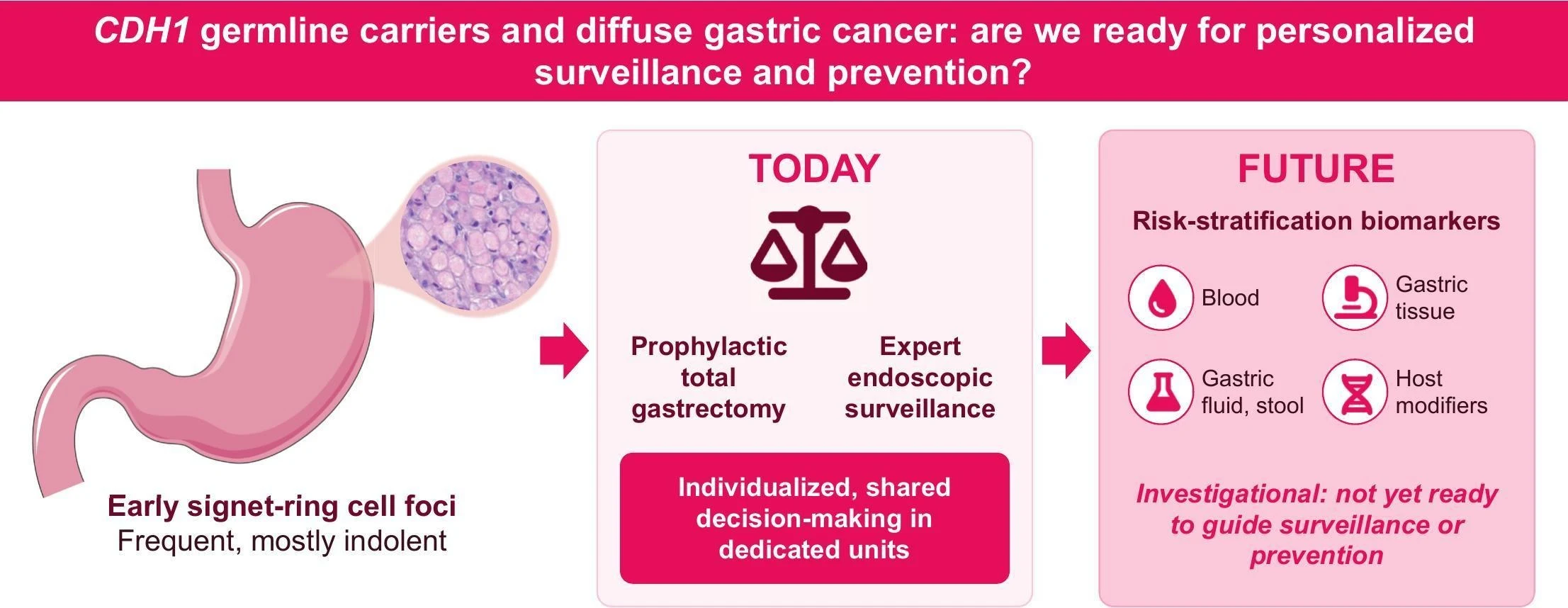
Hereditary diffuse gastric cancer (HDGC) caused by germline pathogenic or likely pathogenic variants in CDH1 remains a difficult hereditary cancer syndrome to manage. Prophylactic total gastrectomy has long been considered the most definitive preventive strategy, but recent penetrance estimates, expert endoscopic surveillance cohorts, and better characterization of early signet-ring cell lesions have challenged a uniform approach for all carriers. This narrative review synthesizes current evidence on CDH1-associated gastric cancer risk, testing criteria, mechanisms of carcinogenesis, prophylactic gastrectomy, endoscopic surveillance, and emerging biomarkers for risk stratification. The available data support a more individualized discussion that integrates family history, age, comorbidity, sex-specific cancer risks, patient preferences, and access to expert surveillance. However, current biomarkers remain investigational, and no blood-, stool-, gastric-fluid-, or tissue-based assay is validated to replace surgery or endoscopic surveillance in routine care. At present, personalized management is best understood as structured shared decision-making within specialist centers, rather than fully biomarker-driven prevention. Future progress will require prospective registries, standardized surveillance protocols, molecular endpoints linked to clinical progression, and careful evaluation of quality of life after both surveillance and gastrectomy.
- Endoscopic surveillance
- Prophylactic total gastrectomy
- Gastric cancer
- Hereditary diffuse gastric cancer
The paper
Cancer Treatment Reviews, 9 Oct 2026, Open access