Blood pressure control rose with combined care in Uganda
Among adults with human immunodeficiency virus (HIV), blood pressure control rose from 3.6% at baseline to 36.7% after 12 months of combined care.
Limit: Only intervention participants were analysed, without comparison against the trial’s control group
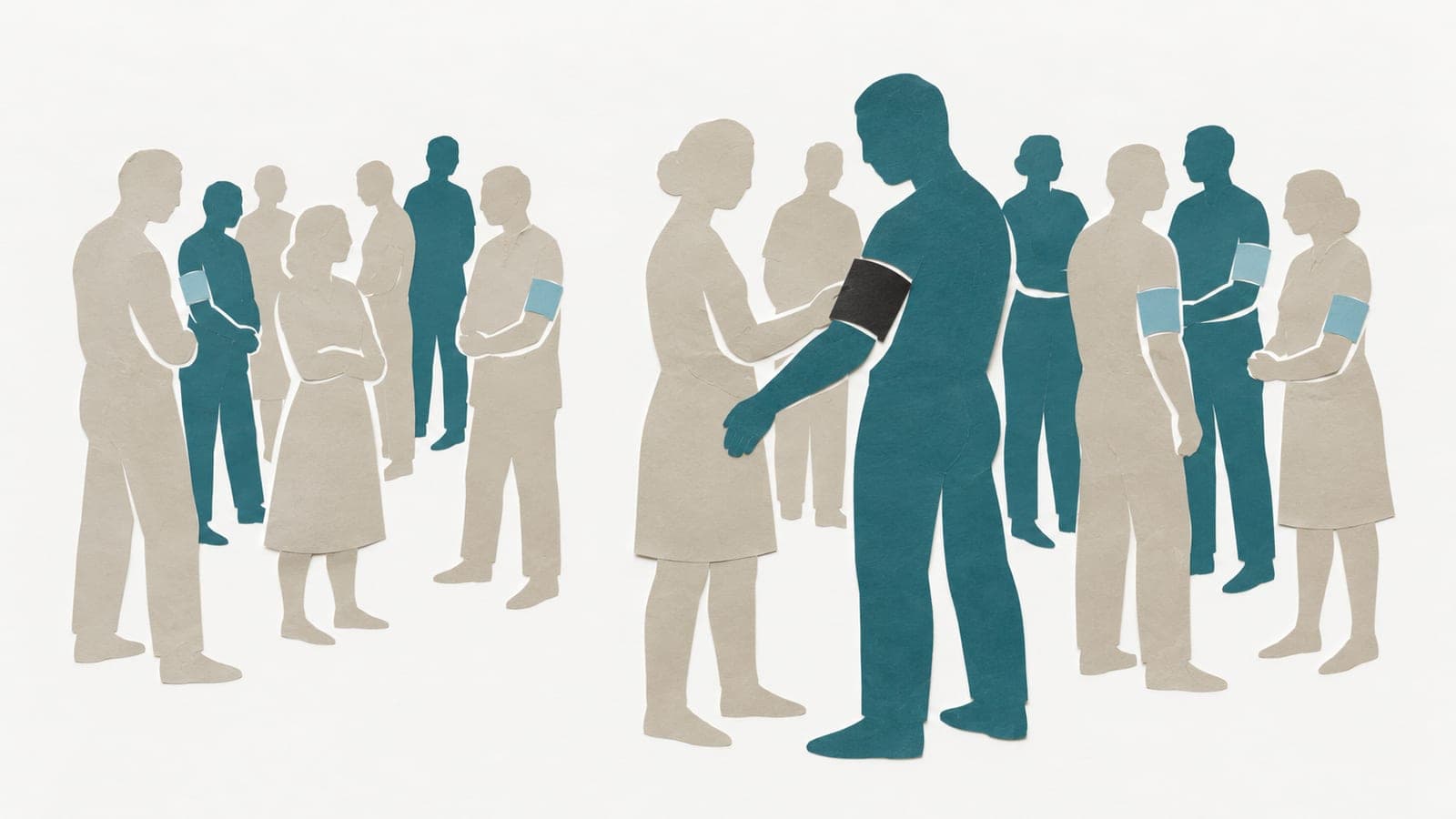
The analysis followed 1,200 adults with HIV and previously diagnosed high blood pressure in rural Uganda; 60% were female and their median age was 49. They received the intervention in a cluster-randomised trial, which assigned groups rather than individuals. The wider trial enrolled adults at 52 health centres in 26 districts. The programme trained health workers to integrate blood pressure care into HIV services, promoted screening and treatment, supplied essential equipment and supplies, and used WhatsApp for coordination.
Researchers defined blood pressure control as a reading below 140/90 millimetres of mercury. Control rose from 3.6% at baseline to 36.7% after 12 months, an increase of 33.1 percentage points. At 12 months, 70% of participants had reduced their blood pressure by at least 10 millimetres of mercury.
Why it matters
Managing high blood pressure is relevant to health in later life. The study addressed whether existing HIV services could also support care for this additional long-term condition.
Caveats
This analysis reported changes only in intervention participants, without a comparison against the trial’s control group. The preprint has not been peer-reviewed, and the findings concern adults with HIV and previously diagnosed high blood pressure in rural Uganda.
The paper
Uganda Management Institute; Infectious Diseases Research Collaboration
Open Res Europe, 12 Oct 2026, Open access, Preprint, not peer-reviewed