Thyroid function and frailty in hospitalized older adults: the role of FT3 and FT3/FT4 ratio
Dose-response
Abstract
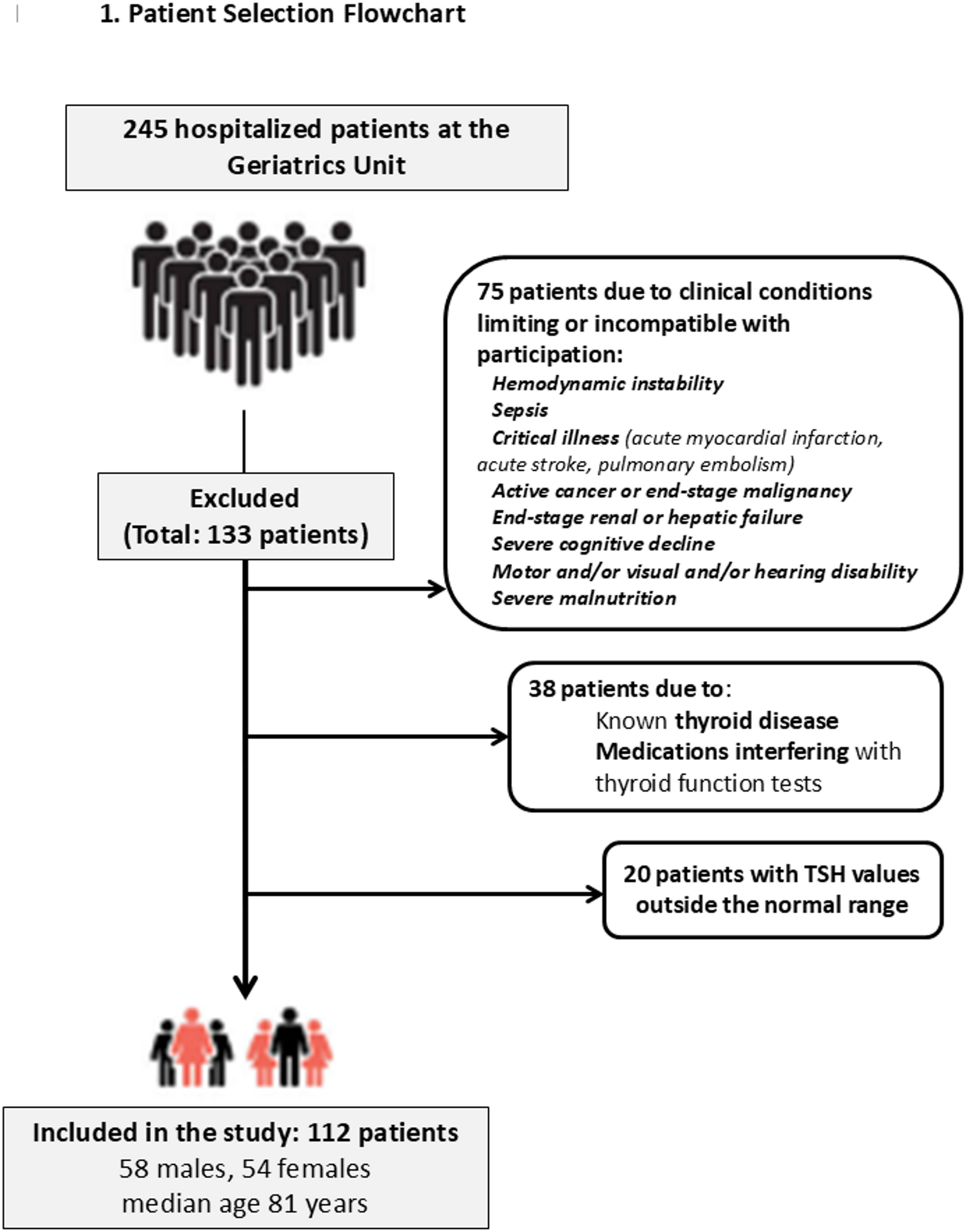
INTRODUCTION: Frailty is a crucial factor in managing older adults, given its strong predictive power for adverse health outcomes. Recent attention has focused on the relationship between frailty and thyroid function, particularly the so-called low T3 syndrome. However, the relationship between frailty and peripheral thyroid hormone metabolism remains under-investigated. METHODS: This cross-sectional study included 112 patients hospitalized in a single-centre geriatric unit. Data on thyroid function, cognitive performance (MMSE), handgrip strength, and comorbidities were collected. Frailty was assessed using the Rockwood Frailty Index (FI), with FI > 0.25 indicating frailty. RESULTS: The study population (58 men, 54 women; median age 81 years) showed mild cognitive impairment (MMSE median 22.0; IQR 18.0-26.3) and reduced handgrip strength (13 kg; 10-20 kg). Median FI was 0.304 (0.196-0.383), and 62.5% of patients were frail. Frail patients were older and had significantly lower MMSE scores, weaker handgrip strength, and poorer renal function. FT3 levels and the FT3/FT4 ratio were significantly lower in frail than non-frail patients (P = 0.001 and P = 0.005, respectively). Increasing FT3/FT4 quartiles were associated with progressively lower FI values and frailty prevalence (P = 0.032 and P for trend = 0.042, respectively). In multivariable analysis, age (P = 0.017), MMSE (P < 0.001), and the FT3/FT4 ratio (P = 0.016) were independently associated with FI. CONCLUSION: Lower FT3 levels and FT3/FT4 ratios were associated with greater frailty in hospitalized older adults. Prospective studies are warranted to validate their clinical utility as biomarkers of frailty.
The paper
University of Messina
Journal of Endocrinological Investigation, 14 Oct 2026