Blood metabolites are linked to frailty in older adults
In people with an average age of 68 at risk of dementia, six of ten metabolite groups in blood plasma tracked with frailty scores.
medRxiv
In an observational study, researchers analysed blood samples from older adults at risk of dementia who had an average age of 68 years, 72.2% of whom were female. Participants attended a clinic for health, thinking, and mood assessments to calculate a frailty index based on accumulated health deficits. Subsets of 118 and 73 participants returned for one or two follow-up visits over an average of four years.
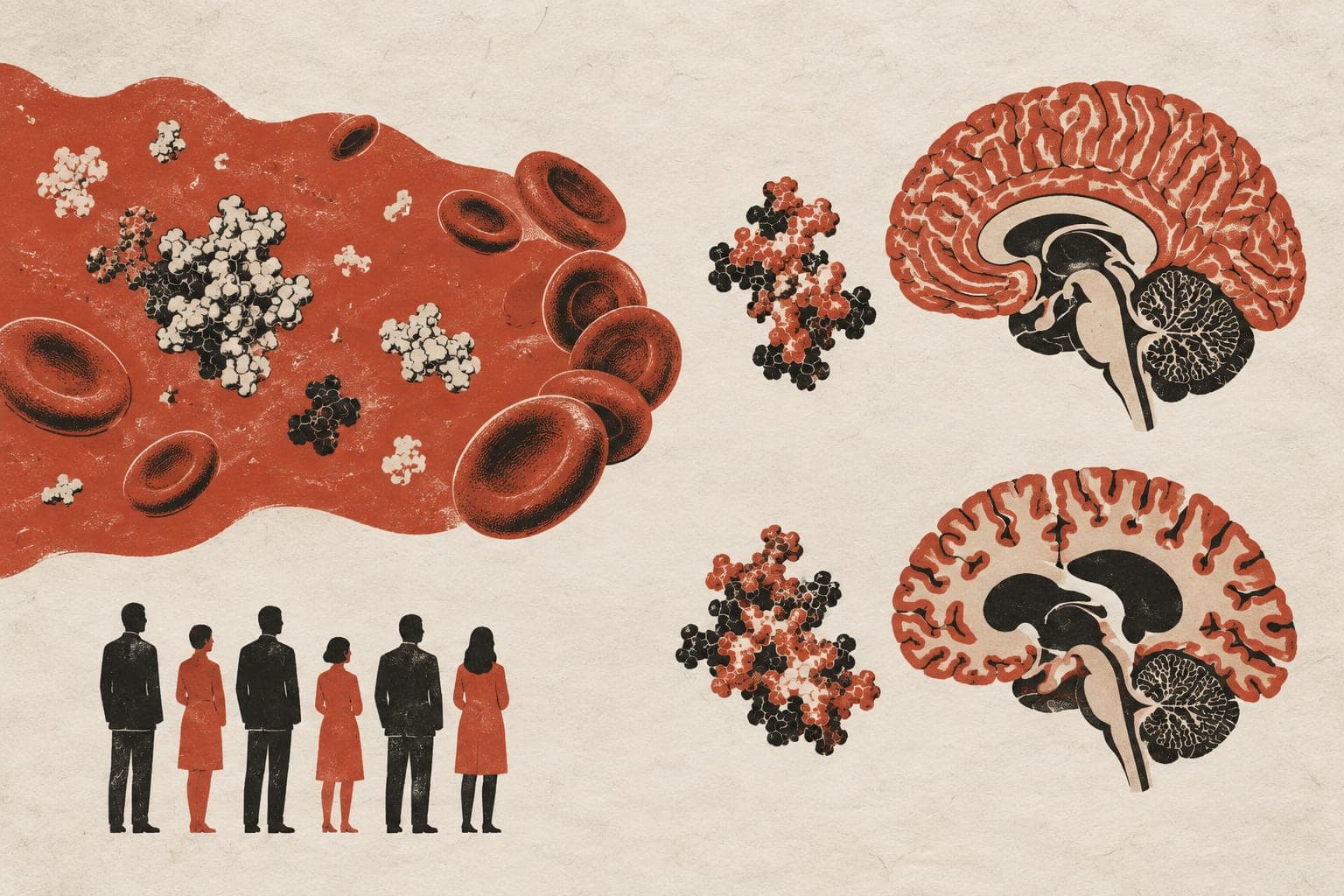
The team grouped plasma metabolites, which are small molecules produced by cellular chemical processes, into ten clusters. Six clusters were linked to baseline frailty scores. The linked groups shared similar classes of molecules, including carboxylic acids, fatty acyls, and lipids. Over time, the severity of frailty influenced how metabolite levels shifted.
Why it matters
Frailty often accompanies cognitive decline in later life. Understanding how energy metabolism shifts as physical resilience declines may help researchers pinpoint biological changes that track with age-related vulnerability.
Caveats
This observational study was released as a preprint and has not yet undergone peer review. Because the work is observational, it cannot establish whether these metabolic differences cause frailty or stem from it.
The paper
Plasma metabolomic profiling of frailty in older adults at risk of dementia
Show 3 more authors
S. E. Deemer, R. J. Mills, S. L. Naismith,University of Technology Sydney
medRxiv · 8 Oct 2026 · CC BY · Preprint, not peer-reviewed