GLP-1 receptor agonists and hair loss: adverse effect, epiphenomenon, or therapeutic paradox?
Abstract
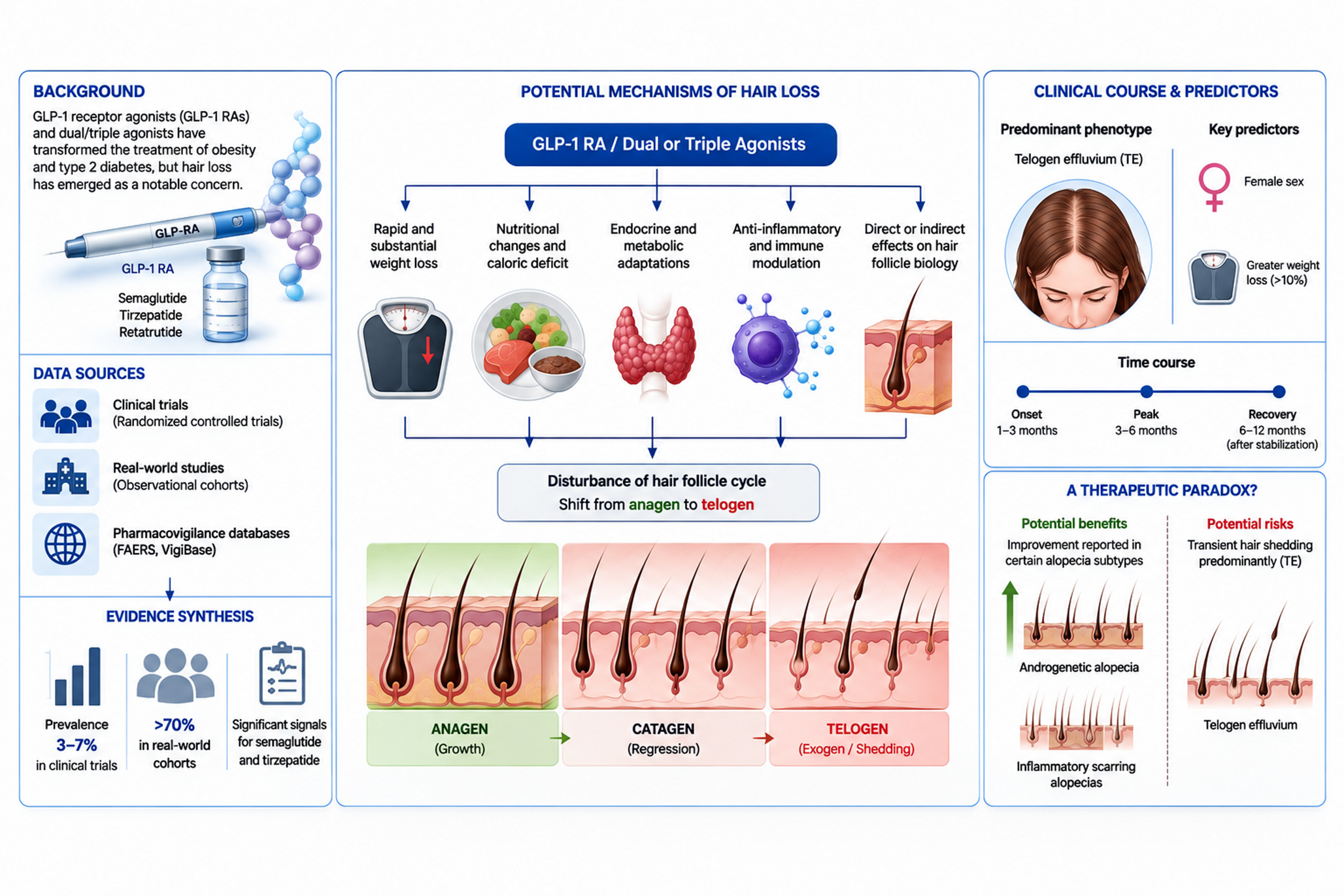
OBJECTIVE: Incretin-based therapies, including glucagon-like peptide-1 receptor agonists (GLP-1 RAs) and dual/triple agonists, have revolutionized the management of obesity and type 2 diabetes. However, hair loss has emerged as an adverse event in clinical practice. This review synthesizes the evidence on the prevalence, mechanistic pathways, and clinical course of hair loss associated with semaglutide, tirzepatide, and retatrutide. METHODS: A narrative review was conducted using the PubMed/MEDLINE database. Data were integrated from clinical trials, real-world observational studies, and pharmacovigilance databases to evaluate the oncological and dermatological implications of these therapies. RESULTS: There is a discrepancy in hair loss prevalence, ranging from 3 to 7% in controlled trials to over 70% in real-world cohorts. Telogen effluvium (TE) is the predominant phenotype, driven primarily by the magnitude and velocity of weight loss rather than drug toxicity. Newer agents like tirzepatide demonstrate stronger associations with hair shedding compared to older GLP-1 RAs. Pharmacovigilance data show inconsistent but significant signals for semaglutide and tirzepatide, with reporting odds ratios indicating a drug-associated risk. Conversely, paradoxical improvements in androgenetic alopecia and inflammatory scarring alopecias have been reported, likely mediated by metabolic normalization and anti-inflammatory effects. Female sex and significant weight reduction (> 10%) were the most robust predictors of hair loss. CONCLUSION: Hair loss associated with incretin-based therapies is a biologically complex, threshold-dependent phenomenon reflecting systemic metabolic reprogramming. While predominantly transient and reversible, its psychological impact can compromise treatment adherence. Clinicians should provide proactive counseling, emphasizing the self-limiting nature of TE in this context while monitoring for diverse follicular responses.
The paper
Htri Clinic; Federal University of Ceará
Acta Diabetologica, 14 Oct 2026