Retatrutide reduces bodyweight in obesity and type 2 diabetes
Bodyweight fell by up to 18.8% with weekly retatrutide compared with 5.1% on placebo at week 80 in adults with obesity and type 2 diabetes.
Lancet
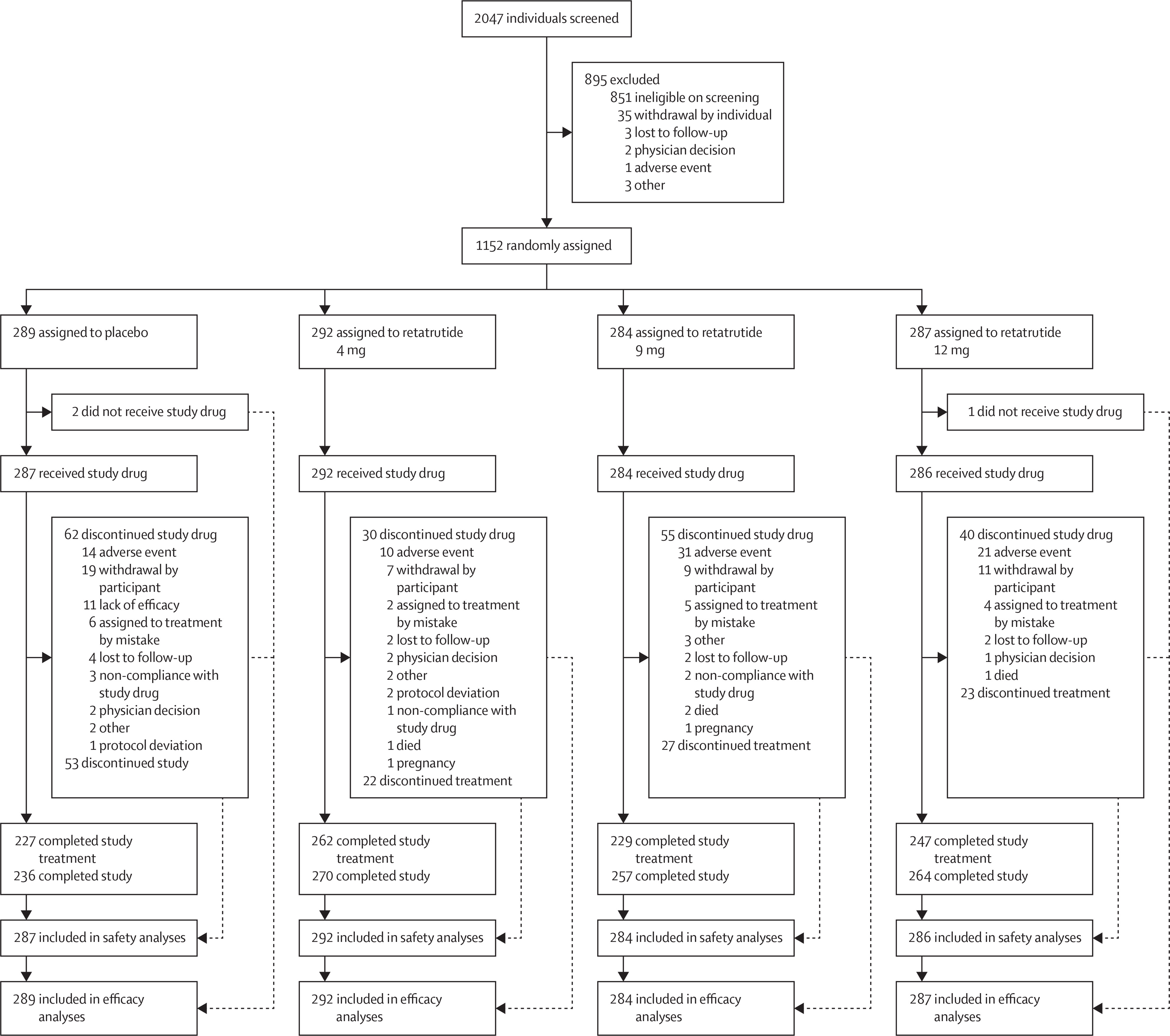
In a phase 3 trial of 1152 adults with obesity and type 2 diabetes, participants received weekly injections of placebo or the GIP, GLP-1, and glucagon receptor agonist retatrutide at doses of 4 mg, 9 mg, or 12 mg for 80 weeks. Mean bodyweight fell 11.9% with 4 mg, 16.8% with 9 mg, and 18.8% with 12 mg retatrutide, compared with 5.1% on placebo. Estimated treatment differences versus placebo ranged from -6.9% to -13.8% (all p<0.0001). Treatment was also associated with improvements in glycaemic control. Gastrointestinal adverse events, mainly diarrhoea and nausea, were most frequent with retatrutide. Hypotension and dysesthesia were also more common on the drug.
Why it matters
Retatrutide is currently under study for comorbidities that include knee osteoarthritis and obstructive sleep apnoea. Marked weight loss and improved glycaemic control in adults with obesity and type 2 diabetes could be relevant to managing these comorbid conditions.
Caveats
Adverse events led to higher permanent treatment discontinuation at higher doses, reaching 12% with 9 mg and 8% with 12 mg compared with 5% on placebo. Overall, 16% of participants did not complete the 80-week drug regimen.
The paper
Show 7 more authors
Petter Bjornstad, Juan P. Frías, Kathryn A. Giblin, Sarah Eyde, So Young Park, Joao Ferro, Caroline Johnson,Hospital Universitario Virgen del Rocío · Eli Lilly (United States)
Lancet · 29 Sep 2026