Medication Burden and Its Escalation Predict Incidence of Hospital-associated Disability in Older Inpatients: A Prospective Cohort Study
Multicentre
Abstract
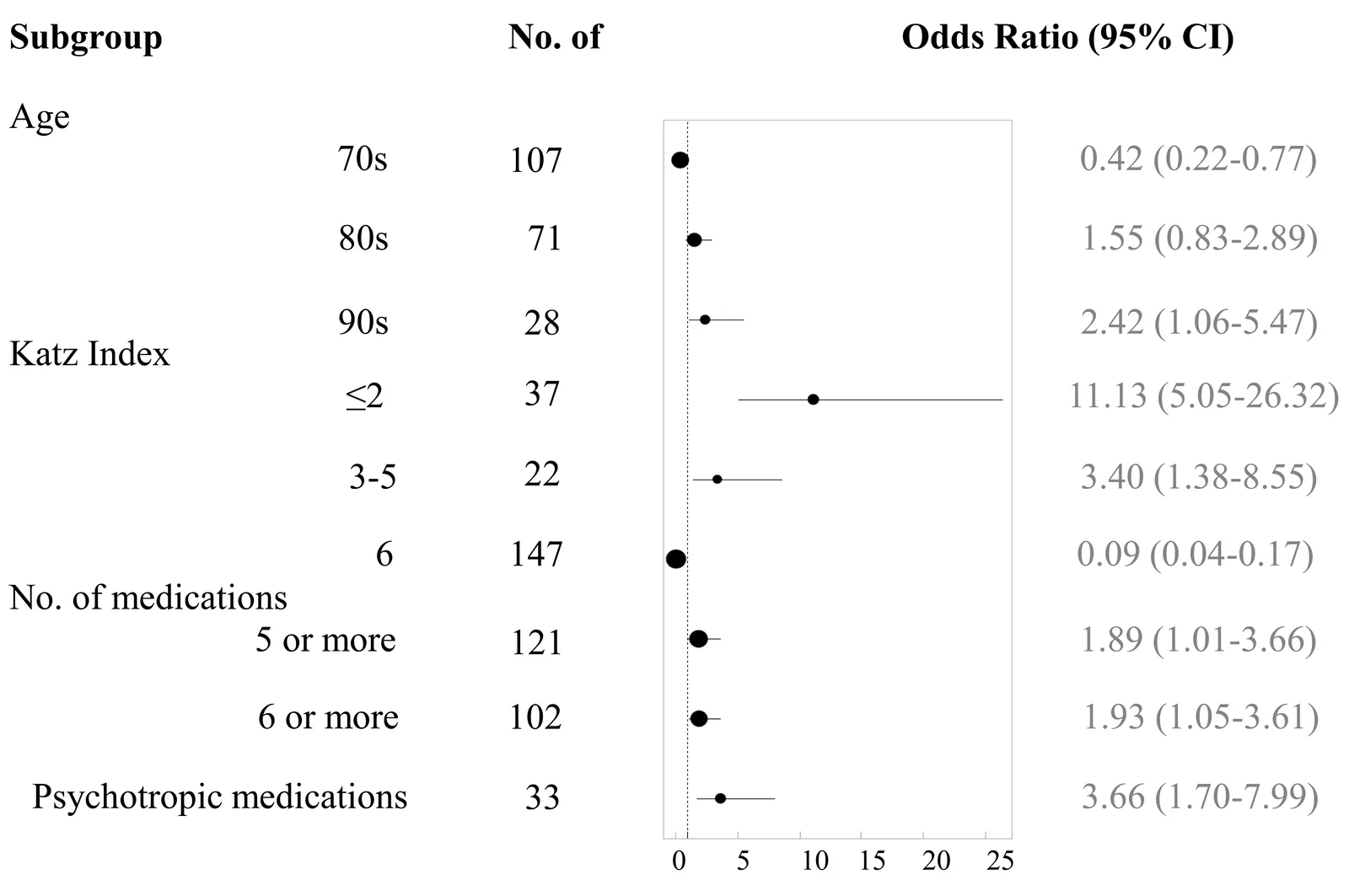
OBJECTIVES: Whether medication burden contributes to hospital-associated disability (HAD) in older inpatients remains unclear. We investigated the relationship between medication count and HAD incidence to identify potential pharmacotherapy targets. METHODS: This multicenter prospective cohort study used data from a HAD registry collected from 1 February 2023 to 31 March 2025. Eligible patients were aged 70 years or older, admitted to medical wards, received rehabilitation, had hospital stays of 48 h or longer, and were independent in activities of daily living at admission (Katz Index of 6). HAD was defined as a Katz Index less than 6 at discharge. The primary outcome was medication count at admission; the secondary outcome was change in medication count during hospitalization. Multivariable logistic regression models with varying covariate adjustment assessed whether admission medication count and in-hospital change were independently associated with HAD. RESULTS: Among the 206 patients (mean age 80.3 years; 60.7% men), 60 (29.1%) developed HAD. Across the models, the medication counts on admission independently increased the HAD risk [odds ratio (OR), 1.14; 95% confidence interval (CI), 1.01-1.28]. Increased medication count during hospitalization was also associated with HAD development (OR, 1.21; 95% CI, 1.01-1.45), reaching significance in most models. Subgroup analyses showed that a medication count on admission of at least five or at least six increased the HAD risk (OR, 1.89 and 1.93, respectively). CONCLUSIONS: Both admission medication count and increase in the in-hospital medication count were associated with HAD development. To prevent HAD development, medication regimens should be optimized, including efforts to reduce unnecessary polypharmacy.
- Admission medication count
- In-hospital medication count increase
- Hospital-associated disability
- Katz index
- Medication count
- Humans
The paper
Juntendo University; Mie University
Progress in Rehabilitation Medicine, 14 Oct 2026, Open access