Risk model for older inpatients with type 2 diabetes and heart disease
The model’s scores for distinguishing hospital deaths from survival were 0.904 during development, 0.878 in internal testing and 0.889 at a separate hospital.
Independent replication, multicentre
Limit: Medication effects on mortality were omitted, potentially confounding the model's risk estimates
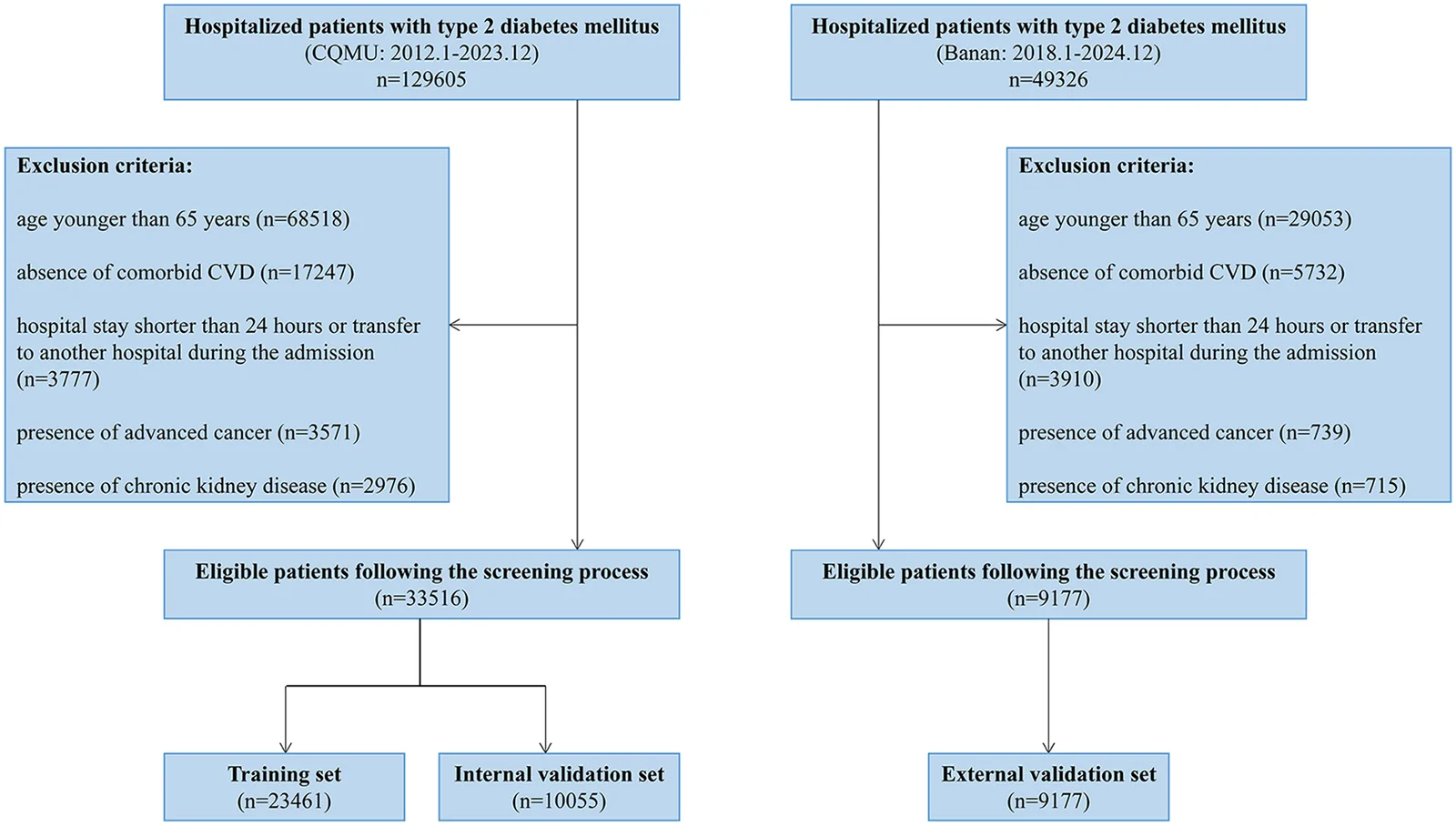
An observational study analysed hospital records for a reported 42,693 patients aged 65 or older with type 2 diabetes and cardiovascular disease, which affects the heart and blood vessels. The records came from six hospitals in China between January 2012 and December 2024.
Researchers built a risk-prediction chart using age, lung infection present at admission and three ratios calculated from blood tests. They tested it using separate records, including those from another hospital. They measured its ability to distinguish patients who died in hospital from survivors using a score called the area under the curve. The model’s predicted risks also closely matched the observed outcomes.
Why it matters
For older people with diabetes and cardiovascular disease, the work addresses how information available at hospital admission might support personalised assessments of their outlook.
Caveats
This retrospective observational study tested predictions from existing records, not whether using the model improved care or reduced deaths. The analysis counted admissions rather than unique patients and excluded people under 65 or with chronic kidney disease or advanced cancer.
From the paper
- Result
The AST/ALT ratio remained a significant predictor in the both-normal subgroup (OR = 1.185, 95% CI: 1.089–1.290, P < 0.001), suggesting that its prognostic value extends beyond situations with overt liver enzyme abnormalities.
Quoted word for word from the full text on PubMed Central.
- Machine learning
- Type 2 diabetes
- Cardiovascular disease
- Aspartate aminotransferase to alanine aminotransferase ratio
- Metabolic-inflammatory health-related nomogram
- Humans
The paper
Chongqing Medical University
Frontiers in Medicine, 29 Sep 2026, Open access