Baseline blood-based DNA methylation in impaired fasting glucose and impaired glucose tolerance: epigenome-wide differences and associations with subsequent progression to type 2 diabetes mellitus
Abstract
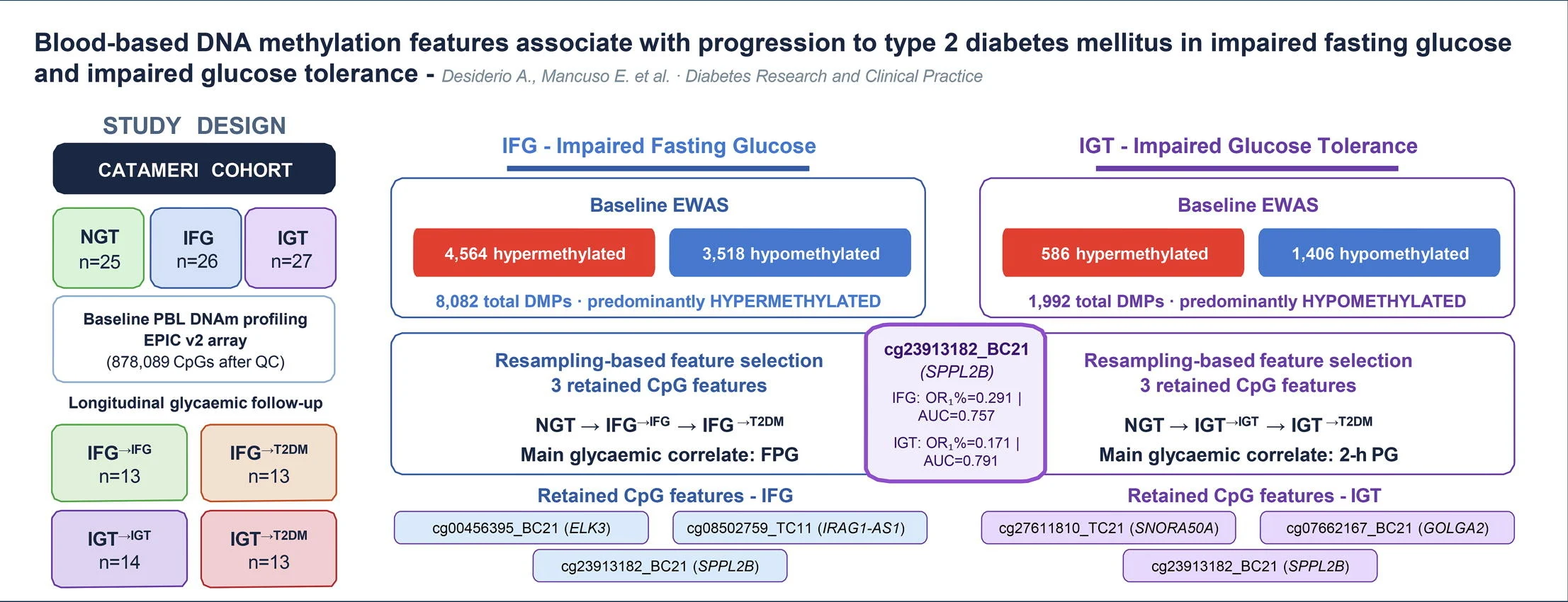
AIMS: Impaired fasting glucose (IFG) and impaired glucose tolerance (IGT) differ in type 2 diabetes mellitus (T2DM) progression risk, but whether they have distinct blood DNA methylation (DNAm) patterns and CpG features associated with progression remains unclear. METHODS: DNAm was profiled in peripheral blood leukocytes from 78 CATAMERI participants (26 IFG, 27 IGT, and 25 NGT). IFG and IGT participants were stratified by prediabetes persistence or T2DM progression. DNAm differences were assessed using a unified epigenome-wide model. Features were selected by 20 x 5-fold repeated resampling and evaluated for metabolic correlations, progression, and discrimination. RESULTS: DNAm analysis identified 8,082 differentially methylated CpGs in IFG versus NGT, 1,992 in IGT versus NGT, and 9,488 in IFG versus IGT. Resampling retained three CpGs per phenotype showing ordered baseline DNAm patterns according to glycaemic outcome; cg23913182 was retained in both phenotypes. Lower baseline DNAm at these CpGs was associated with subsequent T2DM progression. cg23913182 showed lower odds of progression per 1 percentage-point DNAm increase (OR1%=0.291 in IFG; OR1%=0.171 in IGT) and moderate discriminatory performance (AUC = 0.757 and 0.791, respectively). CONCLUSIONS: IFG and IGT show distinct blood-based DNAm patterns, highlighting epigenetic heterogeneity. CpG features associated with subsequent T2DM progression warrant validation in independent cohorts.
The paper
Federico II University of Naples; University Magna Graecia of Catanzaro
Diabetes Research and Clinical Practice, 13 Oct 2026