Fracture and Vertebral Augmentation Utilization Following Androgen Deprivation Therapy in Men With Prostate Cancer: A Propensity Score-matched Cohort Study
5 years
Abstract
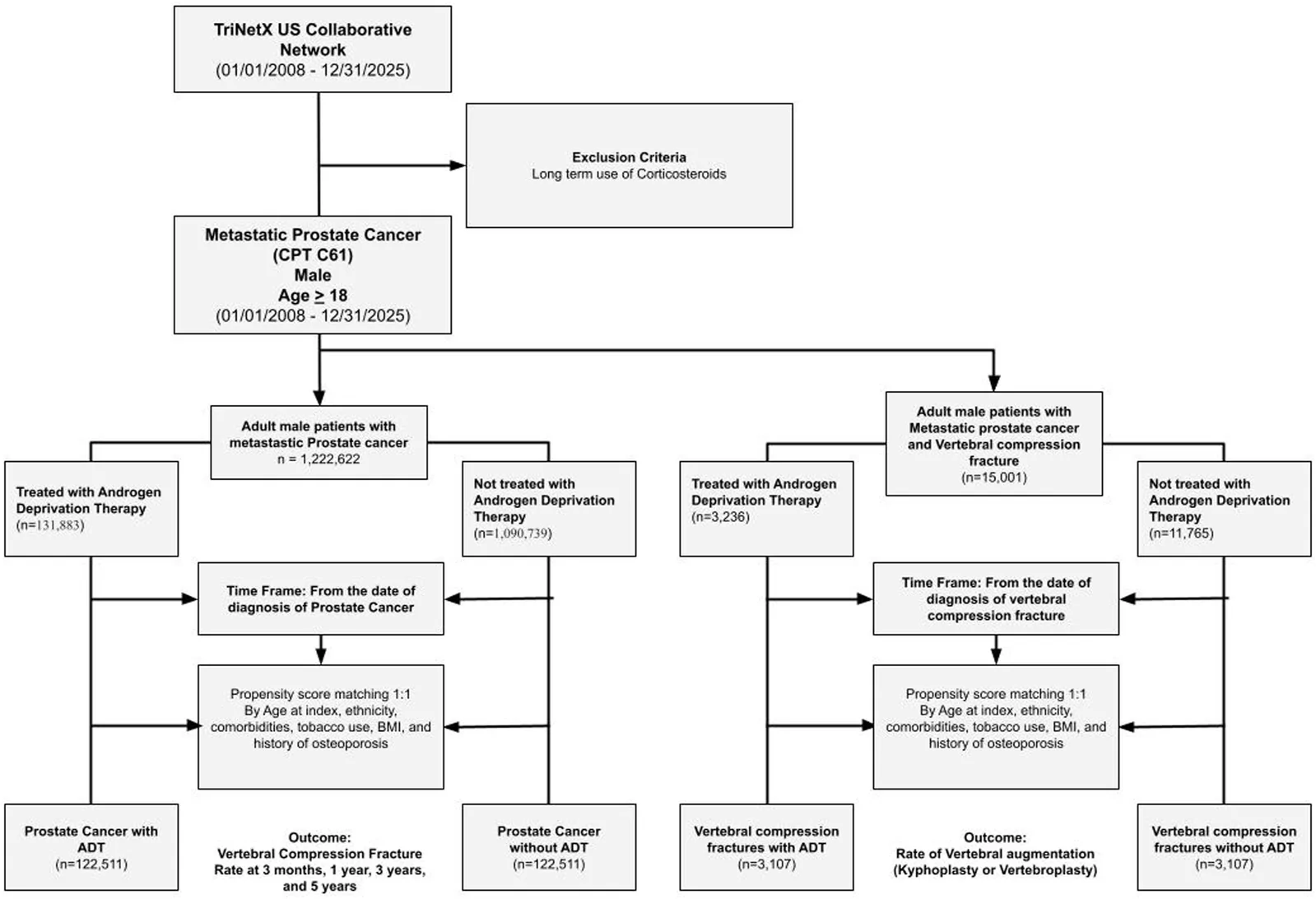
Study DesignRetrospective cohort study.ObjectiveTo investigate the association between androgen deprivation therapy (ADT), vertebral compression fracture (VCF) incidence, and subsequent vertebral augmentation (vertebroplasty/kyphoplasty) utilization in adult men with prostate cancer.MethodsAdult men with prostate cancer were stratified by ADT exposure and matched 1:1 to non-ADT controls on demographics, comorbidities, and bone health. Primary outcomes were VCF incidence at 3 months, 1 year, 3 years, and 5 years and vertebral augmentation utilization. Secondary outcomes included posterior spinal instrumentation, dependency, fracture burden, and bisphosphonate/denosumab use. Risks were compared using Kaplan-Meier and Cox proportional hazards models, with chi-square tests for categorical outcomes.ResultsAfter matching, 122,511 patients were included per cohort. ADT was associated with higher 5-year VCF incidence (1.95% vs 1.29%; HR, 1.49; p < 0.001), representing a 54% relative increase (NNH = 143), with consistent findings at earlier time points (all p < 0.05). Among 2,926 matched pairs with VCFs, vertebral augmentation utilization was higher with ADT (7.4% vs 5.1%; p < 0.001), representing a 45% relative increase. Posterior instrumentation (2.1% vs 2.0%) and dependency (7.5% vs 7.7%) were similar, while fracture burden did not differ (p = 0.07).ConclusionsADT is associated with increased VCF incidence and vertebral augmentation utilization without differences in posterior instrumentation. This pattern is consistent with osteoporotic insufficiency fractures and supports bone health screening and preventive therapy at ADT initiation.
- Androgen deprivation therapy
- Bisphosphonates
- Denosumab
- Prostate cancer
- Vertebral compression fracture
- Humans
The paper
Loma Linda University Health Care; Duke University Health System
Global Spine Journal, 13 Oct 2026, Open access

