Exercise and engagement linked to more years without thinking problems
Estimated years without cognitive impairment from age 50 were 24.7 with high exercise and cognitive-social engagement, versus 17.5 with low levels of both.
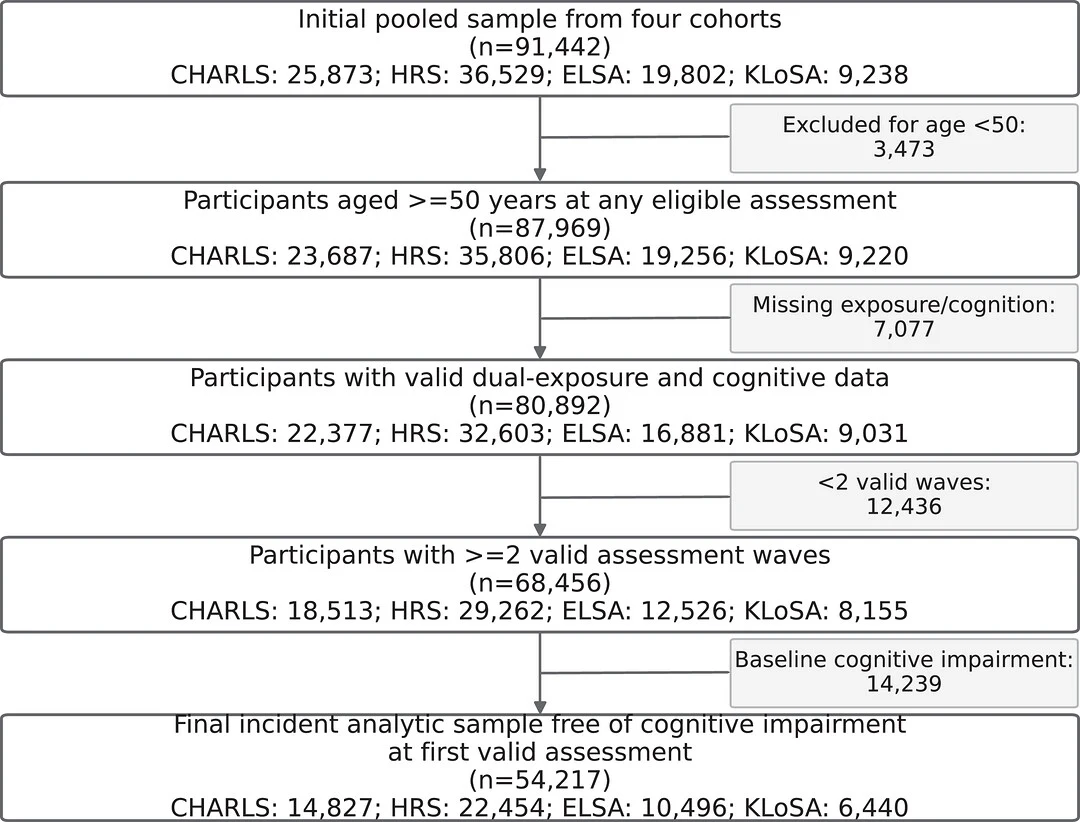
People in four aging cohorts across Asia, North America and Europe were studied in an observational analysis of structured exercise and engagement in mental and social activities. Researchers combined repeated measurements and classified people by low or high levels of both at each assessment. They used statistical models to estimate years of life without cognitive impairment, meaning difficulties with memory or thinking.
From age 50, estimated years without impairment were 17.5 with low levels of both, 23.2 with high exercise and low engagement, 20.1 with low exercise and high engagement, and 24.7 with high levels of both. The associations suggested combined benefits from exercise and engagement, but suggested that the two were not interchangeable.
Why it matters
The study addressed whether mental and social engagement could compensate for insufficient structured exercise in cognitive aging. The authors said the findings supported dementia-prevention strategies that integrate both.
Caveats
This observational study could not establish that either activity caused more years without cognitive impairment. The life-expectancy figures were statistical estimates.
- Cognitive-social engagement
- Structured exercise
- Structured exercise and cognitive-social engagement
- Cognitive impairment
- Humans
The paper
Shanghai Jiao Tong University School of Medicine
Alzheimer's & Dementia, 1 Oct 2026