Helicobacter pylori infection, histological gradient, and lesion phenotype specificity in colorectal neoplasia: a three-group analysis of 1556 adults undergoing colonoscopy in China
Abstract
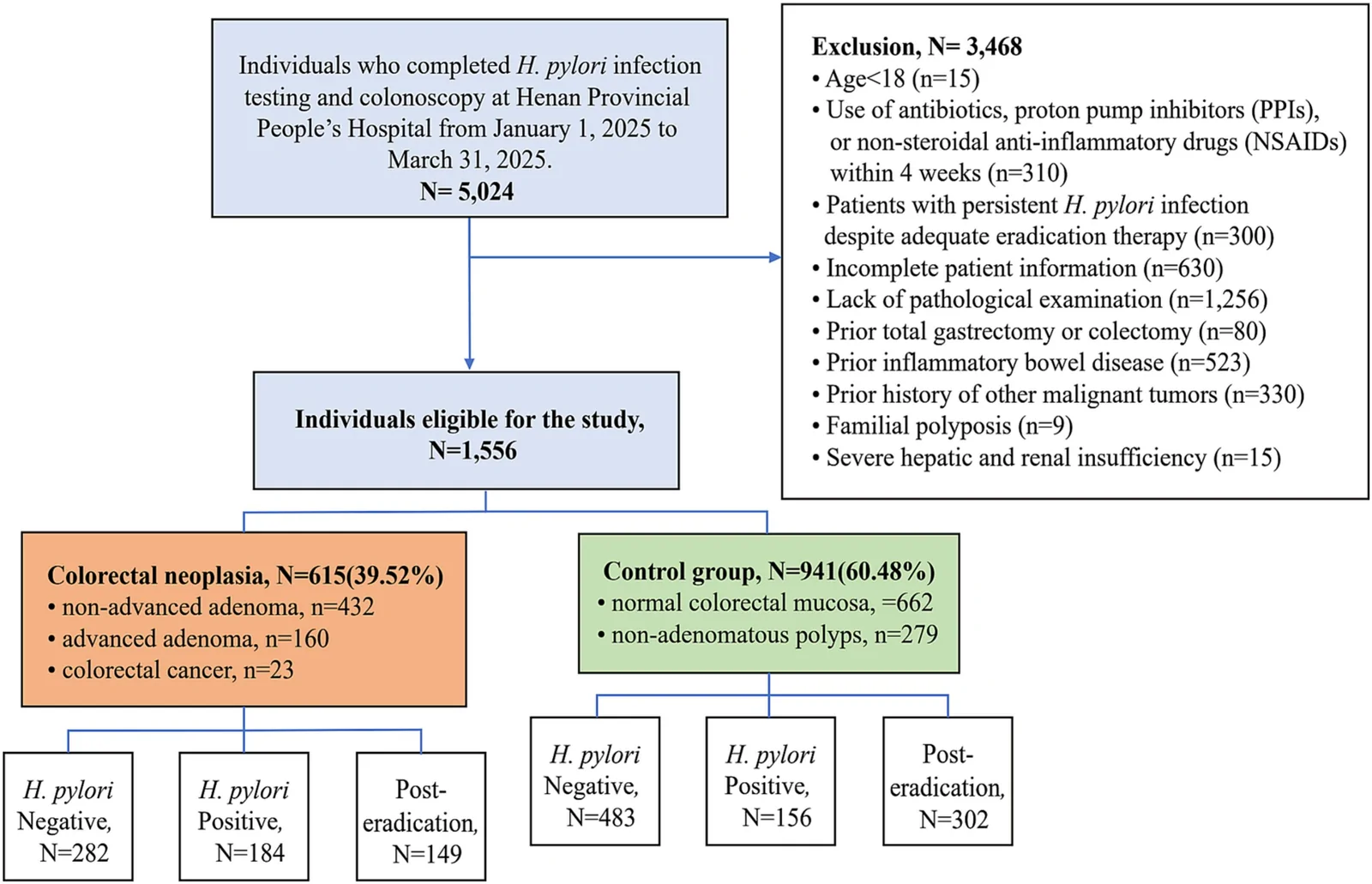
OBJECTIVE: To assess whether the Helicobacter pylori-colorectal neoplasia association varies by histological stage, phenotype, and eradication history. METHODS: This cross-sectional study enrolled 1556 adults undergoing colonoscopy and H. pylori testing at Henan Provincial People's Hospital, Zhengzhou, China (January-March 2025), grouped as H. pylori-negative, positive, or post-eradication. Lesions were categorized by stage, number, size, location, and subtype. Multivariable logistic regression adjusted for age, sex, body mass index, smoking, alcohol, diabetes, high-density lipoprotein cholesterol, triglycerides, aspirin use, and colorectal cancer family history. RESULTS: In infected participants, adjusted odds ratios increased across stages: non-advanced adenoma (aOR = 1.74; 95% CI, 1.28, 2.37), advanced adenoma (aOR = 2.16; 95% CI, 1.36, 3.42), and colorectal cancer (aOR = 6.96; 95% CI, 2.44, 22.35), highest for large, multiple, and bilateral lesions. Compared with persistent infection, post-eradication status was associated with lower odds of colorectal neoplasia (aOR = 0.40; 95% CI, 0.29, 0.55); odds for advanced adenoma were similar to never-infected participants (aOR = 0.90; 95% CI, 0.58, 1.39). CONCLUSIONS: The association is graded and phenotype-specific and is weaker after eradication. This supports prospective evaluation of H. pylori screening in high-prevalence populations.
- Helicobacter pylori infection
- Helicobacter pylori eradication
- Colorectal neoplasia
- Advanced adenoma
- Colorectal cancer
- Humans
The paper
Henan Provincial People's Hospital
Preventive Medicine Reports, 29 Sep 2026, Open access