Older age linked to poorer kidney tube health in adults
Each decade of age was linked to 23% higher levels of a urine marker of how kidney tubes return filtered substances to the blood.
10 years
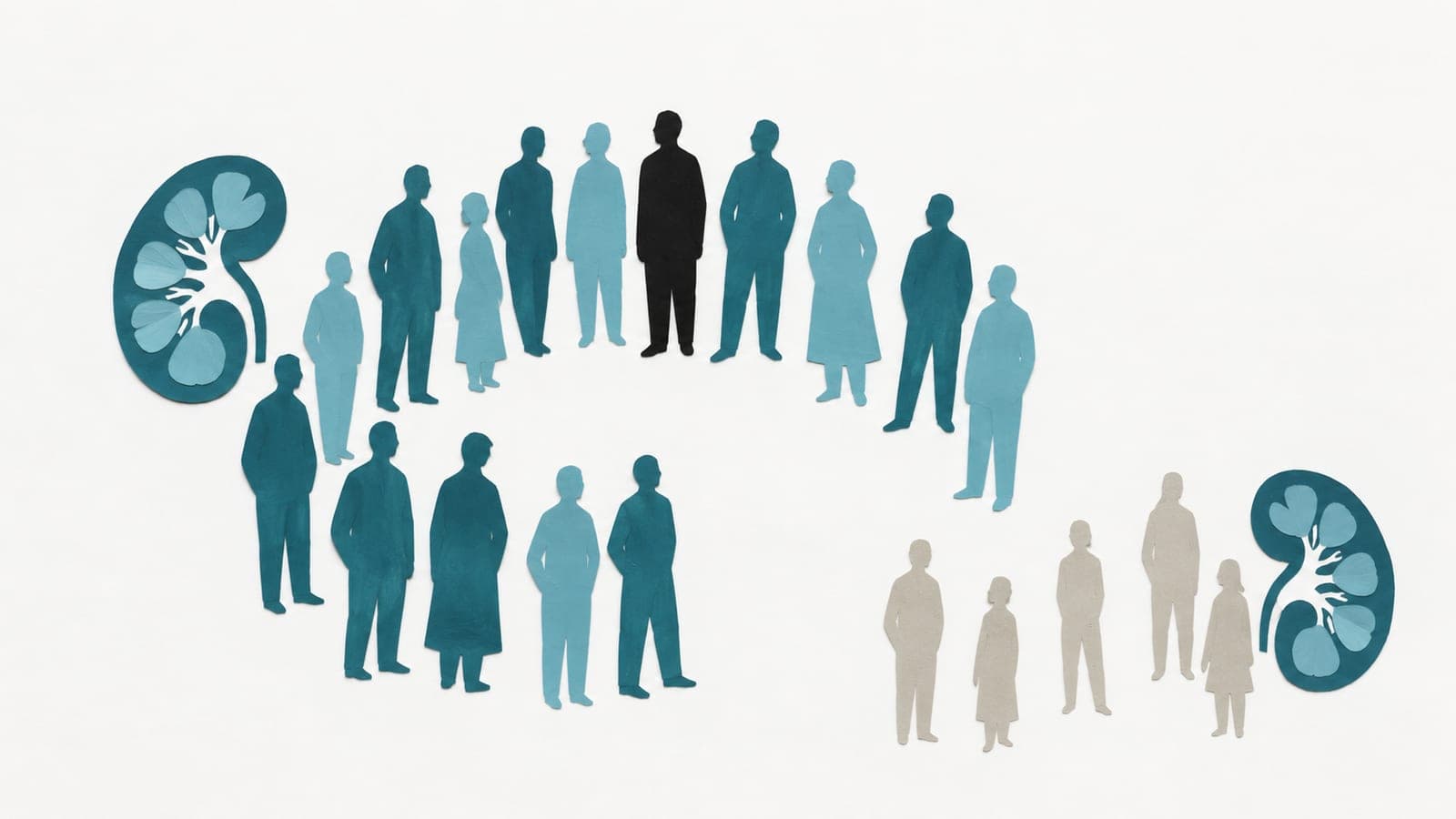
In an observational study, researchers analysed 939 adults aged 37–55 and 1,014 adults aged 45–84 from two community-based cohorts. They measured seven urine markers of the health of kidney tubules, small tubes that process filtered fluid. They compared adults of different ages and tracked changes over 10 years in 780 and 668 participants, respectively.
Older age was associated with signs of poorer tubule function and injury. Each decade of age was linked to a 23% higher level of alpha-1 microglobulin, a urine marker of reabsorption—the return of filtered substances to the blood. This measure accounted for urine concentration. Over 10 years, two markers of the tubes’ protein production fell, while markers of reabsorption and tissue scarring or repair rose. A measure of kidney filtration also fell by 10%.
Why it matters
Age-related changes in kidney tubes have been little studied. Their function is another aspect of kidney health to investigate alongside blood filtration and protein leakage into urine.
Caveats
This observational study could not show that aging caused the changes. The 10-year analysis included only participants who completed follow-up.
- Extracellular matrix remodelling
- Kidney interstitial fibrosis
- Proximal tubular injury
- Albuminuria
- Estimated glomerular filtration rate
- Humans
The paper
Kidney Tubule Aging Across Adulthood
and University of California
Journal of the American Society of Nephrology, 12 Oct 2026