Diet linked to hip fracture risk in postmenopausal women
In a cohort of 541,887 women followed for an average of 19.7 years, 60 of 99 dietary factors were linked to hip fracture risk.
Researchers followed 541,887 UK postmenopausal women in the Million Women Study in an observational cohort study. They assessed 99 dietary factors using food questionnaires completed in 2000–2004 and checked these against participants’ accounts of what they ate over 24 hours. Linked hospital admission records identified 27,318 hip fractures over an average of 19.7 years.
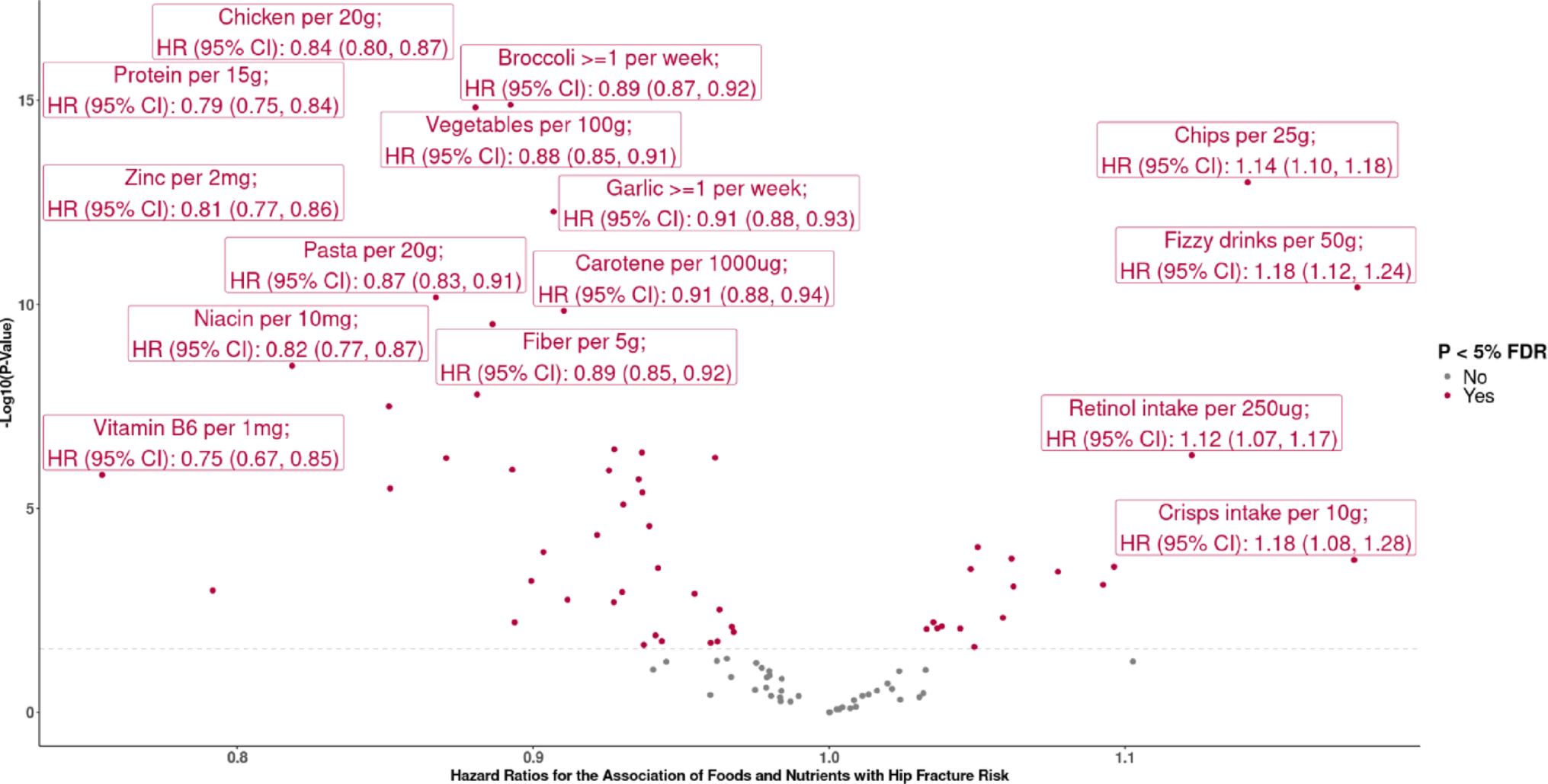
After accounting for other measured factors and the many statistical comparisons made, 60 dietary factors were associated with fracture risk. Higher intakes of chicken, vegetables and pasta were linked to lower risk. Higher intakes of chips and fizzy drinks were linked to higher risk. Protein, zinc and fibre were among the nutrients associated with lower risk. The results were consistent across subgroups and when researchers excluded the first five years of follow-up.
Why it matters
Further research could test whether specific foods affect hip fracture risk after menopause or whether overall diet quality and other lifestyle factors account for the links.
Caveats
The study was observational and relied on reported diets, so it could not establish cause and effect. Its population consisted of UK postmenopausal women.
From the paper
- Participants
After excluding participants with previous hip fracture and unreliable dietary information at baseline, 541,887 women were included in the analyses (SFigure 1).
- Result
… including chicken (HR and 95% CI: 0.84, 0.80–0.87 per 20 g/day), vegetables (0.88, 0.85–0.91 per 100 g/day), and pasta (0.87, 0.83–0.91 per 20 g/day), which were ranked as the top foods based on the lowest p-values; and protein (0.79, 0.75–0.84 per 15 g/day), zinc (0.81, 0.77–0.86 per 2 mg/day) …
Quoted word for word from the full text on link.springer.com.
The paper
University of Oxford
European Journal of Epidemiology, 12 Oct 2026