Mid-life physical activity linked to lower hip fracture risk
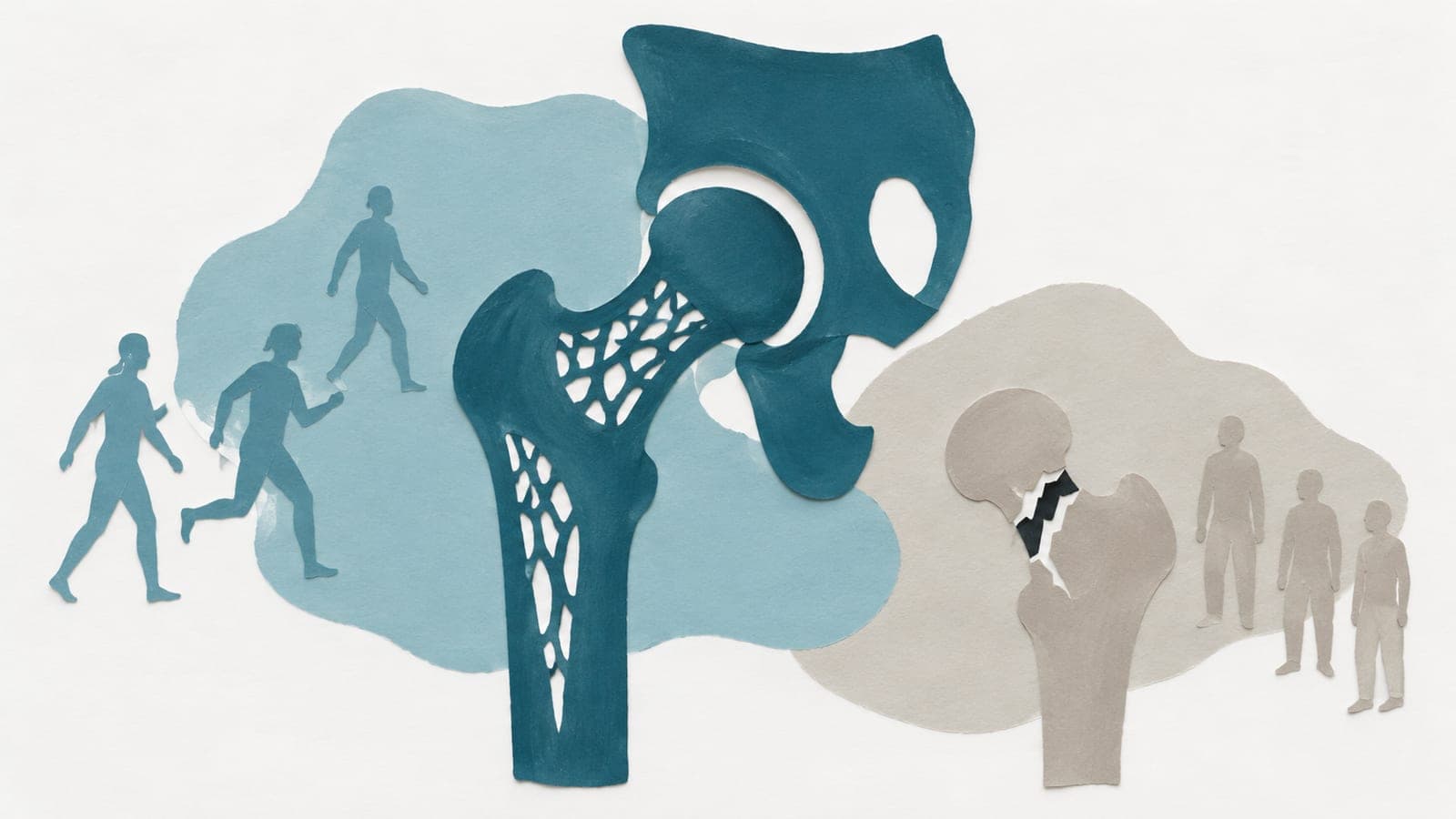
A 16-year observational study of 324,284 adults found the lowest hip fracture risk at approximately one hour of leisure-time physical activity a day.
16 years
The prospective observational study included 324,284 UK Biobank participants aged 40–65. They reported their walking, moderate activity and vigorous activity during leisure time at the start of the study. Researchers used linked health records to track hip fractures over 16 years and analysed women and men separately. They recorded 2,674 hip fractures.
For total leisure-time activity, women and men in the middle of five activity groups had the lowest hip fracture risk. This corresponded to approximately one hour of activity a day. When researchers examined each intensity separately, vigorous activity had the lowest estimated risks, at approximately 60–90 minutes a week. The links between moderately high activity levels and lower fracture risk appeared weaker at higher amounts.
Why it matters
Hip fractures in later life raise questions about the balance between the possible benefits of mid-life activity and its injury risks. This analysis informs the question of how much activity may be beneficial.
Caveats
This observational study cannot establish cause and effect, and activity was self-reported. The paper is a preprint and has not yet been peer-reviewed.
The paper
MID-LIFE LEISURE-TIME PHYSICAL ACTIVITY IS ASSOCIATED WITH LOWER HIP FRACTURE RISK IN UK BIOBANK
University of Bristol
medRxiv, 11 Oct 2026, CC BY, Preprint, not peer-reviewed