Activity linked to lower death risk despite a faster resting pulse
An observational analysis of 12,042 patients across three chronic kidney disease cohorts linked higher activity to a weaker association between elevated resting pulse and death.
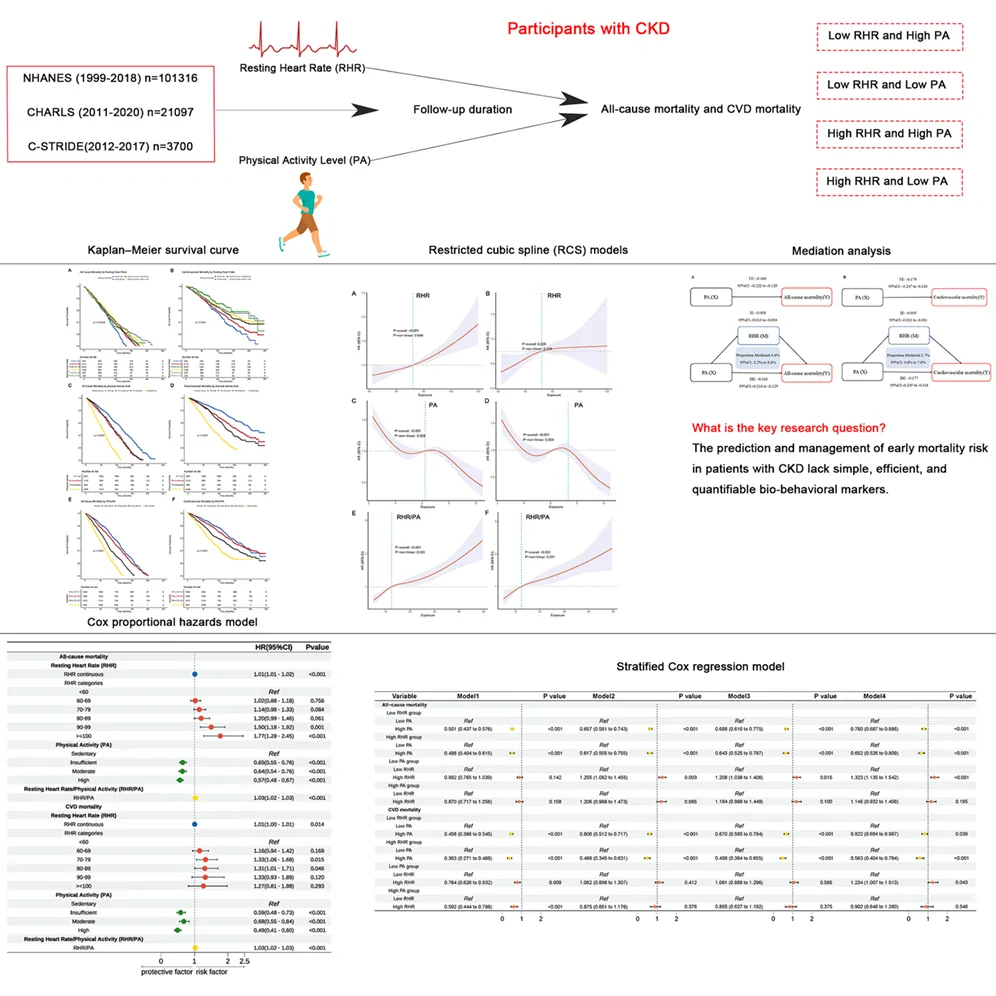
In an observational study, researchers analysed 12,042 patients with chronic kidney disease from three cohorts. They examined how resting heart rate and physical activity, separately and together, were associated with the risk of death.
A higher resting heart rate was linked to greater risks of death from any cause and from diseases of the heart and blood vessels. Higher physical activity was linked to lower mortality across all three cohorts. Among the combinations studied, high resting heart rate with low activity was associated with the greatest mortality risk. Higher activity was associated with a weaker link between elevated resting heart rate and death. Further analyses suggested that resting heart rate partly contributed to the association between activity and mortality.
Why it matters
The researchers recommended promoting physical activity and monitoring resting heart rate as part of chronic kidney disease care aimed at improving survival.
Caveats
The observational design cannot establish whether increasing activity or lowering resting heart rate improves survival.
The paper
Mianyang Third People's Hospital; University of Electronic Science and Technology of China
iScience, 30 Sep 2026