The Power of Two: Harnessing Dual Glucagon and Incretin Signaling for Treatment of Obesity and Metabolic Dysfunction-Associated Steatohepatitis-A Narrative Review with a Translational Focus
Abstract
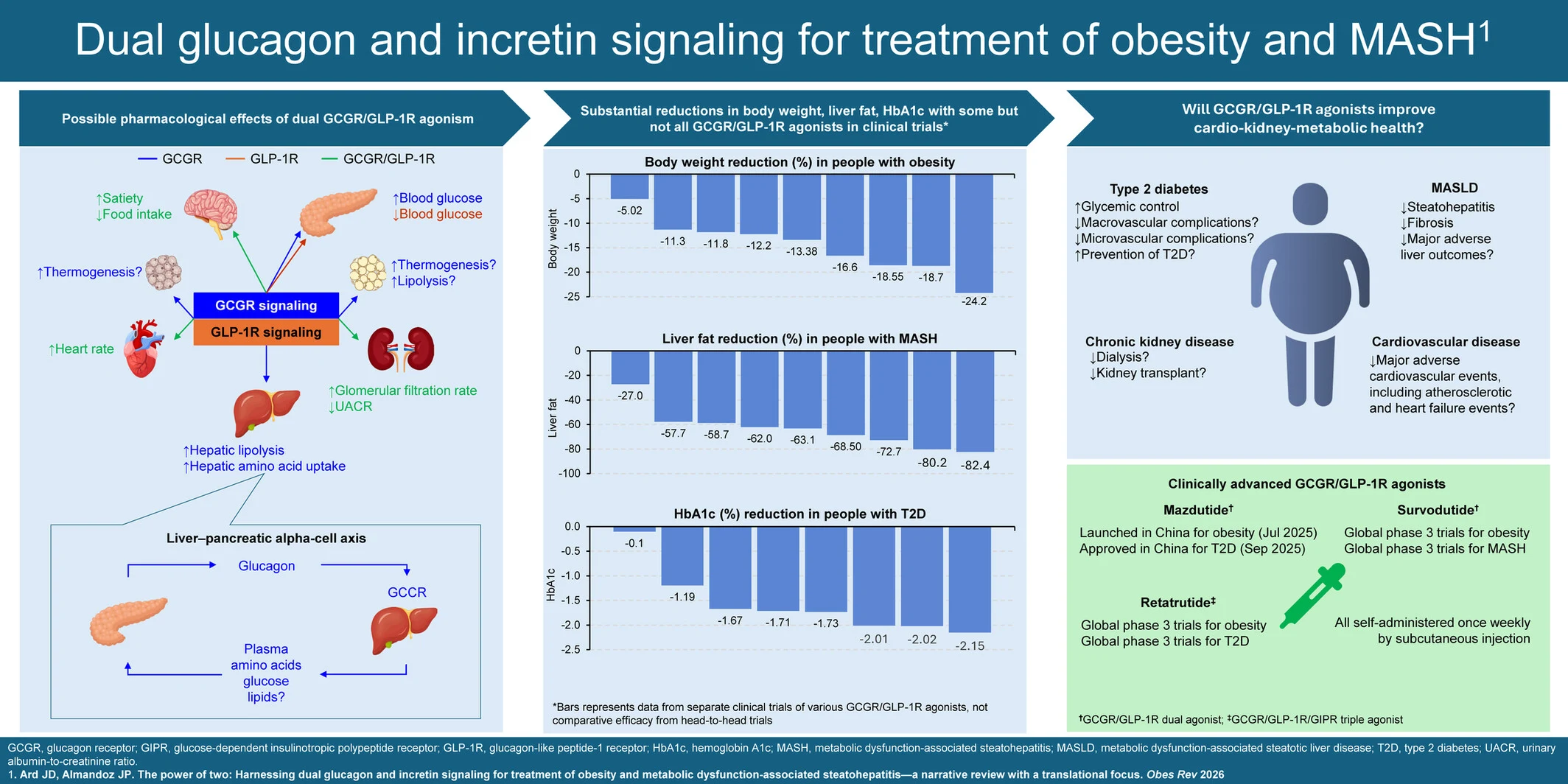
A resurgence in glucagon research has repositioned this pancreatic hormone as a promising target in the treatment of obesity and related metabolic disorders. Glucagon is classically known for contributing to glucose homeostasis, but emerging evidence points to a much wider role in metabolism, including energy balance and liver health. These findings are fueling attempts to understand how to leverage glucagon signaling to treat obesity and metabolic dysfunction-associated steatohepatitis (MASH). Due to potential hyperglycemic effects of glucagon signaling, most investigational compounds are dual agonists of both the glucagon and glucagon-like peptide-1 (GLP-1) receptors to harness the antihyperglycemic and anorectic effects of the latter hormone, analogs of which such as semaglutide are already proven to be potent obesity medications. Glucagon receptor/GLP-1 receptor dual agonists reduce food intake, decrease hepatic fat, and increase energy expenditure in animal models of obesity and MASH. In early clinical trials, some dual agonists substantially reduced body weight, hepatic steatosis, and hepatic fibrosis. Whether they are more effective than GLP-1 receptor mono-agonists remains to be established in definitive head-to-head studies. The precise balance between glucagon and GLP-1 signaling within individual compounds appears important for overall therapeutic effects-including glycemic control, which worsened with some dual agonists. However, the two most clinically advanced compounds-mazdutide (approved for chronic weight management and type 2 diabetes in China) and survodutide (ongoing global phase 3 trials)-had potent weight-loss and antihyperglycemic effects in people with obesity, with survodutide also improving liver health in people with MASH. Therefore, the research into glucagon physiology that led to glucagon receptor/GLP-1 receptor dual agonists is translating to advantageous new therapies for the highly prevalent diseases of obesity and MASH.
The paper
Wake Forest University; The University of Texas Southwestern Medical Center
Obesity Reviews, 11 Oct 2026