Divergent associations of weekly and seasonal sleep variability with 1-year glycemic change in Chinese adults
1 year
Abstract
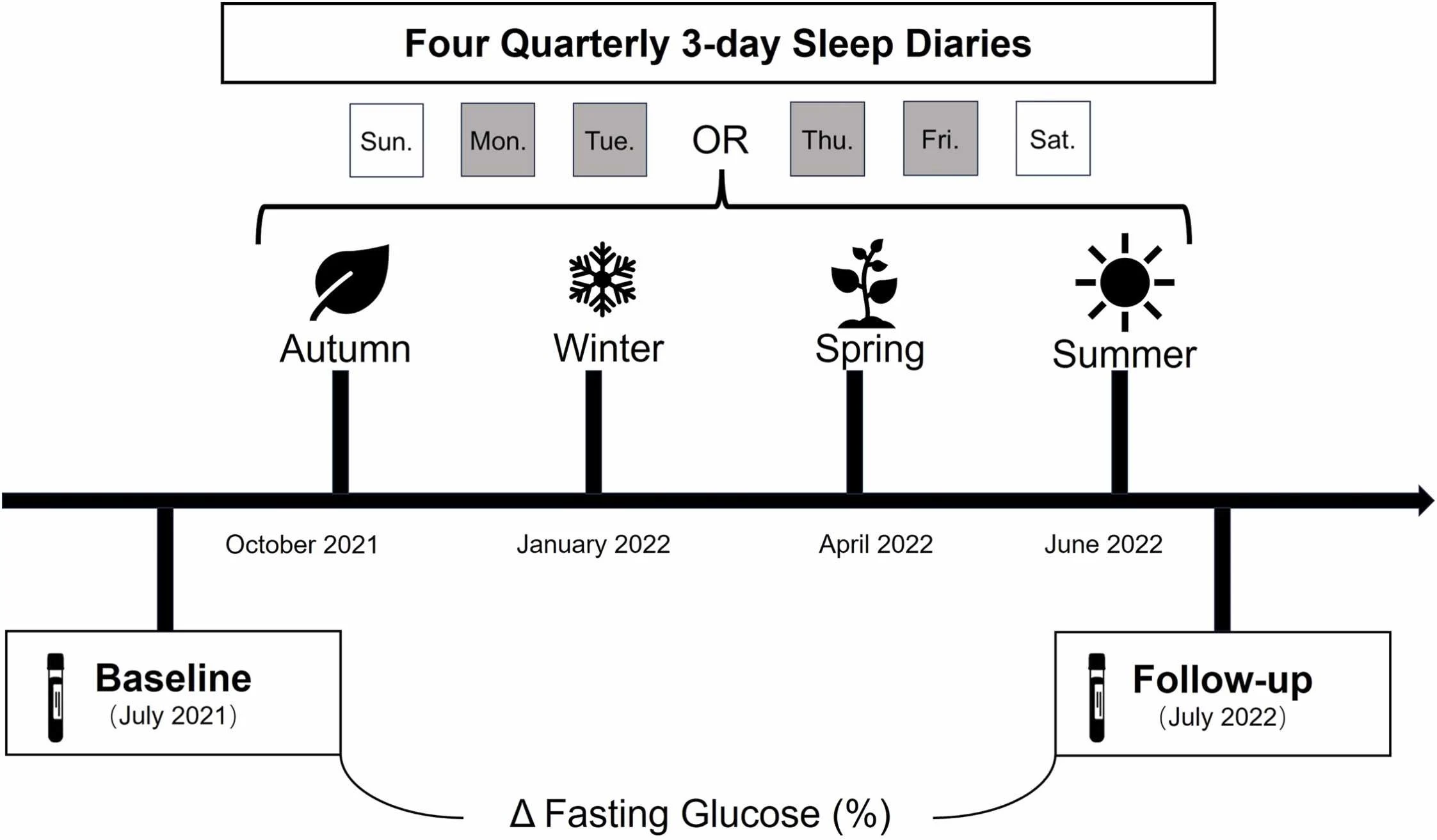
OBJECTIVES: Sleep variability is often examined as a unitary construct, yet its metabolic relevance may differ by temporal scale. Although social jetlag, reflecting weekly misalignment between sleep and social schedules, is associated with worse glycemic control, the longitudinal relationship of naturally occurring seasonal sleep variability with glucose metabolism remains unclear. We aimed to evaluate and contrast the associations of annualized social jetlag and seasonal sleep variability with 1-year changes in fasting blood glucose. METHODS: We analyzed data from 357 Chinese adults in a longitudinal design. Sleep was recorded via diary over three consecutive days in each season, enabling computation of annualized social jetlag and intra-individual standard deviations of sleep duration and timing across seasons. Fasting blood glucose was measured at baseline and 1 year later. RESULTS: Compared with minimal social jetlag (<0.25 hour), high social jetlag (≥0.5 hour) was associated with a 6.1% increase in fasting glucose (95% CI: 1.3, 11.2). In contrast, greater seasonal variability in sleep duration (per 1-hour increase in standard deviations) was associated with a 6.5% decrease in glucose (95% CI: -11.1, -1.7). An interaction was observed for MTNR1B rs1387153 (Pinteraction = .04), with an inverse association between seasonal variability in wake-up timing and glucose present in C-allele carriers but absent in TT homozygotes. CONCLUSIONS: Weekly social jetlag and seasonal sleep variability show opposing longitudinal associations with glycemic change. Maintaining a natural degree of seasonal sleep plasticity is associated with better glucose regulation, and this relationship appears to be modified by genetic variations in MTNR1B.