Peptide‑calcium chelates from microalgae enhance calcium bioavailability and regulate osteogenic and osteoclastogenic signaling in ovariectomized mice
Abstract
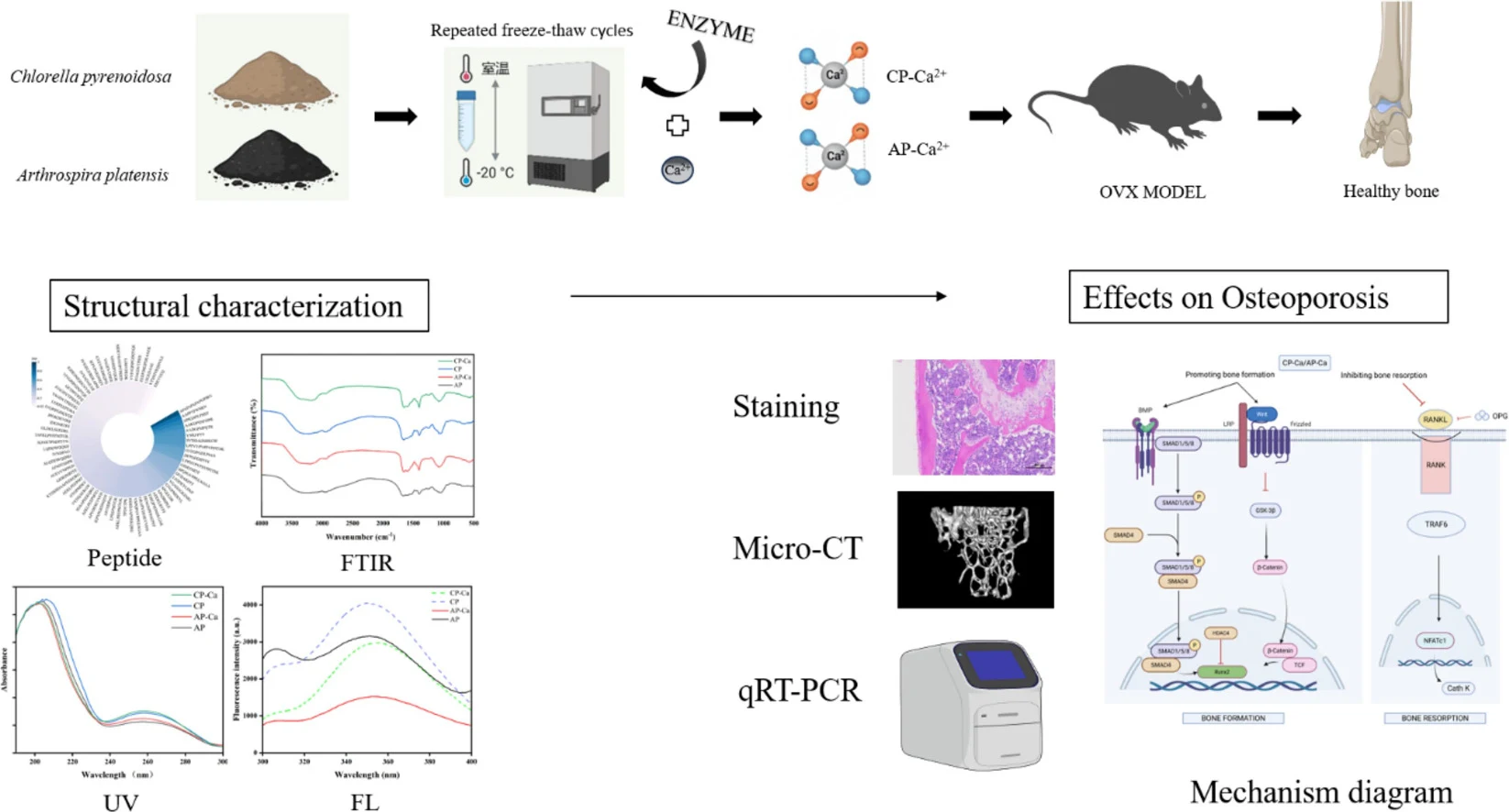
Estrogen deficiency-induced postmenopausal osteoporosis (PMOP) poses a global health burden requiring high-bioavailability nutritional therapies, while conventional calcium supplements exhibit poor absorption and gastrointestinal irritation; peptide‑calcium chelates stand out for superior uptake efficiency. In this study, we investigated the osteoprotective effects and molecular mechanisms of two microalgae-derived peptide-calcium chelates, specifically Chlorella pyrenoidosa peptide-calcium chelate (CP-Ca) and Arthrospira platensis peptide-calcium chelate (AP-Ca), using an ovariectomized (OVX) mouse model. FTIR, UV and Fluorescence spectra revealed that peptides form dynamic multi-point coordination with calcium ions through carboxyl and carbonyl oxygens, accompanied by orderly conformational changes of the peptide chain during the chelation process. Animal feeding tests showed that both chelates enhanced systemic calcium utilization. Compared with the model group, the calcium absorption rate in the high-dose CP-Ca and AP-Ca groups increased by 54.47% and 57.30%, respectively, while the calcium retention rate increased by 69.41% and 67.56%. Interventions with CP-Ca or AP-Ca mitigated OVX-induced bone deterioration in mice. Peak biomechanical loads reached 2.07 ± 0.24 N and 1.93 ± 0.16 N, and the trabecular bone microarchitecture was structurally preserved. The biological mechanisms driving these results involve the activation of the BMP/Smad and Wnt/β-catenin pathways, together with a clear suppression of the RANKL/RANK axis and the downregulation of HDAC4 levels. CP-Ca was particularly effective at preserving trabecular structure and bone strength, a benefit closely linked to its suppression of HDAC4. Conversely, AP-Ca acted as a rapid osteo-inducer, driving the highest local expression of BMP-2 and quickly restoring systemic calcium levels. These findings suggested that both CP-Ca and AP-Ca serve as effective nutritional interventions for preventing postmenopausal osteoporosis.
- Arthrospira platensis peptide-calcium chelate
- Chlorella pyrenoidosa peptide-calcium chelate
- TGF-β signalling
- Wnt/β-catenin signalling
- Postmenopausal osteoporosis
- Mice
The paper
Ocean University of China; Qingdao National Laboratory for Marine Science and Technology
Food Research International, 29 Jul 2026