Treadmill exercise impedes cognitive decline in type 2 diabetic rats by improving mitochondrial function and modulating the TGF-β/Smad-3 pathway
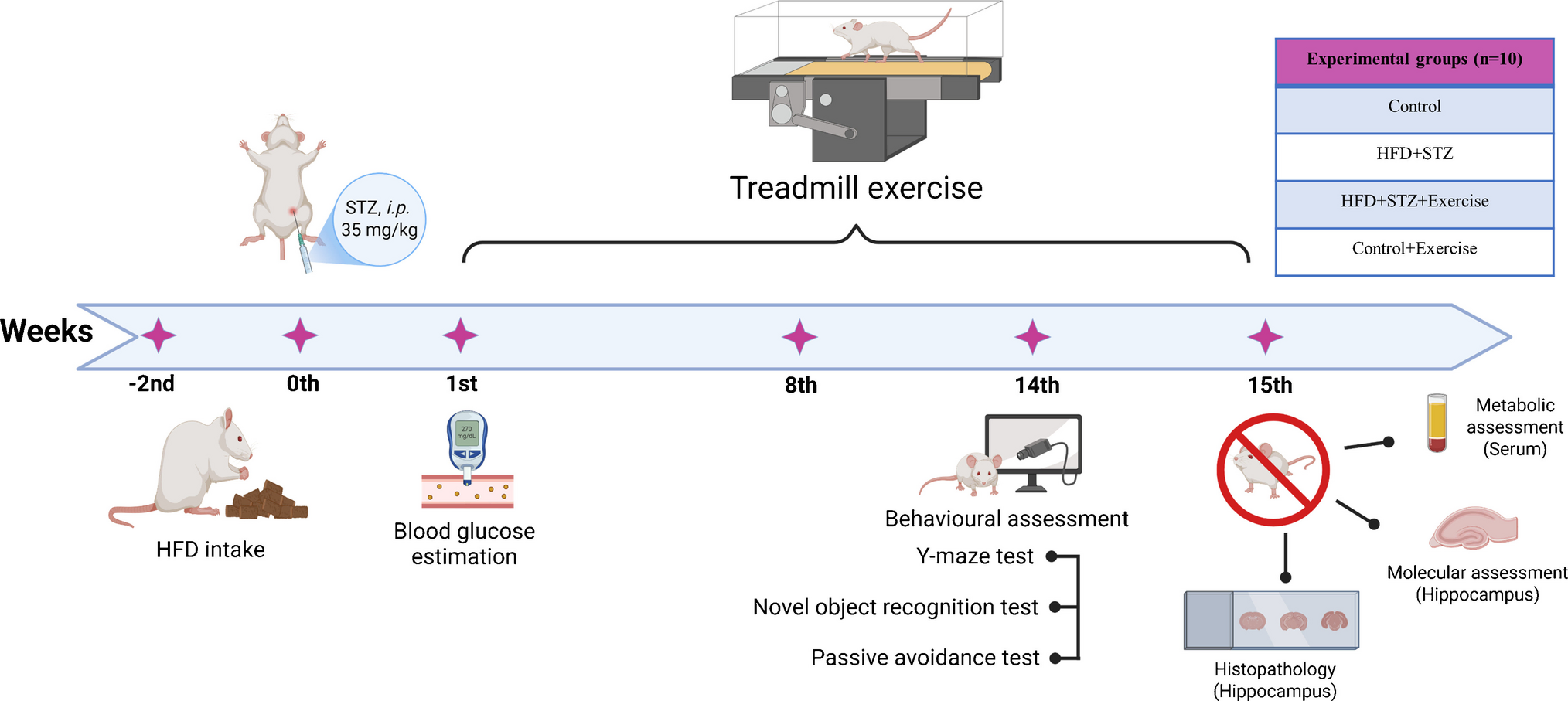
14 weeks
Abstract
Chronic hyperglycemia and cerebral insulin resistance are the major contributors to cognitive impairment in the ageing population. Due to the increased number of the worldwide type - 2 diabetic mellitus (T2DM) population, the prevalence of cognitive decline and dementia has also increased. It is well documented that moderate aerobic exercise dramatically improves cognitive function in individuals with diabetes. However, the impact of exercise on T2DM-associated cognitive decline modulating TGF-β/Smad-3 signalling is yet to be explored. In this study, we assessed the impact of treadmill exercise on cognitive health in a preclinical model of T2DM, focusing on neuroinflammation, mitochondrial function, and the TGF-β/Smad-3 signalling pathway. To develop an experimental type - 2 diabetic model, rats were fed a high-fat diet (HFD), followed by an intraperitoneal injection of a single low dose of streptozotocin (STZ, 35 mg/kg). After confirmation of diabetes, rats underwent moderate-intensity treadmill exercise for 14 weeks. We observed a significant alternation in behavioural patterns in diabetic rats compared to controls, which reversed on exercise treatment. Moreover, chronic Type - 2 diabetes compromises mitochondrial function and increases inflammation in the hippocampal region of the brain. An increase in pro-inflammatory cytokines, such as IL-1β and TNF-α, was observed in the hippocampus of T2DM animals and was reduced by exercise. Oxidative stress is markedly increased in the type - 2 diabetic brain, resulting in compromised mitochondrial function with elevated hippocampal MDA and decreased GSH and ATP levels, which are reversed in the exercise group. Furthermore, we evaluated the role of exercise on TGF-β/Smad-3 signalling in the type - 2 diabetic brain. Exercise suppresses the overexpression of this signalling cascade in the diabetic brain. In summary, moderate-intensity treadmill exercise ameliorated type - 2 diabetes-associated cognitive impairment by decreasing oxidative stress, neuroinflammation, mitochondrial dysfunction and downregulating the TGF-β/Smad-3 signalling pathway.
The paper
National Institute of Pharmaceutical Education and Research (NIPER)
Pflugers Archiv, 10 Oct 2026