C-Reactive Protein as a Predictor of Cardiovascular Events and Mortality in Obstructive Sleep Apnea: A Propensity-Matched Analysis Using the TriNetX Research Network
Abstract
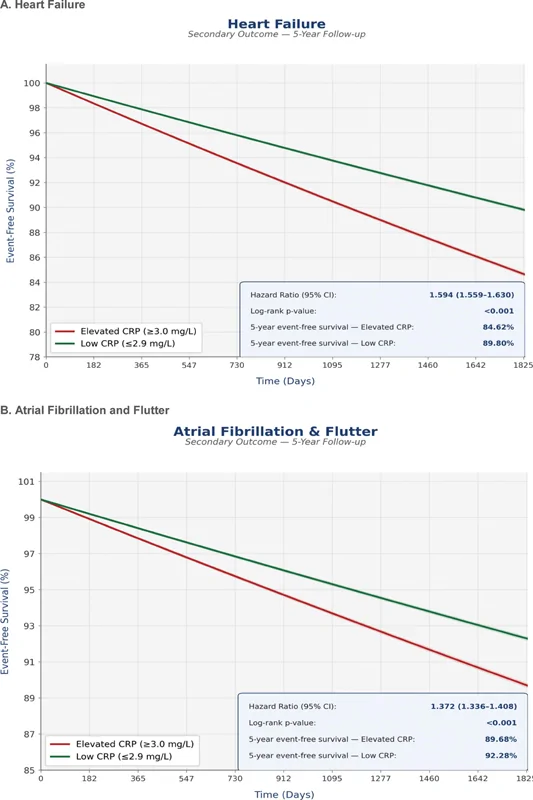
INTRODUCTION: Obstructive sleep apnea (OSA) increases cardiovascular disease risk through systemic inflammation, particularly through elevated C-reactive protein (CRP). This study investigated whether CRP stratification predicts mortality and cardiovascular events in OSA patients. METHODS: We conducted a retrospective cohort analysis using the TriNetX Research Network, encompassing electronic health records from 130 healthcare institutions. Adults (ages 18-90 years) with OSA were stratified by CRP concentration: elevated (≥ 3.0 mg/L) versus low (≤ 2.9 mg/L). After propensity score matching for demographics and comorbidities, 240,727 participants per cohort were followed for five years. Primary outcome was all-cause mortality; secondary outcomes included cardiovascular events, arrhythmias, and acute kidney injury. RESULTS: Elevated CRP was associated with significantly higher all-cause mortality (11.3% versus 7.0%; HR 1.695, 95% CI 1.662-1.727; p < 0.001). The elevated CRP group demonstrated heightened cardiovascular risk: cardiogenic shock (1.0% versus 0.5%; HR 2.003), heart failure (9.8% versus 6.5%; HR 1.594), pulmonary hypertension (4.9% versus 3.4%; HR 1.508), and acute kidney injury (11.0% versus 6.4%; HR 1.825), all p < 0.001. Arrhythmic complications were also increased: atrial fibrillation/flutter (6.3% versus 4.8%; HR 1.372) and ventricular tachycardia (2.3% versus 1.8%; HR 1.388), both p < 0.001. CONCLUSION: Elevated CRP constitutes a robust predictor of mortality and cardiovascular morbidity in OSA populations. Assessment of inflammatory biomarkers may enhance risk stratification, informing intensified monitoring and targeted therapeutic interventions.
The paper
Department of Internal Medicine; St. John's Episcopal Hospital
Sleep Science, 9 Oct 2026