Multisystem effects of sodium-glucose cotransporter-2 inhibitors beyond glycaemic control: an umbrella review of systematic reviews and meta-analyses
Preregistered CRD420261378845
Abstract
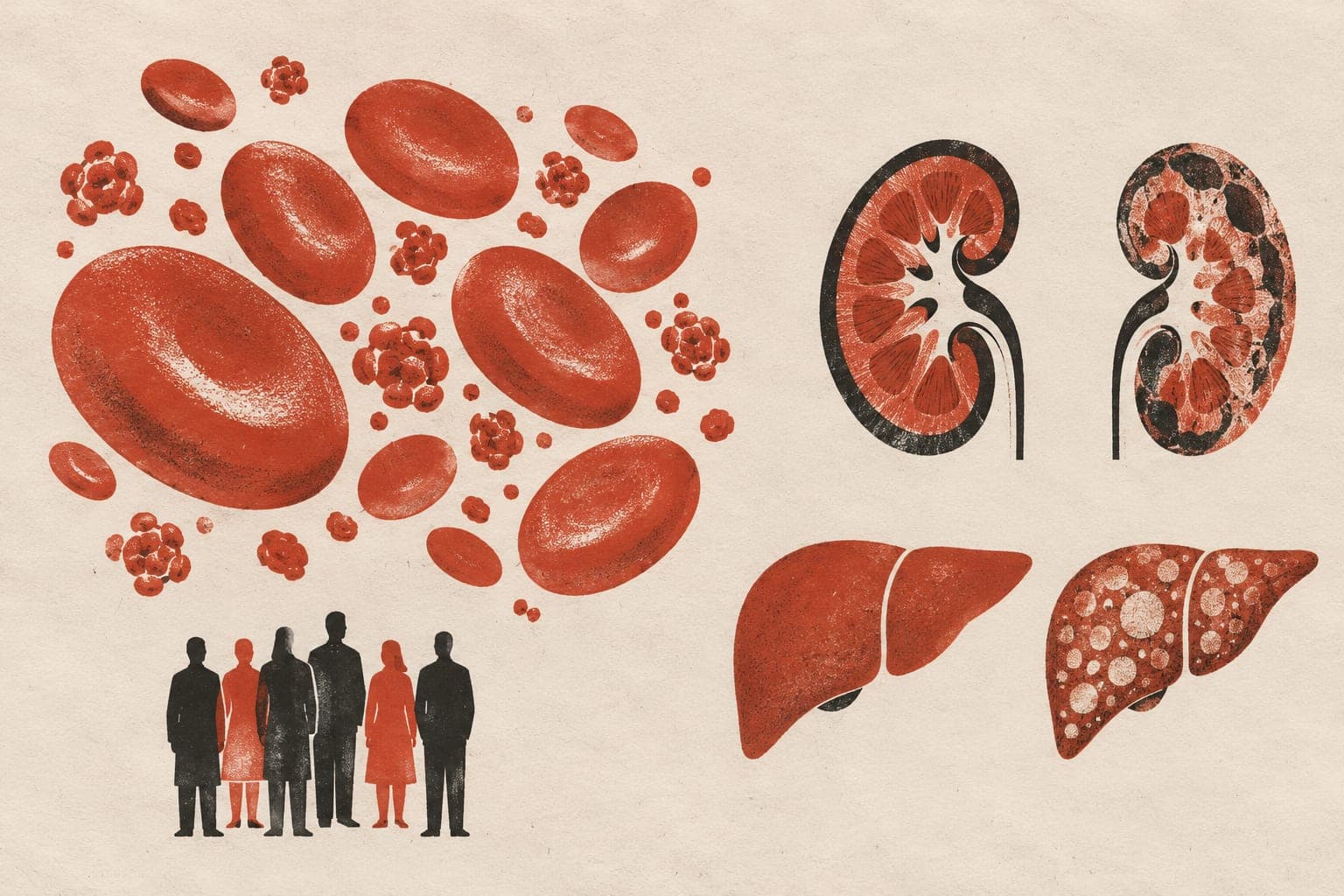
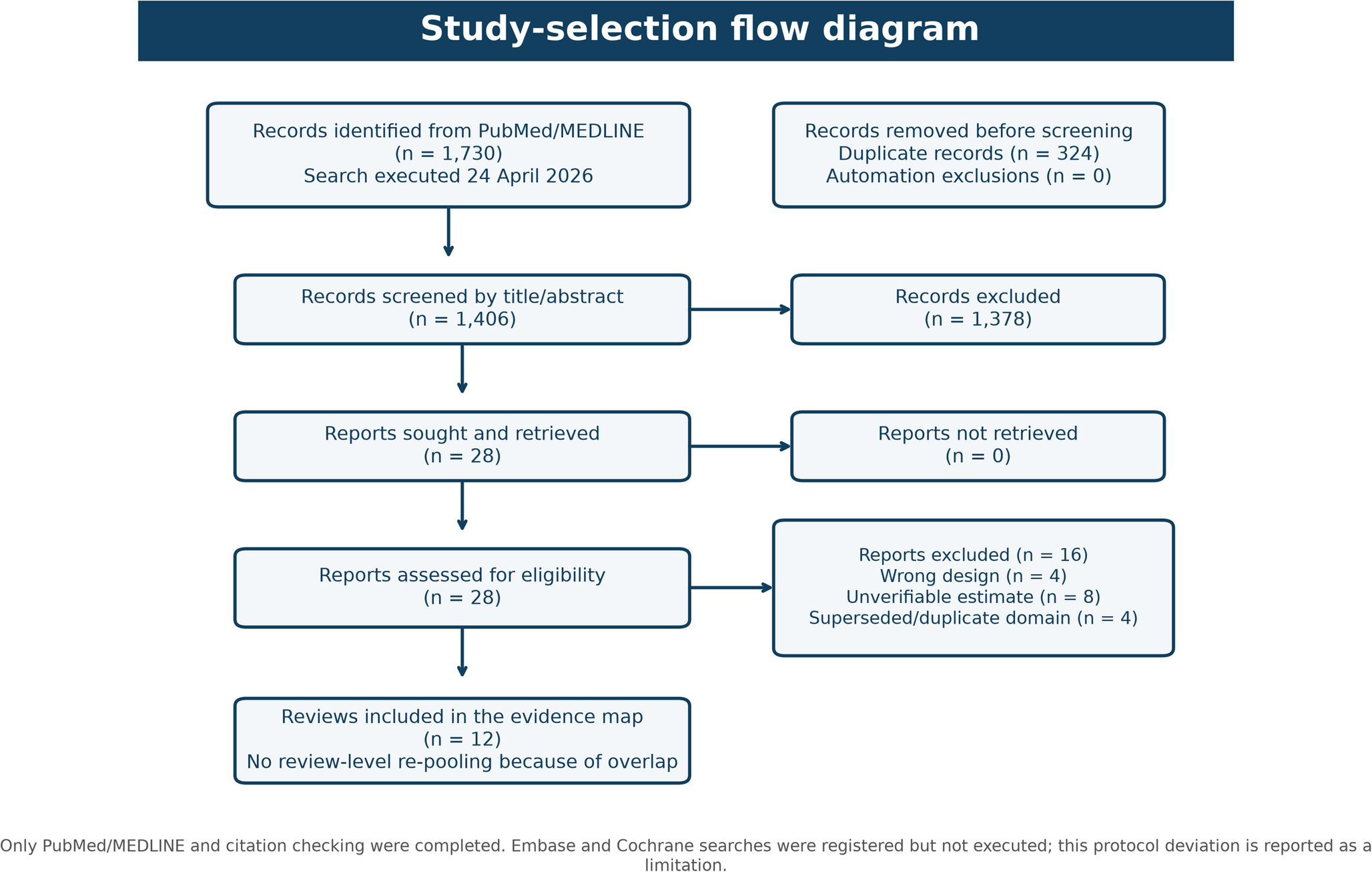
PURPOSE: To map benefits and harms of sodium-glucose cotransporter-2 (SGLT2) inhibitors beyond glucose lowering and assess evidence certainty. METHODS: We searched PubMed/MEDLINE through 24 April 2026 and checked references. Two reviewers screened records and verified extracted data. Review methods were appraised with AMSTAR-2, and outcome certainty was judged using GRADE domains. Overlapping, non-interchangeable review estimates were not re-pooled. PROSPERO registration occurred after review initiation (CRD420261378845; 25 April 2026; retrospectively registered). RESULTS: Twelve PubMed-indexed reviews were included. Representative estimates showed fewer cardiovascular death or first heart-failure hospitalisation events (hazard ratio [HR] 0.77, 95% confidence interval [CI] 0.72-0.82), major adverse cardiovascular events (HR 0.91, 95% CI 0.87-0.96), and kidney disease progression (risk ratio [RR] 0.63, 95% CI 0.58-0.69). Liver fat decreased by 2.05% points (95% CI 1.48-2.61), but this was an imaging outcome, predominantly in type 2 diabetes. The RCT-only subgroup of a mixed-design gout review reported HR 0.74 (95% CI 0.55-0.98). Genital infection increased (RR 3.30, 95% CI 2.74-3.99); urinary tract infection and diabetic ketoacidosis estimates were imprecise or compatible with no difference. SGLT2 inhibition did not clearly reduce 28-day mortality in hospitalised COVID-19 (odds ratio 0.93, 95% CI 0.79-1.08). All reviews had critically low AMSTAR-2 confidence. CONCLUSION: Cardiorenal benefits are supported in the studied heart-failure and chronic-kidney-disease populations, including prespecified non-diabetic subgroups. Evidence for liver fat and gout is narrower and does not establish universal multisystem benefit. GRAPHICAL ABSTRACT: Outcome-specific summary of the strongest cardiorenal evidence, narrower extra-cardiorenal findings, and principal safety signal. SUPPLEMENTARY INFORMATION: The online version contains supplementary material available at https://doi.org/10.1007/s40200-026-02097-x.
The paper
Community Health Partners; Damascus University
Journal of Diabetes and Metabolic Disorders, 8 Oct 2026