Food insecurity and symptoms of anxiety and depression among Latinas at risk for type 2 diabetes: disaggregating between- and within-person associations using a micro-longitudinal design
Abstract
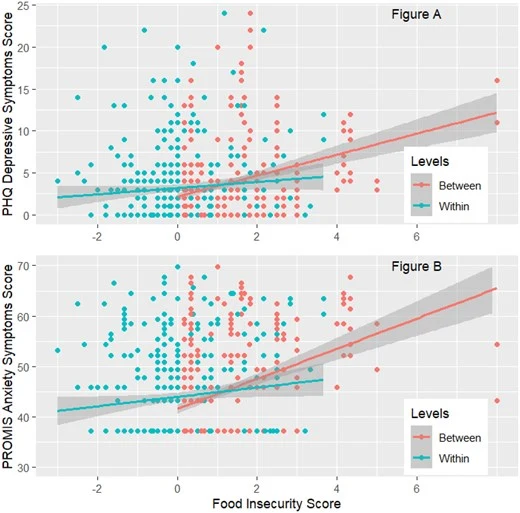
BACKGROUND: Food insecurity (FI), depression and anxiety are known risk factors for type 2 diabetes. FI can be transient, but short-term relationships between FI and symptoms of depression and anxiety are not described. PURPOSE: We used a micro-longitudinal design to investigate the between- and within-person relationships between FI and symptoms of depression and anxiety. METHODS: Participants were n = 76 Latinas living in Hartford, CT, United States, who had high risk for type 2 diabetes, utilized SNAP benefits and screened positive for FI. Recruitment and data collection were from April 2021 to June 2023. Data were collected at 6 time points over 3 consecutive months. FI was measured over the phone by trained bilingual interviewers with the 15-item US Household Food Security Survey Module. FI scores across timepoints were categorized as food secure, intermittent food insecure, or persistent food insecure. Depressive symptoms were measured with the 8-item Personal Health Questionnaire and anxiety symptoms with the 8-item PROMIS anxiety scale. A multilevel regression model was used to predict FI from between- and within-person depression and anxiety predictors. RESULTS: Compared to those experiencing persistent food security or intermittent FI, those experiencing persistent FI reported higher symptoms of depression and anxiety overall. Within persons, when FI score was higher than an individual's own average, symptoms of anxiety and depression were also higher. Between-person associations were approximately twice the magnitude of within-person associations. CONCLUSIONS: Food insecurity is associated with symptoms of depression and anxiety at the between- and within-person levels. Overall levels of depression and anxiety differ by persistence of FI. Repeated and/or prolonged exposures to FI and associated distress should be examined as risk factors for incident type 2 diabetes.
- Food insecurity
- Anxiety symptoms
- Depressive symptoms
- 8-item Personal Health Questionnaire
- PROMIS anxiety scale
- Humans
The paper
University of Connecticut
Annals of Behavioral Medicine, 7 Jan 2026