Indoor particles linked to death risk in older Chinese adults
In older Chinese adults, each one-microgram rise in indoor fine particles per cubic metre was linked to a 0.3% higher risk of death.
BMC Public Health
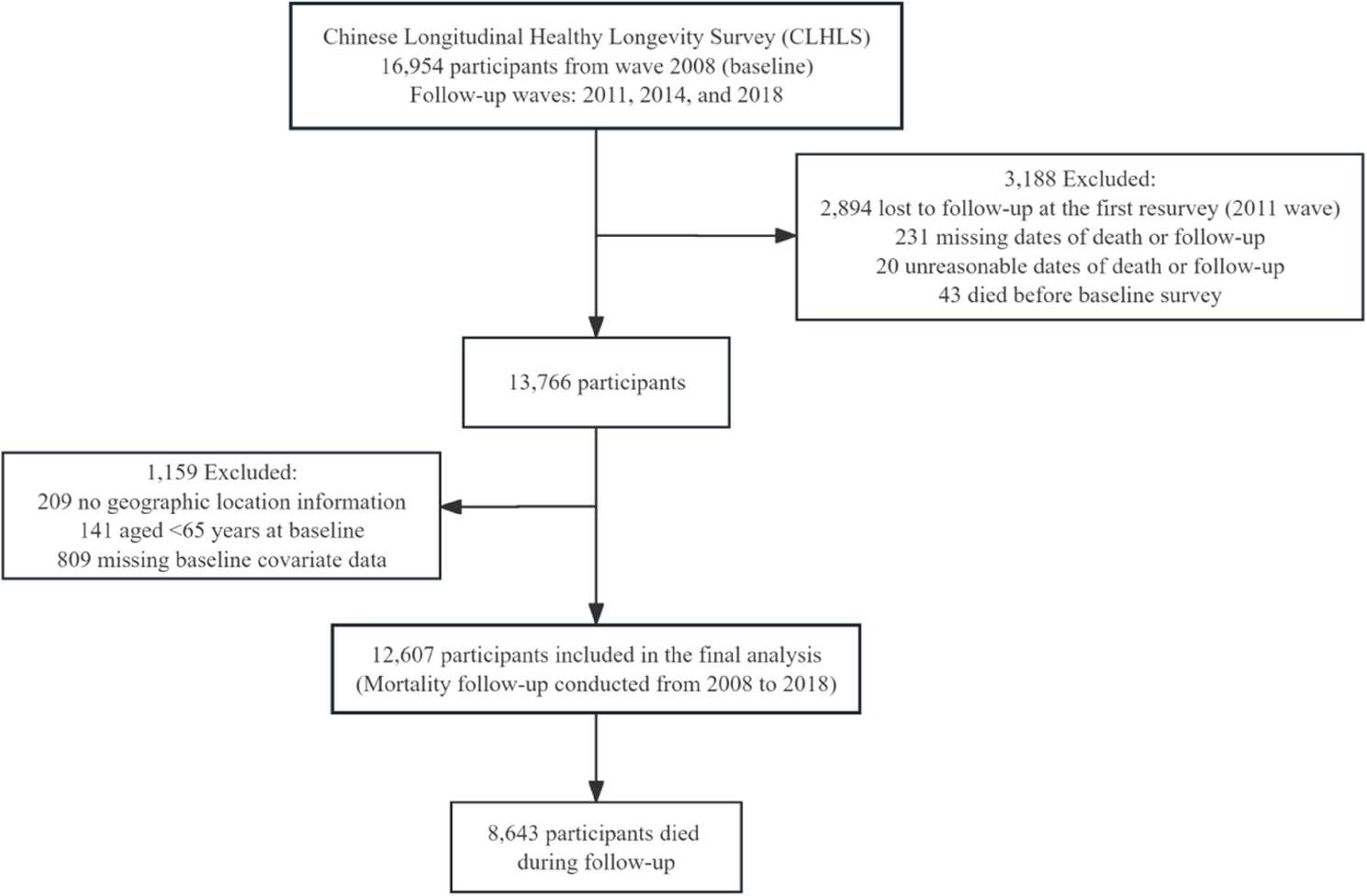
In a nationwide prospective cohort study, researchers tracked 12,607 older adults in China with an average age of nearly 87 years from 2008 to 2018. They estimated indoor exposure to fine particle pollution and its chemical components over a median follow-up of 4.14 years, during which 8,643 participants died. Higher indoor levels of fine particles, black carbon, organic matter, and sulfate were each linked to increased all-cause mortality. Each one-microgram per cubic metre rise in fine particles was associated with a 0.3% higher risk of death. For black carbon, that same rise was linked to a 7.2% higher risk, while organic matter and sulfate were linked to 0.9% and 1.0% higher risks, respectively. Fine particle exposure was also associated with the neutrophil-to-lymphocyte ratio, a marker of systemic inflammation.
Why it matters
Because age-related limits on mobility lead older adults to spend most of their time indoors, indoor air pollutants may strongly influence health in late life. Identifying which particle components link to mortality could help shape targeted indoor air standards to protect aging populations.
Caveats
The observational design cannot prove that indoor particle exposure caused the deaths. In addition, indoor pollution levels were estimated from ambient outdoor data and infiltration factors rather than measured directly inside homes.
The paper
Shanxi Medical University
BMC Public Health · 7 Sep 2026