Portable microcontroller-based impedance analyzer equipped with molecularly imprinted polymer for sensitive and specific detection of amyloid beta
Abstract
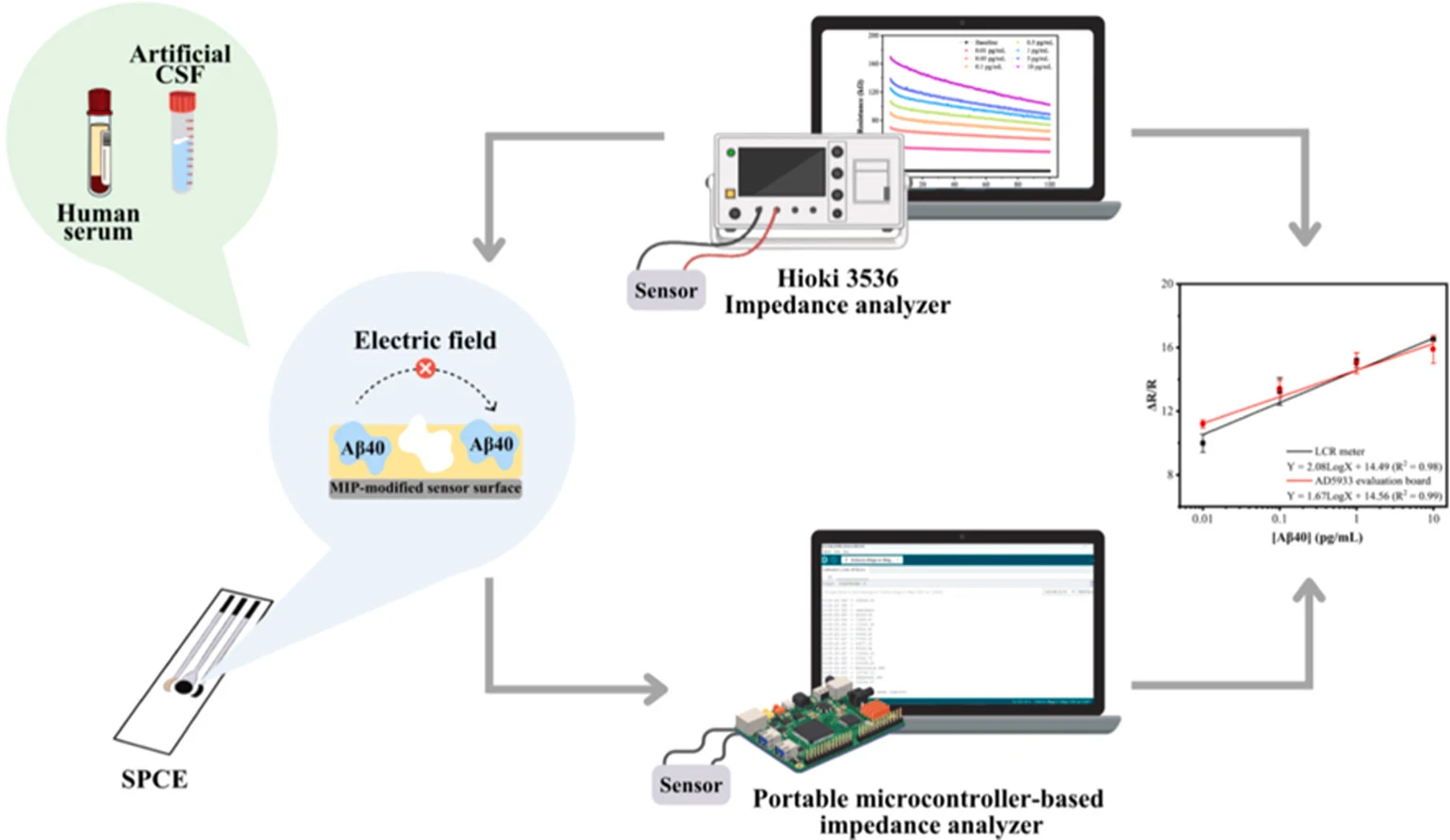
Alzheimer's disease (AD) is a progressive neurodegenerative condition with a rising global prevalence. Although clinical immunoassays offer high sensitivity, their dependence on costly and centralized infrastructure hinders widespread screening in resource-limited regions. Herein, we developed an electrical sensing platform utilizing molecularly imprinted polymers (MIPs) as synthetic receptors to detect a critical biomarker, amyloid beta 40 (Aβ40). The analytical performance was evaluated using impedance measurements through a high-precision benchtop LCR meter and a cost-effective miniaturized impedance evaluation board. This biomimetic sensor enabled sensitive detection of Aβ40 across a tested concentration range of 0.01 - 10 pg/mL with a correlation coefficient (R²) ≥ 0.98 for both impedance devices. Notably, the miniaturized board demonstrated strong parity with the benchtop system, yielding limit of detection (LOD) values of 0.19 pg/mL for the miniaturized board and 0.12 pg/mL for the benchtop LCR meter. Furthermore, spiked analysis in human serum and artificial cerebrospinal fluid (aCSF) showed relative errors below 10% at all tested concentrations. As a proof-of-concept achieved with only a 15-min analysis, this study offers a sensitive, portable, and cost-effective platform that shows promise for decentralized screening applications, thereby holding the potential to significantly improve patient outcomes.
The paper
Mahidol University; Macquarie University
Talanta, 27 Sep 2026