Mifepristone improved bone formation in mice with bone loss
In an experiment in mice with ovaries removed and fed a high-fat diet, the drug also reduced fat in bone marrow.
Journal of Pharmaceutical Analysis
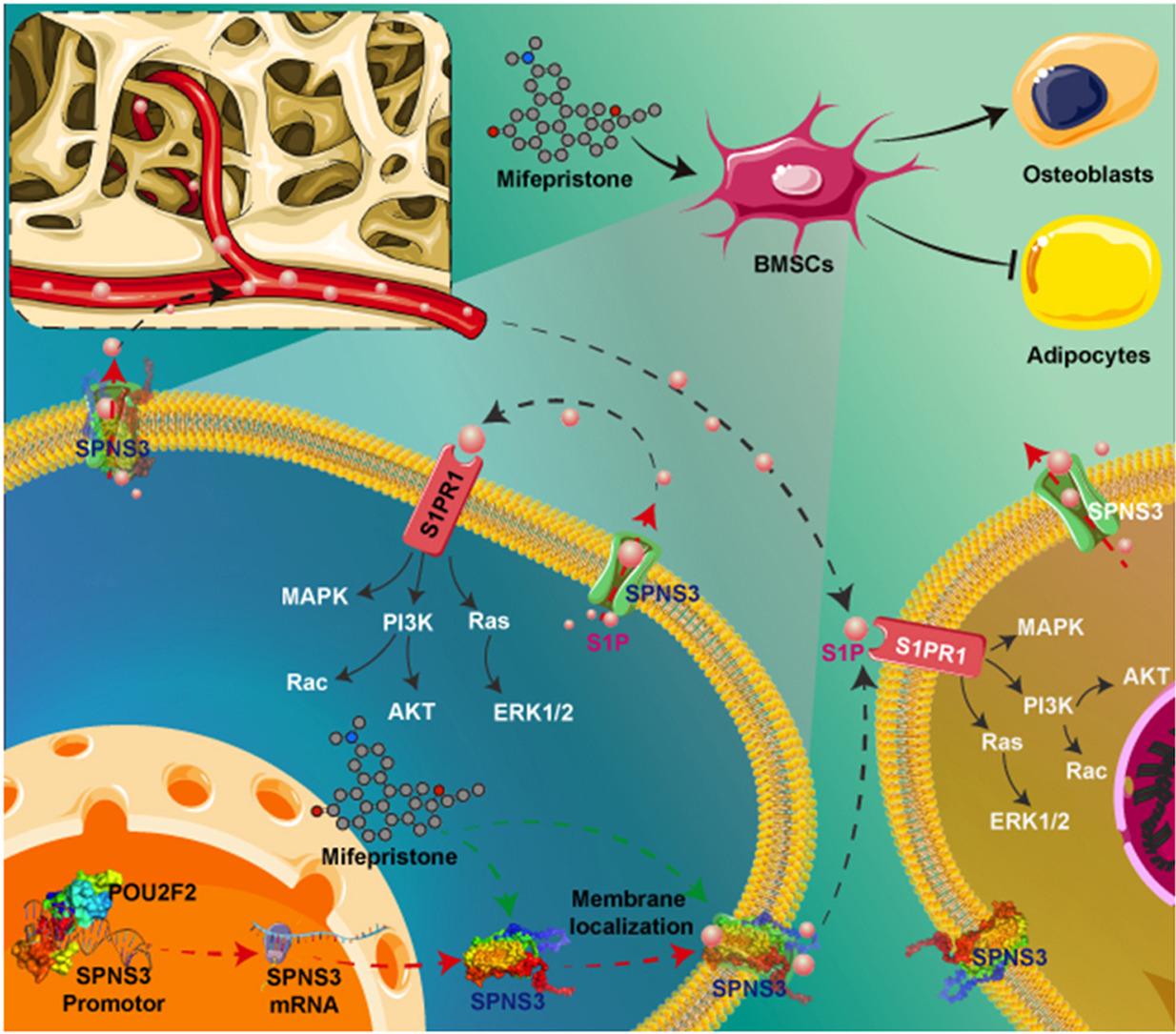
In an experiment in mice, researchers modelled osteoporosis, a condition that weakens bones, alongside hyperlipidemia, high blood fat levels. They removed the animals’ ovaries and fed them a high-fat diet. They also studied bone marrow stem cells grown in the lab, testing their development into bone-forming cells or fat cells.
The researchers identified a pathway involving SPNS3, a protein that transports certain fats, as a key regulator of this development. Mifepristone stabilised this protein. In the lab-grown cells, the drug enhanced development into bone-forming cells and inhibited development into fat cells. In mice with both conditions, it improved bone formation and reduced fat in bone marrow. The authors suggested repurposing mifepristone for the combined conditions.
Why it matters
Osteoporosis and high blood fat levels often coexist in postmenopausal women. The work points to bone marrow stem-cell development as a possible target for addressing this age-related combination.
Caveats
The findings came from mice and cells grown in the lab, not people. The abstract did not state how many mice were studied or the drug dose and duration.
The paper
Dalian Medical University
Journal of Pharmaceutical Analysis · 19 Mar 2026