Healthy aging linked to lower brain scaling exponent in humans
In three cohorts totaling 840 people aged 18–88, fMRI analyses linked a lower scaling exponent during healthy aging to coordinated brain activity.
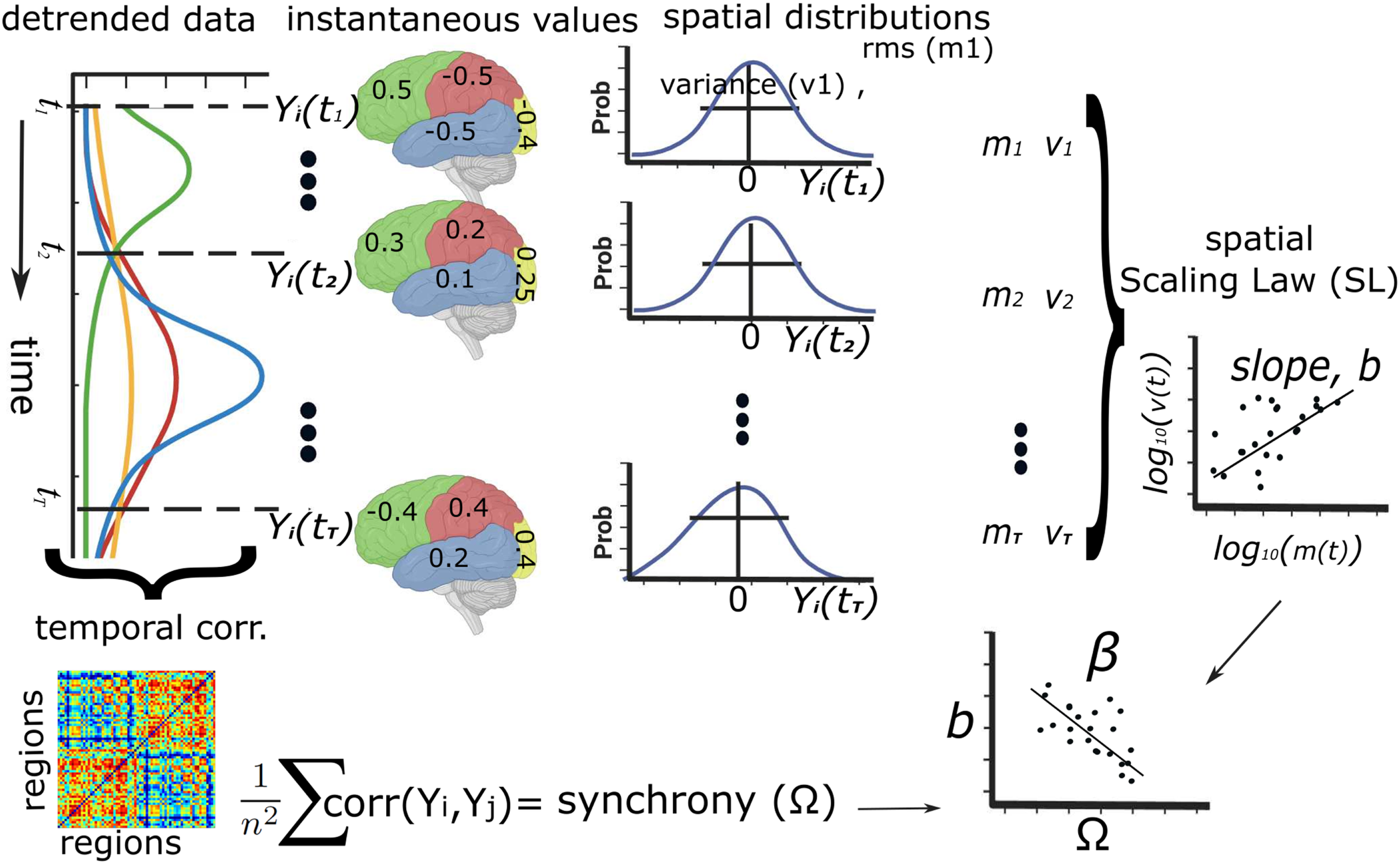
In human fMRI data from three cohorts comprising 840 people aged 18–88, researchers examined how brain-signal scaling relates to synchrony and aging. They adapted Taylor’s law, which links variance to the mean, by replacing the mean with the root-mean-square to accommodate signals with positive and negative values. They removed trends and temporal means before analysis.
Analytical work and simulations found an inverse relationship between the scaling exponent and synchrony. The human data linked healthy aging to a substantial reduction in this exponent associated with synchrony. The synchrony-scaling relationship remained stable during rest but progressively shifted during naturalistic tasks across the lifespan. The researchers also reported altered synchrony-scaling coupling in individuals with ADHD.
Why it matters
The findings suggest that this scaling metric may capture age-related changes in coordination among brain regions.
Caveats
The observational fMRI analyses cannot establish that synchrony causes age-related changes in brain dynamics.
The paper
Vellore Institute of Technology University; National Brain Research Centre
PLOS Computational Biology, 5 Oct 2026, Open access