Arsenic triggers heart senescence in mice while quercetin counteracts the damage
Exposure to environmental arsenic caused heart dysfunction via the p53 and p21 pathway, which quercetin treatment reversed in cultured rat cardiomyoblasts.
Toxicology and Applied Pharmacology
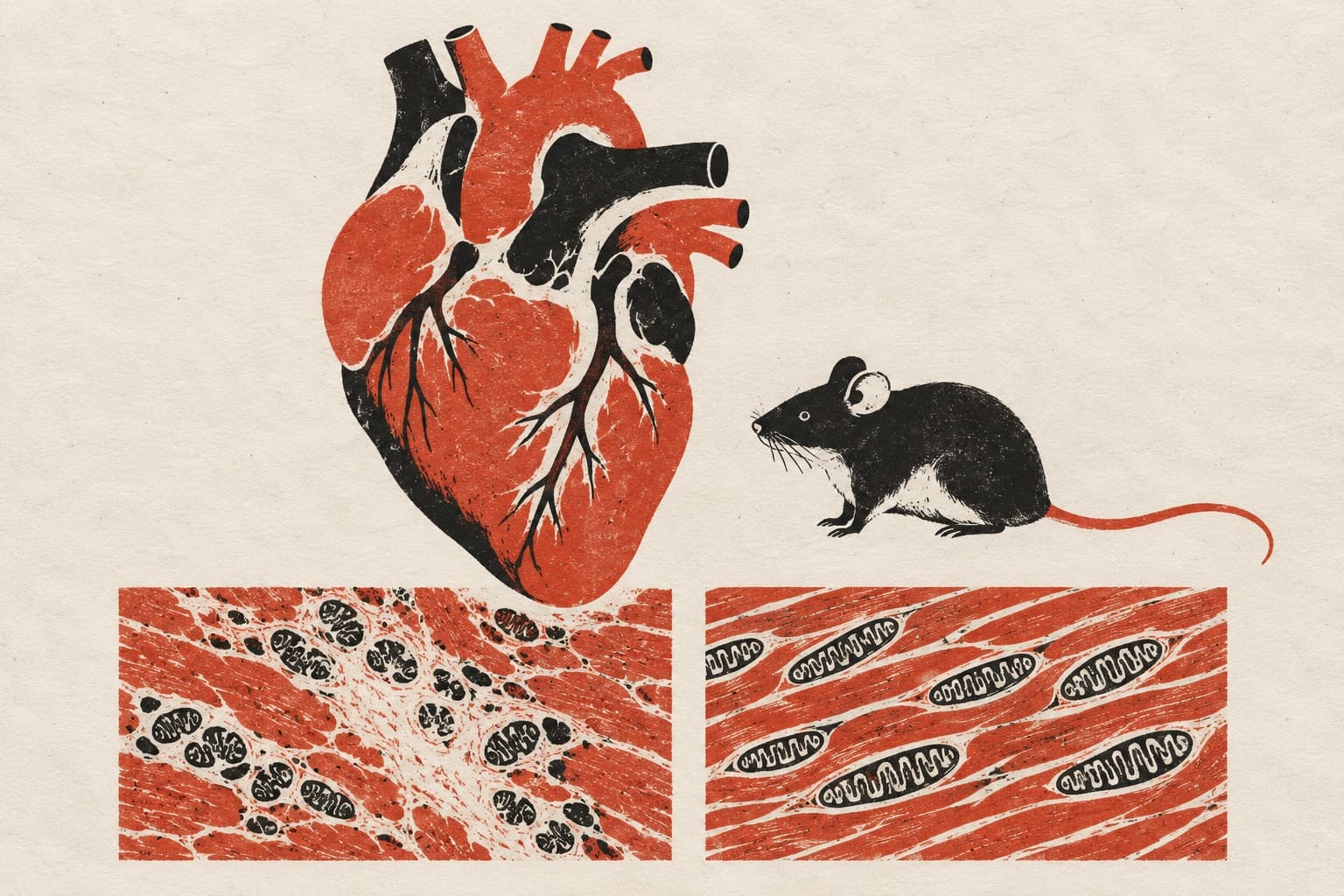
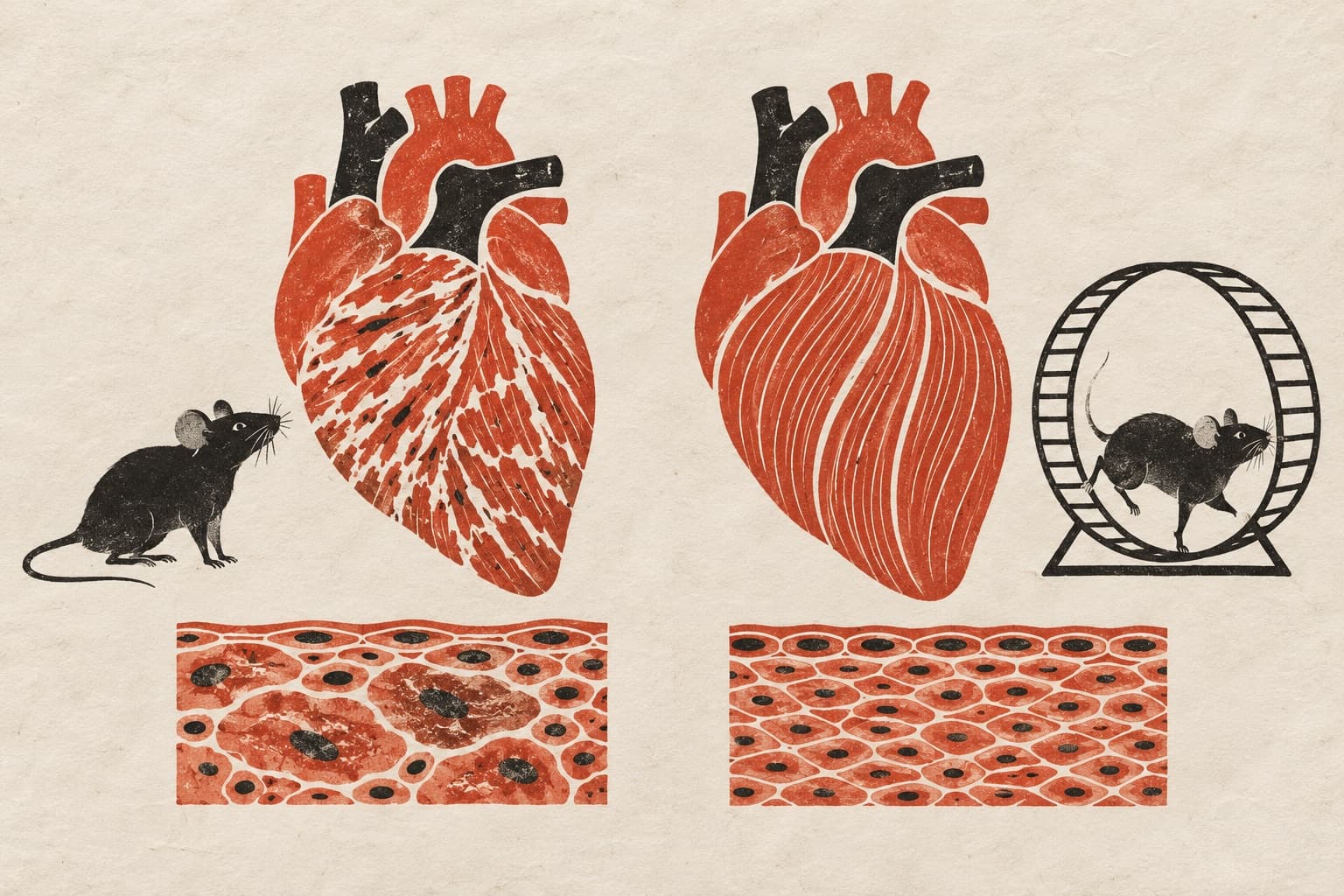
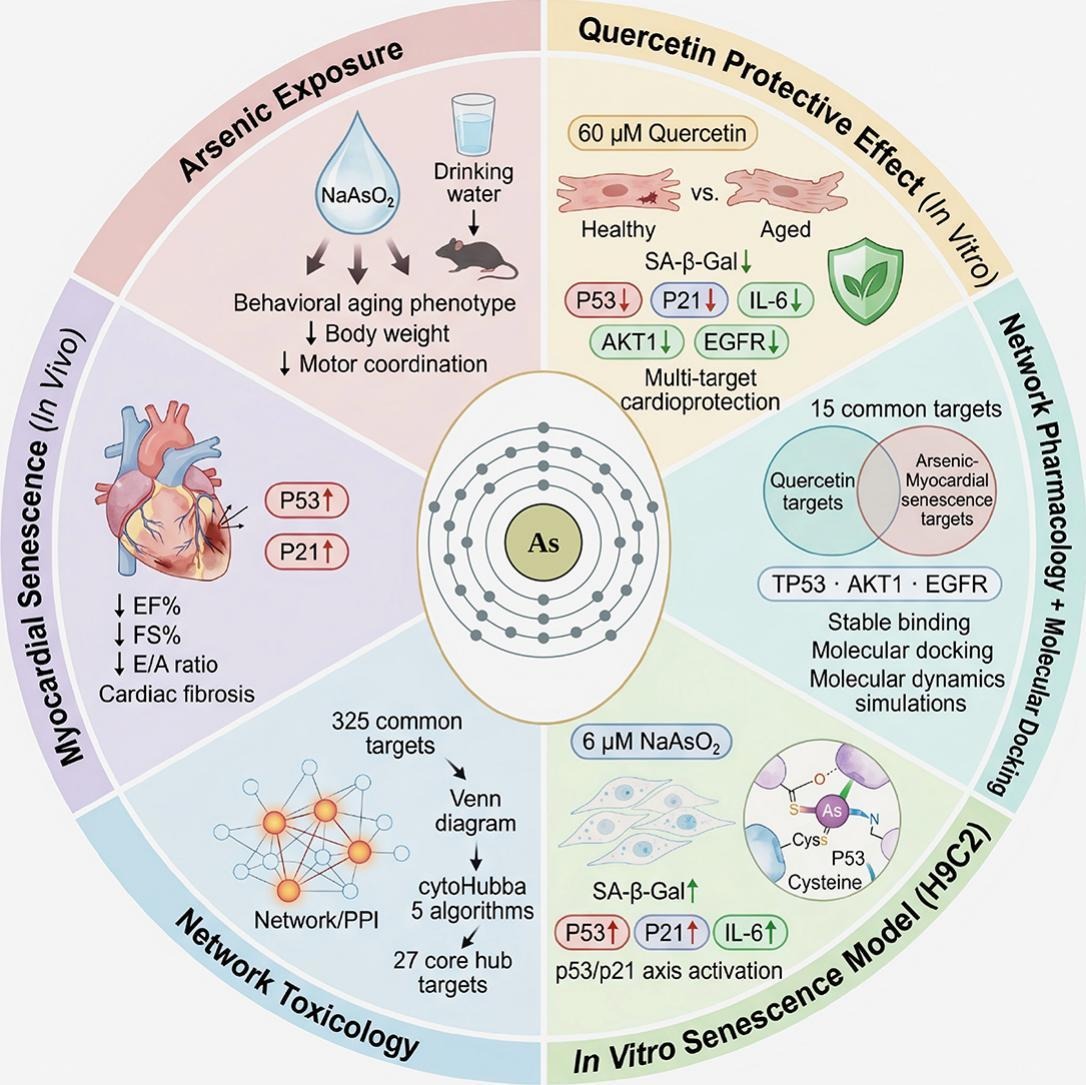
In male C57BL/6 mice and rat cardiomyoblasts, researchers examined how environmental arsenic promotes cardiac aging and whether quercetin can mitigate the damage. Three-week-old mice drank water containing sodium arsenite for six weeks, with 22-month-old mice serving as natural aging controls. Arsenic exposure induced left ventricular systolic and diastolic dysfunction, myocardial fibrosis, behavioral deficits, and elevated P53 and P21 levels. In rat cardiomyoblasts, arsenic directly bound a cysteine residue on p53, driving cellular senescence through the p53/p21 axis. Arsenic also increased senescence-associated beta-galactosidase activity and raised levels of P53, P21, and IL-6. Subsequent treatment with quercetin reversed these senescence markers in cells and downregulated overactivated targets, including TP53, AKT1, and EGFR.
Why it matters
The findings show that environmental toxicant exposure can directly activate cellular senescence pathways in the heart, mimicking natural cardiovascular aging. Identifying shared molecular drivers of chemical toxicity and aging provides potential targets for interventions that preserve heart function.
Caveats
The study was conducted in young male mice and cultured rat cells, so the findings may not translate to humans or female physiology. In addition, quercetin was tested as an intervention only in cell culture rather than in whole animals.
The paper
Guangxi Medical University
Toxicology and Applied Pharmacology · 26 Sep 2026