Stronger activity rhythms linked to slower biological aging
Stronger daily activity rhythms were associated with 26–46% lower odds of accelerated aging than weaker rhythms.
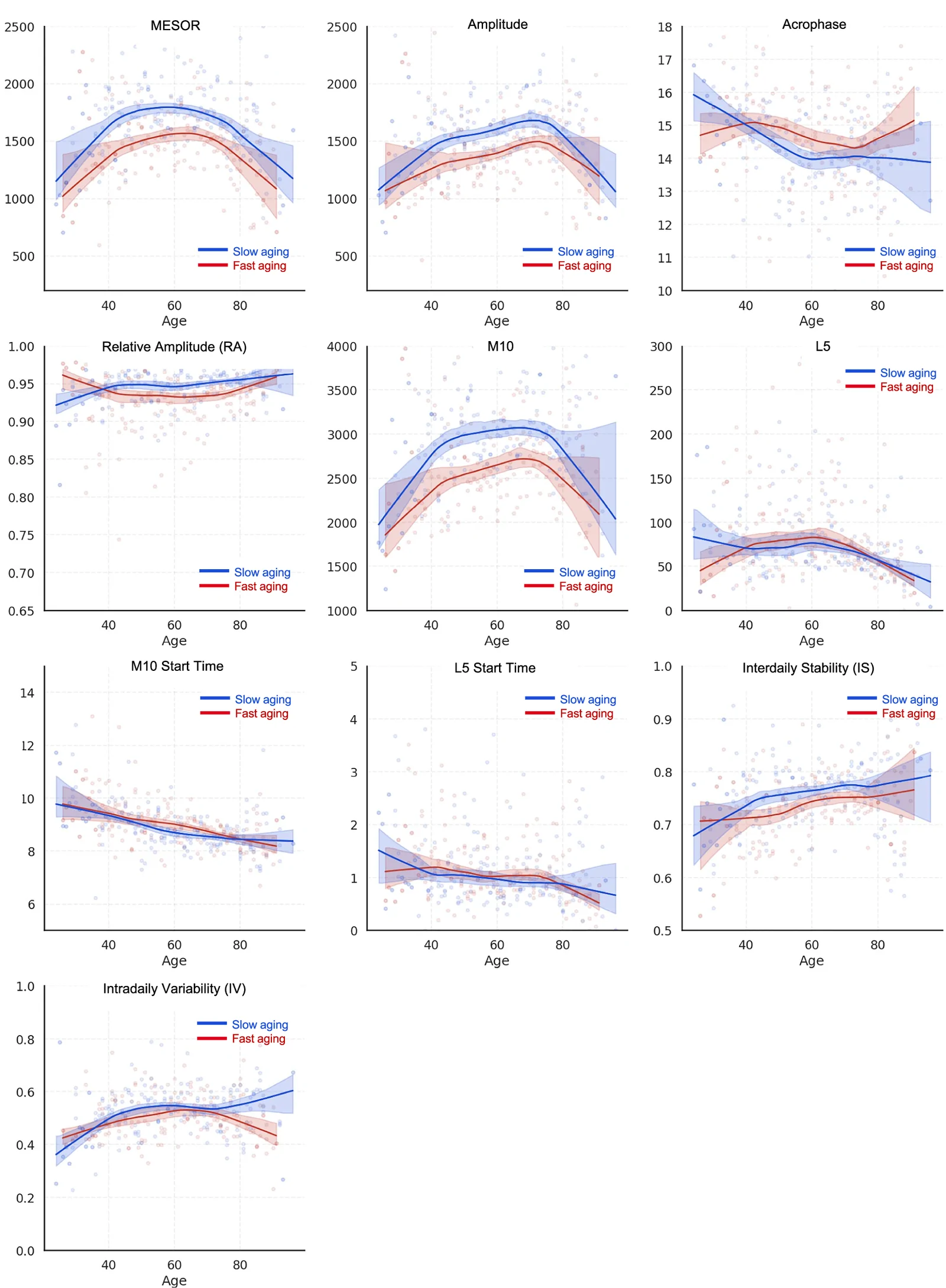
Limit: Aging itself can weaken activity rhythms, reversing the apparent direction of the association
Edited by Boris Djordjevic · AgingResearch.News
In an observational cohort study, researchers analyzed Fitbit activity records and biological age estimates from 2,222 US adults, including males and females. Mean ages were 61.09 years among those classified as aging faster and 60.23 years among the others. Average follow-up lasted 6.84 years.
The researchers estimated biological age using nine clinical biomarkers and chronological age. They classified participants as aging faster when their estimate exceeded the value expected for their chronological age. Higher rhythm intensity, measured through overall activity levels and the size of daily activity swings, was associated with lower odds of accelerated aging. Links involving activity timing and regularity were stronger in females. Males classified as aging faster showed activity surges in the early morning and rebounds in the late evening.
Why it matters
The authors suggest that rest-activity rhythms measured by consumer wearables may serve as scalable digital markers for aging trajectories and aging-related risk assessment.
Caveats
This observational study could not establish cause and effect, and its aging outcome was a biomarker-based estimate, not lifespan. Only adults with linked Fitbit data and repeated biological age estimates were included.
From the paper
- Participants
From this cohort, we identified 34,217 participants who had contributed Fitbit data through the Bring Your Own Device (BYOD) program, additionally authorized access to their Fitbit data through the AoURP Participant Portal, and provided valid physical measurements.
- Result
A one-quartile increase in fPC1 corresponded to a 36.9% reduction in the odds (OR = 0.631; 95% CI: 0.526-0.757; p < 0.001).
Results, Longitudinal associations of functional and CRAR metrics with biological aging
- Limitation
First, the AoURP cohort with Fitbit data was predominantly young, female, white participants with a college education.
Quoted word for word from the full text on PubMed Central.
The paper
Longitudinal digital phenotyping of activity rhythms and biological aging using commercial wearables
Harvard University
Nature Communications, Aug 22, 2026, Open access


