Levothyroxine use linked to faster bone loss in some women
Below age 60, women taking levothyroxine lost 0.010 grams per square centimeter more bone density per year than non-users.
Our read
Populations- Studied:
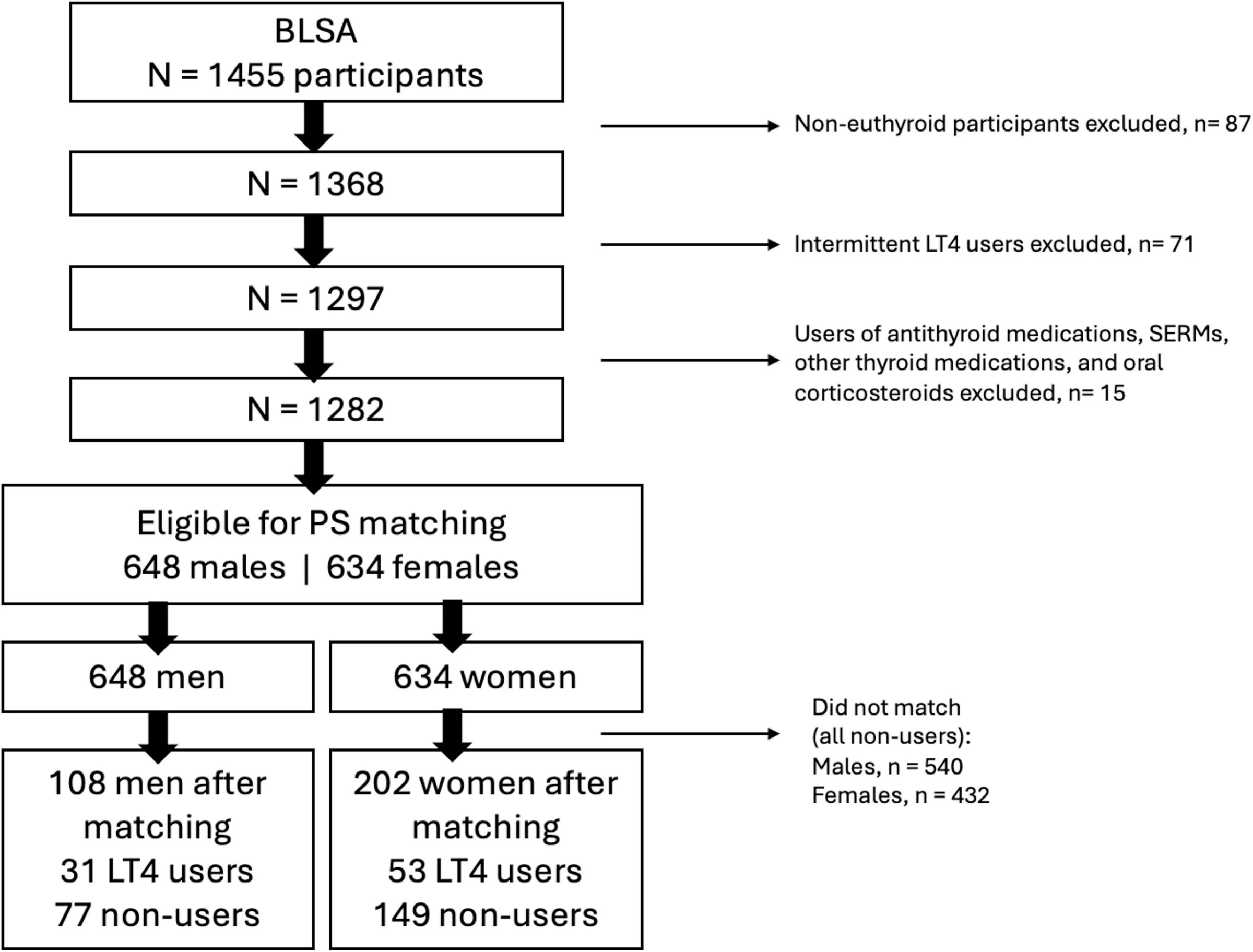
- Cohort study of 202 women with normal thyroid hormone levels
- What changed:
- Women below age 60 taking levothyroxine lost 0.010 grams per square centimeter more bone density per year than non-users
- The catch:
- The abstract reports bone density rather than fracture outcomes
- In the record:
- The 22nd paper on levothyroxine with results in people; 48 on record in all.
- Why it’s aging research:
- It looks at how biology varies with age or lifespan.
Editor of record: Boris Djordjevic · AgingResearch.News
An observational study included 108 men and 202 women whose thyroid hormone levels stayed normal at every study visit. Researchers used data from the Baltimore Longitudinal Study of Aging. They compared consistent users of levothyroxine, a thyroid hormone medicine, with people who never used it during follow-up. They matched users and non-users on demographic, medical and other factors, and measured bone mineral density with X-ray scans.
Women taking levothyroxine had faster annual bone density loss than non-users below age 60 and at ages 70–79. The differences were 0.010 and 0.003 grams per square centimeter per year, respectively. Men had similar annual changes regardless of levothyroxine use across all four age groups studied. The authors said levothyroxine may be a factor in bone loss, particularly among women in late middle age and early old age.
Why it matters
Bone loss is a concern in later life. The authors said the potential for harm should inform decisions about levothyroxine use and monitoring to avoid overtreatment.
Caveats
These observational links do not establish cause and effect, and the abstract reports bone density rather than fracture outcomes. The findings concern people whose thyroid hormone levels remained normal throughout follow-up.

Comments
Be the first to comment.